

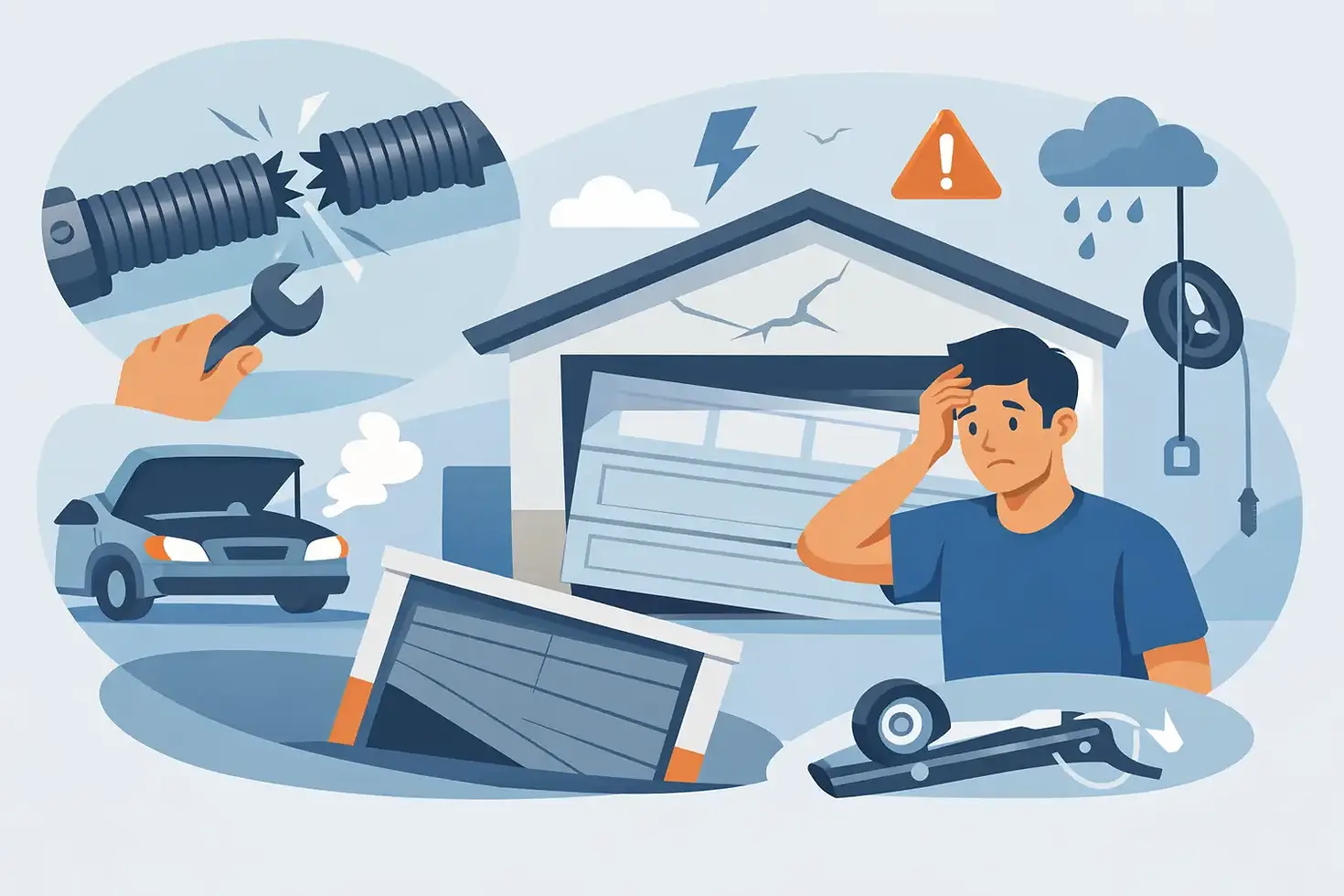
7 Broken Garage Spring Symptoms to Watch

You usually know something is wrong before you ever see the spring. The door feels heavier than normal, the opener strains, or the garage door only lifts a few inches before stopping. Those are classic broken garage spring symptoms, and they are not the kind of problem to ignore until the weekend.
A bad spring is more than a noisy nuisance. It can leave your car trapped inside, make your home less secure, and put a lot of extra stress on the opener, cables, and rollers. In some cases, continuing to use the door can turn one repair into several. If your garage door has suddenly started acting different, here is what to watch for and what to do next.
Broken garage spring symptoms you should not ignore
Garage door springs do the heavy lifting. Whether your system uses torsion springs mounted above the door or extension springs along the tracks, their job is to counterbalance the door's weight. When one spring breaks or wears out, the whole system gets out of balance fast.
The most obvious sign is a garage door that will not open. Sometimes it will not move at all. Other times it rises a few inches and stops, or it starts to open and then slams shut. Homeowners often assume the opener is the problem, but the opener may just be reacting to the extra weight of a door it is no longer designed to lift on its own.
Another common clue is a loud bang from the garage. Many people describe it as sounding like something snapped or hit the wall. That noise is often the spring breaking under tension. If you heard a sharp pop and now the door is not working right, there is a good chance the spring is the issue.
You may also notice the door looks uneven as it opens. One side may rise while the other lags behind. The door can appear crooked in the tracks or shake more than usual. That can happen when one side of the system is carrying more load than it should, especially with extension spring setups or when related hardware is also under stress.
7 signs your garage spring may be broken
Some symptoms are dramatic. Others are easy to brush off until the door stops working completely. These are the signs that deserve attention right away.
1. The garage door feels extremely heavy
A properly working garage door should not feel dead heavy when operated manually. If you pull the emergency release and the door suddenly feels like it weighs a ton, the spring may no longer be doing its job. This is one of the clearest indicators because the spring is what offsets most of the door's actual weight.
2. The opener struggles or hums without lifting
If the opener sounds like it is trying but the door barely moves, do not keep forcing it. Openers are not meant to replace the spring. Repeated attempts can burn out the motor or damage the drive system. What looks like an opener problem often starts with a failed spring.
3. The door only opens a few inches
Many automatic openers have safety settings that stop operation when they sense unusual resistance. A broken spring can trigger that response. The door may move a short distance and reverse, or it may stop partway and stay there.
4. You see a gap in the torsion spring
If you have a torsion spring mounted above the door, take a look from a safe distance. A broken torsion spring usually shows a visible gap in the coil. That separation is a strong visual confirmation that the spring has snapped.
5. The door closes too fast
A healthy spring helps control the door in both directions. When the spring breaks, the door can drop harder and faster than normal. That is a serious safety issue, especially if kids, pets, or vehicles are nearby.
6. The cables look loose or off track
Cables depend on proper spring tension. When a spring fails, cables can loosen, slip, or come off the drum. At that point, the issue is no longer just the spring. The entire lift system may be compromised.
7. The door is loud, jerky, or visibly off balance
Not every failing spring breaks all at once. Sometimes it weakens first. The door may start moving rough, shaking during travel, or making more noise than usual. Those are warning signs that the spring system may be worn and nearing failure.
What causes garage door springs to fail
Most springs break because they wear out. Every open and close counts as a cycle, and springs are only built for so many cycles before metal fatigue sets in. If you use your garage door as the main entrance to your home, those cycles add up quicker than most people expect.
Rust and poor maintenance can shorten spring life. When springs lose lubrication, friction increases and the metal wears faster. Temperature swings can also make an already weak spring fail at the worst time, usually when you are trying to leave for work or close up for the night.
In some cases, the wrong spring was installed to begin with. A spring that is not matched to the weight and size of the door will wear unevenly and fail early. That is one reason quick patchwork repairs often do not hold up.
What to do if you notice broken garage spring symptoms
The first move is simple - stop using the door. Do not keep hitting the wall button to see if it will "work this time." Do not try to force it open with the opener. And unless you are trained for this kind of repair, do not try to replace the spring yourself.
Garage door springs are under heavy tension. A do-it-yourself repair can go wrong fast and cause serious injury or damage. Even if the spring is clearly broken, the rest of the system still needs to be checked. Cables, drums, bearings, brackets, and the opener may all be affected.
If you need to get your car out, there are situations where a technician can safely help you open the door and secure the area until the repair is complete. That depends on the type of failure and the condition of the rest of the hardware. It is not a one-size-fits-all call.
When same-day repair makes the most sense
A broken spring is rarely a repair that improves by waiting. If the garage door is your main access point, if the door is stuck open, or if the property is unsecured, same-day service is usually the smart move. For commercial properties, a nonworking overhead door can disrupt deliveries, staffing, and site security in a hurry.
This is especially true when the spring failure has already started affecting other parts. Loose cables, bent rollers, or a strained opener can turn a simple spring replacement into a larger repair if the door keeps being used. Fast service protects the door and gets normal access back sooner.
For homeowners and property managers in the St. Louis area, that local response time matters. When a garage door fails, you want a company that can get there, diagnose it correctly, and fix it without a sales pitch or a long wait.
Why a professional inspection matters
Two garage doors can show the same symptom and need different repairs. A door that will not open might have a broken torsion spring, a stretched extension spring, a snapped cable, or multiple worn components failing at once. That is why diagnosis matters as much as replacement.
A proper service call should include more than swapping one part. The technician should check door balance, inspect the lift system, test the opener, and confirm the new spring is correctly sized for the door. If one spring has broken, it is also common to evaluate the condition of the second spring on a two-spring system. Sometimes replacing both is the better value because they usually wear at a similar rate.
That kind of practical, no-nonsense approach is what customers want when the door is down and time matters. Davis Door Service handles spring repairs with same-day service, straightforward pricing, and the kind of accountability that only comes from an owner-operated local company.
If your garage door is suddenly heavy, crooked, stuck, or making a loud snap-and-strain kind of noise, trust what the door is telling you. Catching broken garage spring symptoms early can save you from a bigger repair and a much bigger headache later.


Comments