


Belt Drive vs Chain Opener: Which Fits?

If your garage door wakes up the bedroom above it, rattles the whole house, or just needs a new opener, the belt drive vs chain opener question matters more than most homeowners expect. The right choice affects noise, long-term maintenance, upfront cost, and how the system feels every single day. There is no one-size-fits-all answer. It depends on your door, your budget, and how much noise you are willing to live with.
For most people, this decision comes down to two things fast - price and sound. Chain drive openers usually cost less and get the job done. Belt drive openers usually run quieter and feel smoother. That sounds simple, but the better option depends on how your garage is used and what kind of door you are lifting.
Belt drive vs chain opener: the real difference
A chain opener uses a metal chain, similar to a bike chain, to move the trolley that opens and closes the garage door. A belt opener uses a reinforced rubber, fiberglass, or polyurethane belt for the same job. Both can be reliable when installed correctly and matched to the right door.
The biggest difference is noise. Chain systems tend to create more vibration and mechanical sound because metal is moving against metal. Belt systems reduce that vibration, so operation is usually quieter and smoother. If your garage is detached and noise is not a big concern, that may not matter much. If your garage sits under a bedroom, beside a nursery, or under a home office, it matters a lot.
There is also a difference in feel. A belt drive opener often sounds more refined and less abrupt during travel. A chain drive opener can sound rougher even when it is working exactly as it should. That does not automatically mean the chain opener is lower quality. It just means it operates differently.
When a chain opener makes more sense
A chain opener is often the practical pick for homeowners who want dependable performance without paying extra for quiet operation. If your garage is detached, used mainly for storage, or far enough from living spaces that sound is not a daily issue, a chain drive can be a smart value.
It is also a common choice when budget matters most. If you are replacing a failed opener unexpectedly, cost can become the deciding factor. Many property owners and landlords choose chain openers for that reason. They want something durable, functional, and reasonably priced.
That said, cheaper upfront does not mean cheaper in every situation. Chain systems can need periodic adjustment and lubrication, and they may produce more wear-related noise over time. If you are sensitive to rattling, vibration, or that familiar clanking sound, the lower price may not feel like a win after a few months.
Chain openers are often associated with strength, and in many cases they do handle heavier doors well. But that point can get oversimplified. Modern belt drive systems can also lift heavy residential doors when properly rated. The opener itself should always be matched to the size, weight, and balance of the door. If the door is poorly balanced, no opener type is going to perform the way it should.
When a belt opener is worth the extra cost
A belt opener is usually the better fit when the garage is attached to the house and used multiple times a day. If someone leaves early for work, gets home late, or has kids sleeping near the garage, less noise becomes more than a luxury. It becomes a quality-of-life upgrade.
Belt systems are also popular with homeowners who simply want a cleaner, smoother experience. They tend to start and stop with less chatter and vibration. In many homes, that difference is noticeable the first day.
The trade-off is price. Belt drive openers usually cost more than chain drive models. For some households, that extra expense is easy to justify because they use the garage as the main entrance. For others, especially if the garage is separate from the house, the quieter operation may not be worth spending more.
Maintenance can also be slightly different. Belt systems generally require less day-to-day attention than chain systems because there is no metal chain needing regular lubrication. That does not mean maintenance-free. Any opener still needs inspection, testing, and occasional service. Safety sensors, force settings, springs, rollers, hinges, and tracks all affect how the system runs.
Noise is not the only factor
A lot of articles make this sound like a simple quiet-versus-cheap decision. That is part of it, but not all of it. Door condition matters just as much.
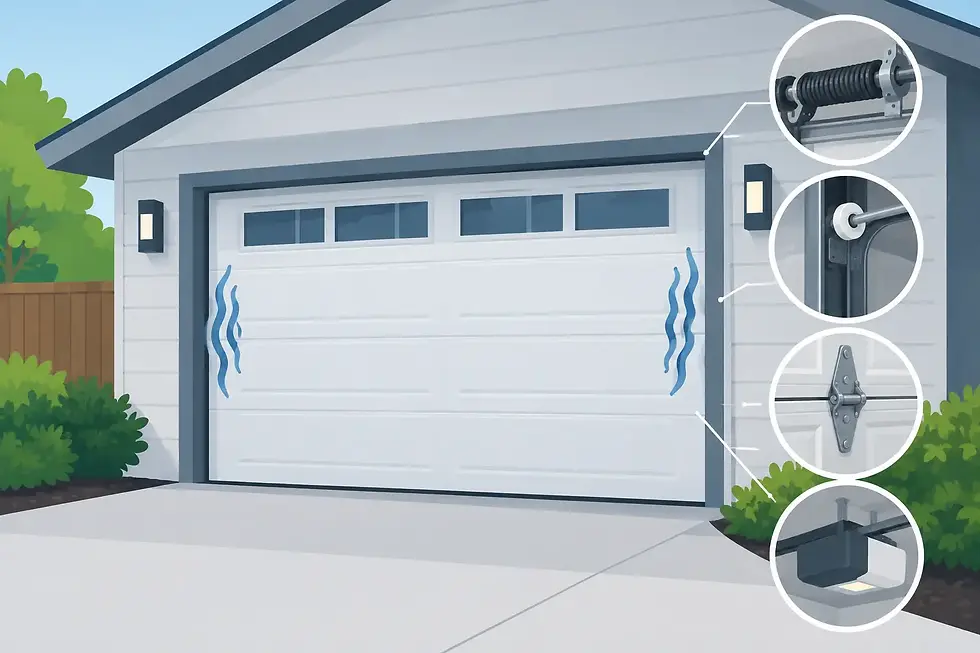
A worn-out garage door with bad rollers, loose hardware, tired hinges, or an unbalanced spring system will still be noisy with a belt opener. In some cases, homeowners replace the opener when the real problem is the door itself. If the door jerks, binds, or slams, the opener may be compensating for deeper issues.
This is where a professional inspection can save money. Sometimes the best move is not upgrading from chain to belt. Sometimes it is repairing the door, replacing the rollers, or correcting spring tension so the opener you already have can work properly. If the opener is failing and the door is also in poor condition, replacing both at the same time often makes more sense than fixing one weak point and hoping the rest holds together.
Belt drive vs chain opener for heavier doors
If you have a solid wood door, an insulated double door, or a larger custom setup, the belt drive vs chain opener choice should be based on the opener's horsepower and the actual condition of the door, not just the drive type. A properly sized belt drive can handle many heavy residential doors without trouble. A chain drive can also perform well in these situations, especially when budget is a priority.
The key issue is balance. A garage door should be easy to lift manually when disconnected from the opener. If it feels unusually heavy, drops quickly, or will not stay in place, the spring system likely needs attention. That is not an opener problem. It is a safety issue.
Putting a new opener on a badly balanced door is like putting a new engine in a vehicle with bad brakes. It may move, but it is not the real fix.
What homeowners usually regret
Most regret comes from choosing based on one feature alone. Some buyers pick the cheapest opener and then get frustrated by the noise every morning. Others spend extra on a quiet belt drive but ignore the worn rollers and loose hardware that are causing most of the racket.
Another common mistake is assuming all opener replacements are equal. Installation quality matters. Travel limits, force settings, rail support, door balance, and sensor alignment all affect reliability. A good opener installed poorly can become a constant nuisance. A properly installed opener matched to the door usually gives far fewer problems.
For homes in St. Louis with attached garages, belt drive openers are often the better everyday choice because so many garages sit directly below bedrooms or beside main living areas. For detached garages, rentals, or lower-use spaces, chain drive openers still make a lot of sense and can be a strong value.
Which opener should you choose?
If you want the short answer, choose a belt drive opener if quiet operation matters, your garage is attached to the house, or you use the door several times a day. Choose a chain opener if you want a lower upfront cost, your garage is detached, or noise is not a major concern.
If you want the better answer, look at the full system. Door weight, balance, condition, usage, and installation quality all matter. The opener should fit the door and the way you live, not just the price tag on the box.
For homeowners who are not sure, the smartest move is to have the door and opener looked at together. That is how you avoid replacing the wrong part, overspending on features you do not need, or living with a noisy setup that could have been fixed another way. Davis Door Service handles both opener replacement and full garage door issues, so if the problem is bigger than the opener itself, it gets caught before you waste money.
A garage door opener is something you use without thinking about it until it starts making too much noise, moves inconsistently, or stops working when you are already late. Pick the option that fits your home now, not the one that only looks good on paper.


Comments