


Best Insulated Garage Doors for St. Louis

If your garage feels like an oven in July and a freezer in January, the problem may not be your opener or weatherstripping. It may be the door itself. The best insulated garage doors make a real difference in St. Louis, where heat, cold, humidity, and temperature swings can turn an attached garage into a weak spot for comfort, noise, and energy loss.
A lot of property owners shop by appearance first and insulation second. That usually leads to regret. A garage door is one of the largest moving parts on your property, and when it is poorly insulated, you feel it every season. Rooms above the garage get harder to keep comfortable. The door gets louder. The garage becomes less usable for storage, projects, or daily entry. If you want the right door the first time, you need to look past the brochure photo and focus on what the insulation actually does in real conditions.
What makes the best insulated garage doors worth it
Insulation does more than help with temperature. It stiffens the door, reduces vibration, and cuts down on the hollow rattling sound common with basic pan doors. That matters if your garage is under a bedroom, beside a living space, or attached to the house where every open-and-close cycle gets heard.
It also matters for durability. Better insulated doors are usually built with multi-layer construction instead of a single sheet of steel. That added structure helps the door resist dents and flexing over time. In practical terms, that means smoother operation, less strain on hardware, and a door that tends to hold up better under daily use.
The savings question depends on the setup. If your garage is detached and you rarely spend time in it, insulation may be more about noise and door quality than utility bills. If the garage is attached, has conditioned space nearby, or serves as a workshop, insulation is usually money well spent.
Best insulated garage doors by construction type
The best choice usually comes down to how the door is built, not just the label on it. Two doors can both say insulated and perform very differently.
Single-layer steel doors
These are the budget option. They are typically made from one sheet of steel with no insulation. Technically, they do the job of opening and closing, but they are not what most people mean when they ask about the best insulated garage doors. They are louder, less energy efficient, and more prone to denting.
For detached garages with low use, they can make sense. For attached garages in St. Louis, they are usually the wrong long-term buy.
Two-layer doors
These doors pair an outer steel skin with insulation on the inside. They are a step up in thermal performance and noise reduction, and they tend to fit homeowners who want better comfort without paying for the highest-end construction.
The trade-off is that the interior finish is less refined and the door is not as rigid as a full sandwich-style build. Still, for many residential properties, a two-layer insulated door hits a solid middle ground on cost and performance.
Three-layer steel doors
This is where you start getting into the best insulated garage doors for most attached garages. These doors have an outer steel layer, insulation in the middle, and an interior steel or composite backing. That sandwich construction gives you the best mix of strength, sound control, and insulation.
They feel more substantial when they move. They are usually quieter. They also hold up better under regular use, which matters if your household uses the garage as the main entry point.
Wood and faux wood insulated doors
Wood can insulate reasonably well on its own, and insulated wood or faux wood doors can deliver strong curb appeal. But appearance comes with maintenance and cost considerations. Real wood needs more upkeep and does not always make sense in a climate with moisture swings. Faux wood over insulated steel gives you much of the look without as much maintenance.
If appearance is the top priority, these can be excellent. If pure value and low maintenance matter more, insulated steel usually wins.
R-value matters, but it is not the whole story
People often shop garage doors by R-value alone. That is understandable, but it is not the full picture. R-value measures resistance to heat flow, so higher numbers generally mean better insulation. The catch is that published numbers can vary based on testing methods and the type of door construction.
For most St. Louis homes, a moderate to high R-value is enough. You do not always need the highest number on the market. If the garage is attached, if there is living space above it, or if you use the space regularly, stronger insulation usually makes sense. If the garage is detached and used mainly for parking, a mid-range insulated door may be the smarter buy.
The material inside the door matters too. Polystyrene insulation is common and affordable. Polyurethane is denser, fills the cavity more completely, and usually delivers better thermal performance and added strength. If you want one of the best insulated garage doors, polyurethane-filled construction is often the better option.
Best insulated garage doors for common property needs
The right door depends on how the garage is used day to day.
For attached homes
A three-layer steel door with polyurethane insulation is usually the strongest pick. It helps with indoor comfort, cuts noise, and gives you a sturdier door overall. If bedrooms sit over the garage, this upgrade is even more worthwhile.
For detached garages
You may not need the highest insulation package. A two-layer insulated steel door is often enough, especially if your main goal is quieter operation and basic temperature control. There is no reason to overpay for performance you will never notice.
For workshops and hobby spaces
If you spend time in the garage working, exercising, or using it as a flex space, insulation matters more. A well-insulated door helps stabilize the space, and paired with good perimeter seals, it makes the garage more usable year-round.
For commercial and light industrial use
Commercial properties need a different conversation. Door cycle count, opening size, impact resistance, and operational demands all matter. Insulation is still important, especially for energy loss and noise control, but the best door is the one that balances thermal performance with durability and serviceability.
Features that separate a good insulated door from a bad one
Not every insulated door is built well. Some look good on paper and disappoint after installation. Pay attention to panel thickness, insulation type, joint design, exterior gauge, and perimeter sealing. A door with decent insulation but poor seals can still let in drafts, moisture, and outside noise.
Hardware matters too. Quality rollers, hinges, and tracks affect how quietly and smoothly the door runs. A good insulated door paired with worn-out hardware will not perform the way it should. In many cases, customers think they need a new opener when the real issue is an old, noisy, lightweight door and tired moving parts.
Windows are another trade-off. They add curb appeal and natural light, but they can reduce overall thermal performance if not selected carefully. If insulation is your main goal, fewer windows usually help.
Cost vs value when choosing the best insulated garage doors
The cheapest door is rarely the best value. An uninsulated or lightly insulated door may save money upfront, but it often gives up comfort, quiet, durability, and day-to-day performance. On the other hand, the most expensive door is not automatically the right choice either.
The smart buy is the door that fits the property. For many homeowners, that means skipping entry-level models and moving into a solid two-layer or three-layer insulated steel door. That is where you usually see the best balance of price and real-world benefit.
Installation quality also matters. Even the best insulated garage doors can underperform if the door is poorly fitted, the tracks are out of alignment, or the seals are not handled correctly. A good product still needs proper installation to do its job.
How to know when it is time to replace instead of repair
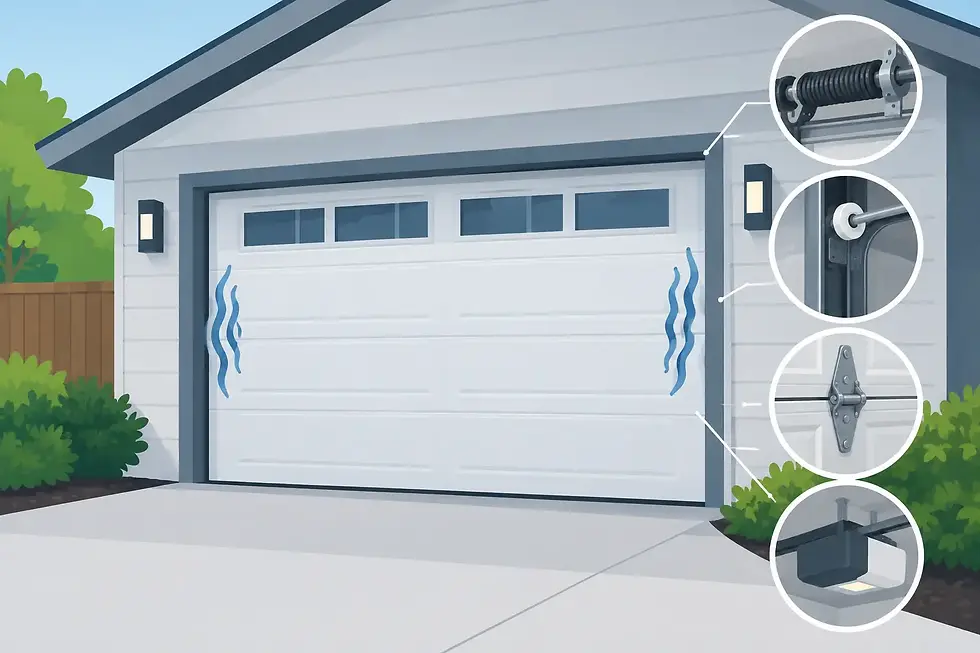
If your current garage door is loud, thin, dented, shaky in the wind, or hard to keep sealed, upgrading to an insulated model may make more sense than putting more money into an outdated door. This is especially true if the door is older, has repeated panel damage, or never had insulation to begin with.
For homeowners and property managers in the St. Louis area, this usually comes down to one question: do you want to keep patching a weak door, or do you want one that works better every day? A properly selected insulated door does more than improve appearance. It changes how the whole garage feels and functions.
Davis Door Service helps customers sort through those choices without the sales pitch. If a repair makes sense, that is the right call. If a replacement gives you better value, quieter operation, and better year-round performance, that is worth knowing before you spend money twice.
The best insulated garage doors are the ones that fit your building, your budget, and how you actually use the space. If your garage is attached, busy, or pulling comfort out of the rooms around it, insulation is not an upgrade for show. It is one of the few door features you will notice every single day.


Comments