

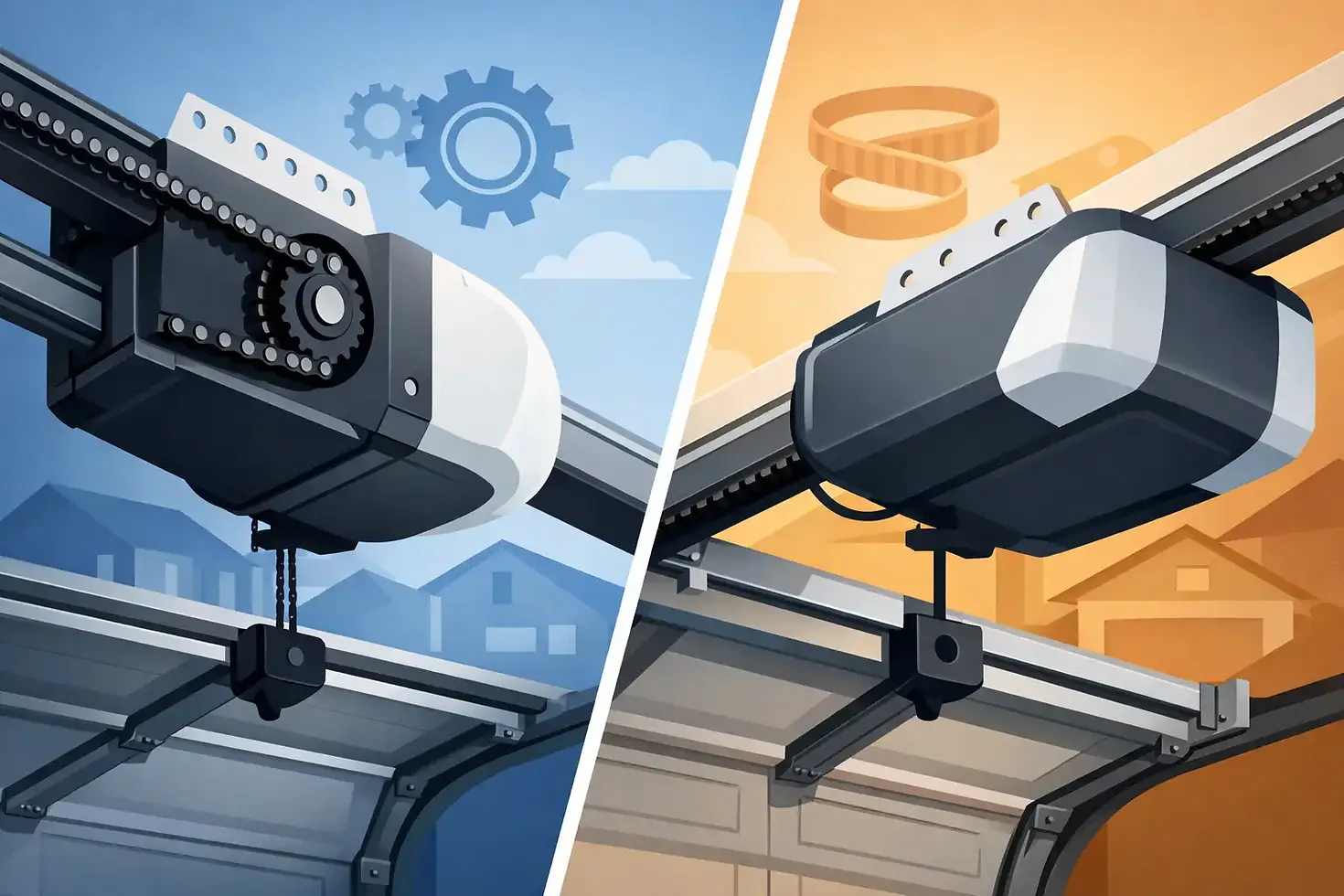
Chain Drive vs Belt Drive Garage Openers

Your garage door opener usually gets ignored until it starts rattling the whole house, hesitates halfway up, or wakes someone up at 5:30 a.m. If you are weighing chain drive vs belt drive, the right choice comes down to more than price. Noise, door size, daily use, and how close the garage sits to living space all matter.
Most property owners are not looking for a lesson in opener engineering. They want something that works, fits the budget, and does not turn into another repair problem six months from now. That is the practical way to look at it.
Chain drive vs belt drive: what is the difference?
Both systems do the same basic job. They move the trolley that opens and closes the garage door along a rail. The difference is in what pulls that trolley.
A chain drive opener uses a metal chain, similar in concept to a bicycle chain. A belt drive opener uses a reinforced rubber, fiberglass, or polyurethane belt. That single difference changes how the opener sounds, how much vibration it creates, how much maintenance it may need, and what kind of door it handles best.
Neither one is automatically better for every property. A lot of bad advice online treats this like a one-size-fits-all decision. It is not.
When a chain drive opener makes more sense
Chain drive openers have been around a long time because they are dependable, widely available, and usually cost less upfront. If your main concern is getting a solid opener at a lower price, chain drive is often the first option people look at.
They also tend to make sense for heavier doors. If you have a large sectional door, a solid wood door, or a commercial-style setup that sees tougher use, a chain drive system is often a practical fit. The strength is not magic - motor size still matters - but chain drive units are commonly paired with applications where durability is the priority.
The trade-off is noise. Metal chain movement creates more sound and more vibration than a belt. In a detached garage, that may not matter much. In an attached garage under a bedroom, it usually matters a lot.
Chain drive systems can also require more adjustment over time. Chains may loosen and need tensioning. They can be rugged, but rugged does not always mean quiet or low-maintenance.
When a belt drive opener is worth the extra cost
Belt drive openers are built for smoother and quieter operation. If your garage is attached to the house, or there is a bedroom, nursery, office, or bonus room above it, belt drive is often the better investment.
The difference is noticeable. You still hear the door move, especially if the rollers or hinges are worn, but the opener itself produces far less rattling and vibration. For a lot of homeowners, that alone justifies the higher price.
Belt drives also tend to feel more refined in daily use. The movement is smoother, and many newer belt drive units are packaged with features homeowners already want, like soft start and stop, smart controls, and quieter DC motors. That said, you should not assume every belt drive opener is premium just because it uses a belt. Build quality still varies by model.
The biggest downside is cost. Belt drive units usually cost more to buy and install. If your garage is detached and noise is not an issue, the added expense may not buy you much practical value.
Noise is not a small issue
A lot of people treat garage door noise like a minor annoyance until it starts affecting sleep, remote work, or tenants. Then it becomes urgent.
If your opener is directly under a bedroom, chain drive can be the wrong kind of savings. The lower upfront price disappears fast when you are listening to that metal-on-metal chatter every day. The same goes for townhomes, duplexes, and rental properties where noise complaints can become a recurring problem.
On the other hand, if the garage sits away from the main living area, chain drive noise may be completely acceptable. This is why the layout of the property matters just as much as the opener itself.
Cost, repairs, and long-term value
If you are comparing chain drive vs belt drive on price alone, chain drive usually wins the upfront battle. But that does not always mean it is the better value.
A quieter opener can be worth more in a home where the garage is used several times a day. If the household has early commuters, kids, shift workers, or anyone sensitive to noise, belt drive often pays off in daily convenience. It is not about luxury. It is about avoiding a constant nuisance.
Repair history also matters. A well-installed chain drive opener can last a long time. A well-installed belt drive opener can too. In real service calls, the bigger issue is often not whether the opener uses a chain or belt. It is whether the opener was matched properly to the door, installed correctly, and supported by a door system that is in good shape.
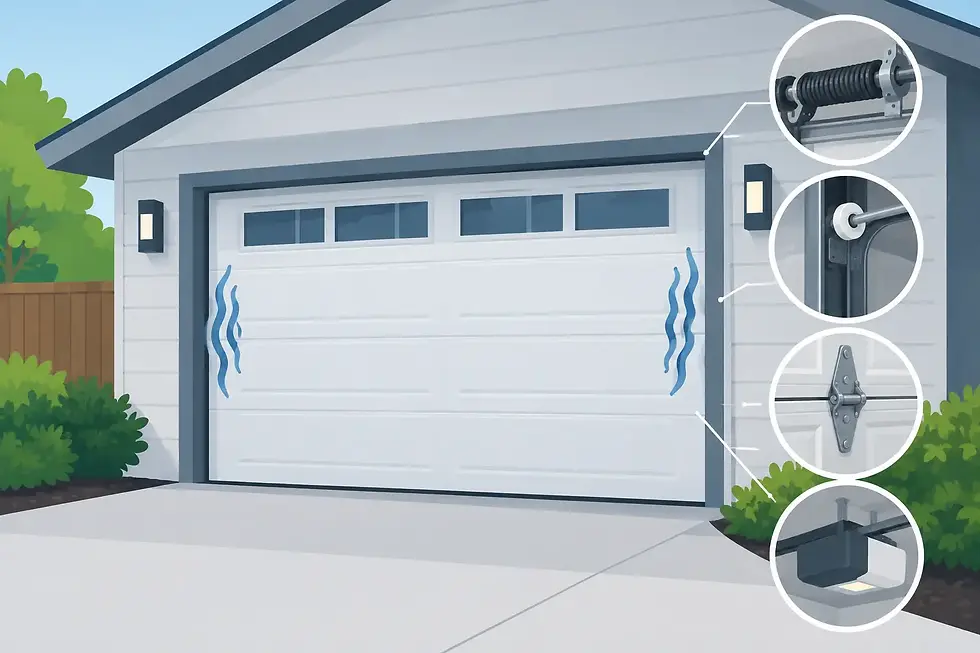
An opener gets blamed for plenty of problems caused by bad springs, worn rollers, bent tracks, or poor balance. If the door is heavy or binding, either opener type will struggle.
For heavier doors, the opener is only part of the story
People often ask which is stronger, chain or belt. That sounds like the key question, but it can be misleading.
Yes, chain drive has a reputation for handling heavier work. That reputation is earned. But opener strength depends on motor rating, door weight, spring condition, and installation quality too. A heavy door with the wrong springs will wear out any opener faster, no matter what drive system you choose.
If you own a commercial building or manage multiple properties, it is even more important to look at the whole system. High-cycle use, oversized doors, and security demands can change the recommendation fast. In those cases, the right answer is usually based on usage, not preference.
Which opener is better for St. Louis homes?
For many attached homes in St. Louis, belt drive is a smart choice because garages are often integrated into the house and used constantly. The quieter operation makes a real difference, especially in neighborhoods where homes were built with bedrooms close to the garage wall or directly above it.
For detached garages, workshops, investment properties, or budget-focused replacements, chain drive still makes a lot of sense. It is proven, practical, and usually easier on the upfront cost.
If your current opener is old, loud, or unreliable, the better question may not be chain or belt. It may be whether the whole system needs to be evaluated before replacing parts one at a time. A noisy opener is sometimes a symptom, not the root issue.
How to make the right call
If you want the shortest answer, here it is. Choose chain drive if budget and durability come first and noise is not a major concern. Choose belt drive if quiet operation matters and the garage is attached to living space.
That said, there are gray areas. A homeowner with a heavy double door may still prefer belt drive if the opener is properly matched. A property manager may choose chain drive for a detached structure where cost control matters more than sound. A business may need something based on duty cycle rather than residential preferences.
The best decisions are made after looking at the actual door, not just a product box.
At Davis Door Service, we see this firsthand on service calls. Customers often call asking for a new opener type, but the smarter move is checking the balance, hardware, and wear points before installing anything. That avoids paying for a quieter or stronger opener only to have the same underlying door problems keep causing trouble.
If your garage door is loud, slow, jerky, or inconsistent, do not guess based on price alone. The right opener should match the door, the property, and how you use it every day. That is what keeps the fix simple, the cost fair, and the door dependable when you need it most.
A good opener should make your day easier, not louder.


Comments