


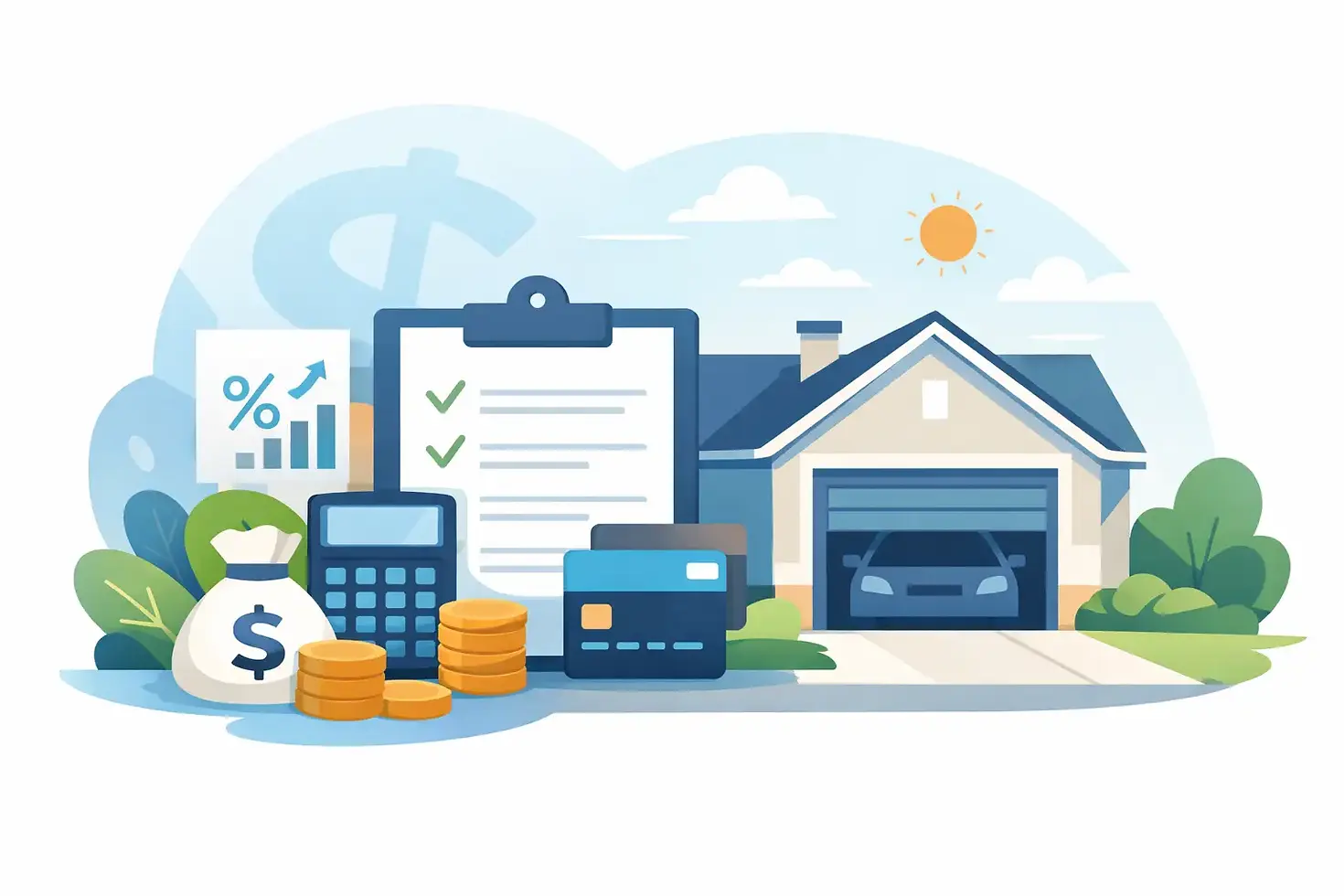
Garage Door Financing Options Explained
- Mike Davis
- Apr 25
- 6 min read

A garage door usually stops working at the worst possible time - when your car is trapped inside, your building can’t secure properly, or a broken spring turns a normal morning into a problem that needs attention now. That is exactly why garage door financing options matter. When the repair or replacement can’t wait, financing can help you fix the problem now instead of putting it off and risking more damage, more downtime, or a safety issue.
For most homeowners and property managers, the real question is not whether a garage door costs money. It is how to handle that cost without getting buried in a payment plan that looks good on day one and expensive a few months later. A smart financing decision starts with understanding what you are paying for, what kind of financing is being offered, and whether the monthly payment actually fits your budget.
When garage door financing options make sense
Not every garage door job needs financing. If you are dealing with a minor tune-up, a sensor adjustment, or a small hardware replacement, paying out of pocket may be the simplest route. But larger repairs and full replacements can hit differently, especially when the issue is sudden.
A snapped torsion spring, failed opener, damaged sections, off-track door, or full door replacement can quickly turn into a bigger invoice than expected. Commercial doors can be even more urgent because delays affect operations, deliveries, staff access, and site security. In those cases, financing is less about convenience and more about getting the door working again without disrupting cash flow.
Financing can also make sense when replacing an old door instead of repeatedly repairing it. If a door has chronic problems, worn sections, outdated components, or poor insulation, putting more money into patchwork repairs may not be the best long-term move. Spreading the cost of a new installation over time can be more practical than paying for one repair after another.
The most common garage door financing options
There is no single financing setup that works for everyone. The right fit depends on the size of the job, your credit profile, and how fast you need the work done.
In-house or contractor-arranged financing
Many garage door companies work with financing partners or offer payment plans through third-party lenders. This is often the most direct option because it is tied to the service itself. You get an estimate, review available terms, and decide whether the monthly payment works before the job moves forward.
The benefit is speed. If your garage door is stuck, unsafe, or unusable, quick approval matters. The trade-off is that terms vary. Some plans offer promotional periods or lower monthly payments up front, while others carry higher interest over time. Always look past the payment amount and check the total repayment cost.
Credit cards
A credit card can work for smaller repairs or when you already have an available line of credit. It can be useful if you plan to pay the balance off quickly, especially with a promotional rate.
The downside is obvious. If the balance sits too long, interest can add up fast. For a large installation or commercial door expense, a standard credit card is often the most expensive route unless you have a strong introductory offer and a clear payoff plan.
Personal loans
Personal loans are common for home-related expenses, including garage door replacement. They usually come with fixed monthly payments and a set repayment period, which makes budgeting easier.
This can be a solid option if you want predictable terms and are shopping independently instead of using financing at the point of service. Approval, rates, and funding speed depend on the lender. If the door issue is urgent, timing matters. Waiting several days for funds may not be ideal when the property is unsecured or access is blocked.
Home equity borrowing
For larger home improvement projects, some homeowners consider a home equity loan or line of credit. This may offer a lower rate than unsecured borrowing, but it is usually slower and more paperwork-heavy than contractor financing or a personal loan.
For one garage door repair, this is often more effort than it is worth. For a broader renovation that includes the garage door, it may make more sense. Still, using home equity for a smaller urgent repair is not always the most practical solution.
What affects approval and pricing
Financing is not just about whether you get approved. It is also about the terms you are offered.
Credit score plays a major role, but it is not the only factor. Lenders may also look at income, existing debt, payment history, and the size of the requested amount. A smaller repair bill is often easier to finance than a full custom installation with upgraded materials and opener systems.
You should also expect the price of the job itself to influence your decision. A basic repair with a short payoff window is different from financing a full insulated door replacement with new tracks, springs, hardware, and operator. The larger the project, the more important it becomes to compare total cost, not just monthly payment.
Questions to ask before you agree to financing
A low monthly number can hide a bad deal. Before you sign anything, ask how long the repayment term lasts, what the interest rate is, whether there are deferred interest terms, and whether there are penalties for paying early.
You should also ask what the total amount paid will be over the life of the agreement. That one number gives you a much clearer picture than a sales pitch built around affordability. If the door company cannot explain the financing clearly and directly, that is a red flag.
For urgent repairs, it is easy to focus only on getting the door fixed today. That urgency is real, but financing should still be transparent. A straightforward service company should be able to explain the job cost and the payment options without pressure, confusion, or surprise fees.
Financing a repair versus financing a replacement
This is where a lot of people get stuck. If the repair is affordable and solves the problem safely, financing may not even be necessary. But if the door is old, unreliable, or has multiple failing parts, paying for another repair may only delay the bigger expense.
A replacement usually costs more up front, but it may lower future repair costs, improve security, reduce noise, and boost curb appeal. For homeowners planning to stay put, that can be worth financing. For property managers, a replacement may cut repeat service calls and tenant complaints. For commercial operators, a dependable overhead door can mean fewer disruptions and better daily operations.
The right choice depends on the condition of the existing door, not just today’s invoice. A good estimate should make that distinction clear instead of pushing the higher-ticket option every time.
Why local service matters when financing is involved
Financing is only part of the decision. The other part is who is doing the work. If the company is hard to reach, slow to schedule, or vague about pricing, financing will not fix that problem.
That is why many St. Louis customers prefer working with a local company that handles repairs and installations directly, offers same-day service when available, and gives a clear estimate on site. When you are making payments over time, you want confidence that the job was done right the first time.
A family-owned, owner-operated company without salesmen tends to keep the conversation simpler. You are not getting pushed through a script. You are getting real answers about what failed, what it takes to fix it, and whether financing is actually a sensible choice for your situation. That practical approach is one reason customers call Davis Door Service when speed, fairness, and accountability matter.
Choosing the best garage door financing options for your budget
The best garage door financing options are the ones that solve the immediate problem without creating a bigger one later. If you need a fast repair to restore access and security, quick approval may be the priority. If you are planning a full replacement, lower total borrowing cost may matter more than same-day funding.
There is no perfect answer for every property. A homeowner replacing an aging garage door has different needs than a warehouse manager trying to keep a roll-up door operational. What matters is getting clear pricing, reviewing the terms carefully, and matching the payment plan to the life of the repair or installation.
If the door is unsafe, unreliable, or completely down, waiting too long can cost more than financing ever would. A clear estimate, honest guidance, and a payment option that fits your budget can get the job handled now - without turning a necessary repair into a financial mess later.
The right financing plan should give you breathing room, not buyer’s remorse.


Comments