


Garage Door Installation Guide for Homeowners
- Mike Davis
- May 28
- 6 min read

A garage door is one of the biggest moving parts in your home, and when it is installed wrong, you feel it fast. The door binds, the opener strains, the tracks shift, and what looked like a money-saving project turns into a repair call. That is why a solid garage door installation guide matters - not just for getting the door up, but for making sure it runs safely, seals properly, and lasts.
If you are replacing an old door or planning a first-time install, the main question is simple: should you handle it yourself or call a pro? For a lot of homeowners, the honest answer comes down to weight, spring tension, time, and risk. Some parts of the job are straightforward. Others can put you in the ER or leave you with a crooked, noisy door that never quite works right.
Garage door installation guide: start with the real decision
Before you think about panels, tracks, or openers, decide what kind of project this is. A lightweight manual door on a small detached garage is very different from an insulated sectional door with a new opener, new tracks, and high-cycle springs. Both are called installations, but they are not the same level of work.
The biggest trade-off is control versus risk. A DIY install can save labor money if you already have the right tools and enough experience reading measurements, leveling tracks, and managing hardware. Hiring a professional costs more up front, but it usually saves time, avoids repeat adjustments, and lowers the chance of expensive damage to the door, opener, or framing.
For most households, spring systems are the line you should take seriously. Torsion and extension springs store enough force to cause severe injury if they are mishandled. If your installation includes spring setup or spring conversion, that is usually the point where professional service makes the most sense.
What to check before installation day
A new garage door should fit the opening, the headroom, and the way you actually use the space. That sounds basic, but plenty of installation problems start before the first bolt goes in.
Measure the opening width and height, then check side room, headroom, and backroom. Headroom is especially important because it affects the track setup and opener compatibility. If your ceiling is low or you have ductwork, shelving, or lighting in the way, the standard hardware package may not work. That does not mean the project is impossible. It means the hardware and installation plan need to match the garage.
Material matters too. Steel doors are durable and practical for most homes. Wood has curb appeal but needs more upkeep and costs more. Insulated doors are worth a serious look if the garage is attached to the house, used as a workspace, or exposed to hard temperature swings. In St. Louis, where weather can change fast, insulation and weather sealing are not extras for many homeowners. They are part of making the door perform well year-round.
You also need to know whether the existing framing is sound. Rot, cracking, uneven concrete, or loose jambs can throw off the whole install. A new door installed on bad framing is like putting new tires on a bent axle. It might move, but not the way it should.
The basic order of a garage door installation
A good garage door installation guide should be clear about one thing: this is a system, not a single part. The door, tracks, rollers, springs, cables, brackets, and opener all depend on each other.
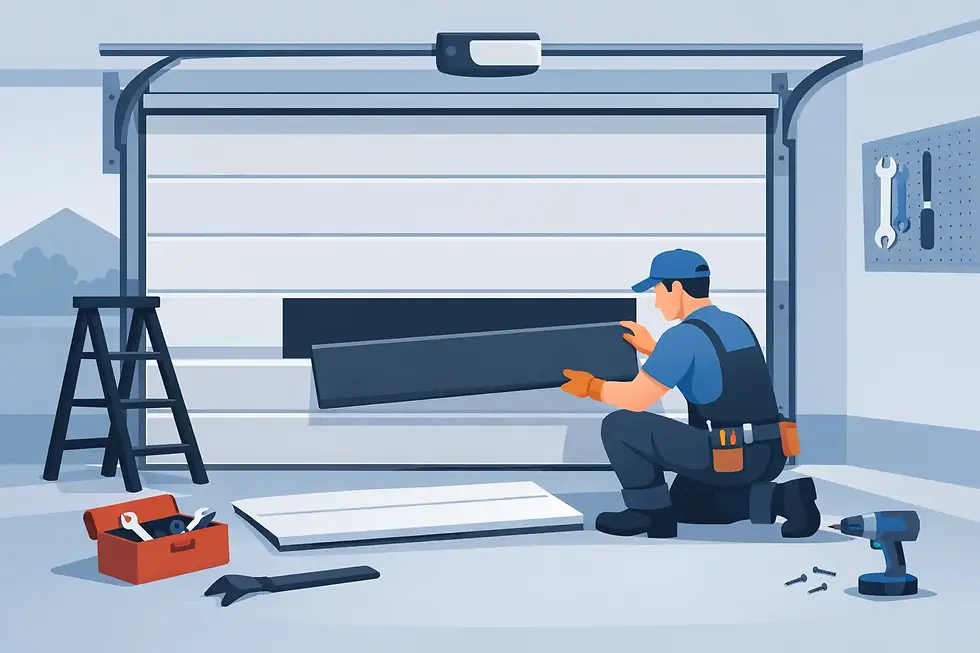
Most installations follow a similar sequence. The old door comes down first, along with old tracks and hardware if they are being replaced. The opening is inspected and prepped. Then the bottom section is set in place and leveled carefully because every panel above it depends on that first section being right.
From there, the rest of the sections are stacked and secured with hinges. Vertical tracks go in next, followed by curved and horizontal tracks. Rollers are inserted as the sections are assembled. Once the track system is aligned, the spring system, shaft, drums, and cables are installed and tensioned. After that, the opener is mounted or reconnected, travel limits are adjusted, and the full system is tested.
That is the clean version. In real life, this is where problems show up. The opening may be out of square. The floor may slope. The old opener may not be strong enough for the new door weight. Tracks may need fine adjustment to stop rubbing or binding. A fast install is good, but only if it is also accurate.
Where DIY installs usually go wrong
Most failed installs do not fail because the homeowner did nothing right. They fail because one small mistake early in the job affects everything else.
Leveling errors are common. If the bottom panel is slightly off, the gap at the floor gets worse as the door closes. Track alignment is another issue. Tracks that are too tight, too loose, or not plumb can make the door shake, wear rollers early, or jump the track under stress. Cable routing mistakes can create uneven lifting, and improper spring tension can make the door too heavy to lift safely or too eager to fly upward.
The opener is another trouble spot. People often assume the opener does the heavy lifting. It does not. A properly balanced door should lift with minimal force. If the spring system is wrong, the opener works harder than it should and wears out sooner.
There is also the issue nobody likes to talk about - time. A job that looks like a Saturday project can spill into Sunday night, especially if a bracket is missing, the measurements are off, or the existing framing is not ready. If the garage is your main entry point, losing access for a day or two is more than an inconvenience.
When professional installation is the better move
If the door is insulated, oversized, unusually heavy, or tied to a torsion spring setup, professional installation is usually the smart call. The same goes for commercial doors, roll-up systems, and jobs involving damaged tracks, bad framing, or opener replacement at the same time.
Professional installers do more than put parts together. They spot fit issues before they become failures. They know when the opening needs adjustment, when the hardware package is wrong for the space, and when a new opener is necessary. They also test balance, safety reversal, cable tension, and track alignment as part of the job, not as an afterthought.
That matters when your garage door is used every day, often several times a day. One rushed install can lead to noisy operation, poor sealing, broken rollers, frayed cables, and avoidable service calls down the line.
For homeowners and property managers who need the job done quickly, local service has another advantage. You are not waiting around for a sales chain to fit you into a schedule. A company like Davis Door Service is built around same-day availability, straightforward pricing, and actual hands-on service rather than a long sales process.
Cost, timing, and what affects the final price
Installation cost depends on the size of the door, the material, insulation level, spring type, track setup, and whether the opener is included. Removing an old door, upgrading hardware, repairing framing, or switching to a different spring system can also change the total.
This is where cheap quotes can get misleading. One installer may price the basic setup only, while another includes haul-away, new hardware, adjustment, weather seal, and opener calibration. The lower number is not always the better deal if it leaves out parts of the job you will end up paying for anyway.
Timing also depends on complexity. A standard residential replacement can often be completed in a few hours. Custom doors, structural issues, or commercial systems take longer. If you need a fast turnaround because the garage is stuck open or the property is unsecured, speed matters just as much as price.
A practical garage door installation guide for choosing the right installer
If you are hiring out the work, ask plain questions and expect plain answers. Will they replace all necessary hardware or just reuse what is there? Are they setting springs to match the new door weight? Will they check opener compatibility, balance, and safety features before they leave? If something is off after installation, who handles the callback?
You also want accountability. Owner-operated companies tend to be more direct because the person standing behind the work is usually closer to the job itself. That matters when you need fast answers, not excuses.
A good installer should explain the options without pushing you into upgrades you do not need. Sometimes the right answer is a basic steel door with dependable hardware. Sometimes it is worth paying more for insulation, quieter rollers, or a stronger opener. It depends on how the garage is used, how long you plan to stay in the home, and how much daily wear the door will see.
The best installation is not the fanciest one. It is the one that fits the opening correctly, runs safely, seals out weather, and holds up under real use. If you are weighing a garage door project right now, keep the goal simple: get it installed once, get it installed right, and make sure the people doing the work are easy to reach when it counts.


Comments