


Garage Door Spring Replacement Example
- Mike Davis
- May 15
- 6 min read

A garage door usually gives you a warning before the spring finally lets go. Maybe the door starts feeling heavy. Maybe it jerks on the way up, slams shut, or leaves a gap when closed. If you are searching for a garage door spring replacement example, you probably want more than a definition. You want to know what the real job looks like, what a technician actually does, what can change the price, and when it makes sense to stop wrestling with the door and call for service.
Here is a straight answer. Spring replacement is not just swapping one part for another. The spring is what counterbalances the full weight of the door. When it breaks or loses tension, the opener is forced to do a job it was never built to do, cables can come loose, rollers can wear faster, and the door can become unsafe in a hurry.
A real garage door spring replacement example
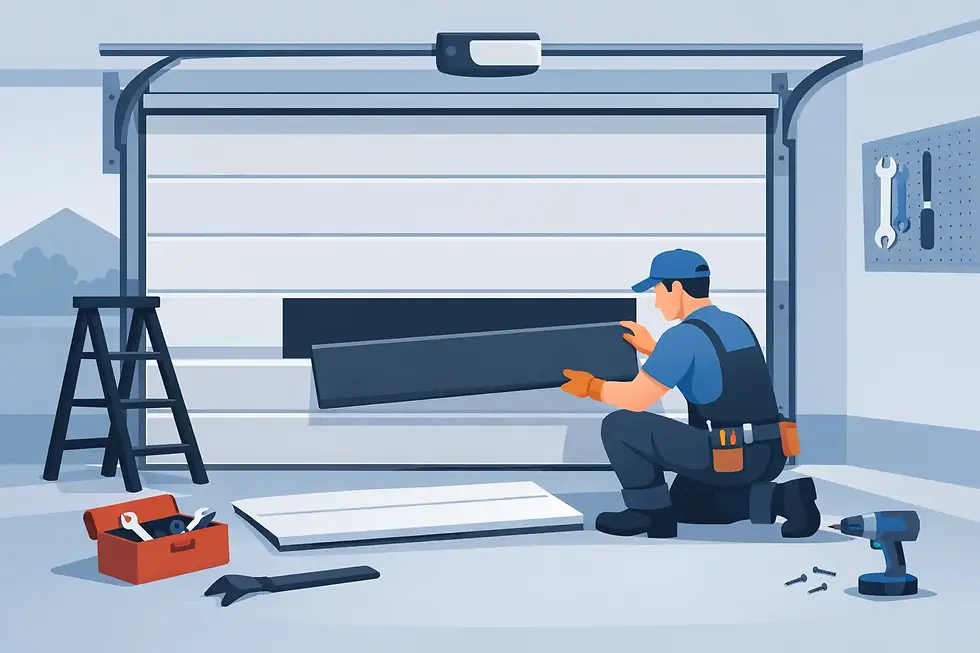
Picture a standard two-car steel sectional garage door on a home in the St. Louis area. The homeowner hears a loud bang from the garage at night and assumes something fell off a shelf. The next morning, the door only lifts a few inches, then stops. The opener strains, the top section shudders, and the emergency release reveals the real problem right away - the door is suddenly dead weight.
On inspection, one torsion spring above the door has snapped cleanly, leaving a visible gap in the coil. The cables are still on the drums, but one side has started to loosen because the spring tension is gone. This is a common service call.
In a proper repair, the technician does not just throw on any spring that fits the shaft. First, the door size, height, weight, track setup, and existing hardware are checked. Then the broken spring is matched with the correct wire size, inside diameter, and length so the door is balanced correctly. If the door originally used a two-spring system, both springs are usually replaced together. That is not a sales trick. If one spring broke, the other has likely gone through the same number of cycles and may be close behind.
Once the right springs are installed, the shaft, center bearing, end bearing plates, cables, drums, and brackets should also be inspected. Springs fail, but they are often not the only tired part on the door. After winding the new springs to the proper tension, the technician tests door balance by hand, checks opener force settings, and makes sure the door opens and closes smoothly without drifting, binding, or dropping.
That is what a real garage door spring replacement example should look like - diagnose the cause, install the correct springs, inspect related parts, and balance the door so the whole system works like it should.
What changes from one spring replacement job to another
Not every spring job is the same, and that is where homeowners get confused. One door may use torsion springs mounted above the opening. Another may use extension springs that stretch along the horizontal tracks. A heavier insulated door, carriage-style door, or wood door may need a different spring setup than a basic steel model.
Cycle life matters too. Standard springs are often rated for a set number of open-and-close cycles. If the garage door is your main entry point, those cycles add up fast. A household with multiple drivers can wear out springs much sooner than a homeowner who rarely uses the garage. In some cases, paying a little more for higher-cycle springs makes sense because it cuts down on repeat failures.
Then there is the condition of the rest of the system. If a cable is frayed, a drum is worn, or the bottom bracket is bent, replacing the spring alone may not solve the full problem. A good service company should tell you plainly what is broken, what is worn, and what is optional versus necessary.
Garage door spring replacement example: what you should expect on service day
The service visit should be simple and direct. The technician confirms the problem, inspects the full door, explains what failed, and gives you a clear price before work starts. If the spring is broken but the opener has also been damaged from trying to lift the door, that should be explained up front.
The repair itself is precise work. Torsion springs carry serious tension, and that is why this is not a casual DIY job. A mistake during winding or loosening can cause injury or damage fast. For extension spring systems, containment cables and pulley condition also matter. Either way, the goal is not just movement. The goal is safe, balanced movement.
After replacement, the door should lift by hand with reasonable effort and stay near mid-height without racing up or slamming down. The opener should sound normal, not strained. The door should sit level on the floor and seal properly. If it still runs crooked or acts heavy, the job is not finished.
What a bad spring replacement job looks like
This is worth saying because people in a hurry often get burned. A bad spring replacement job may use the wrong size spring just to get the door moving again. At first, the door works. Then the opener starts wearing out, cables begin slipping, and the door becomes noisy or unbalanced.
Another common problem is replacing only the broken spring in a two-spring system without discussing the condition of the second one. That can save a little money today and create another emergency call soon after. There is also the issue of skipped inspection. If no one looks at bearings, cables, rollers, hinges, and alignment, you may be fixing half the problem.
A reliable company should be able to explain the difference between a temporary patch and a proper repair in plain language. No pressure. No salesman routine. Just the facts and the price.
Cost depends on the door, not just the spring
People often ask for a spring replacement price over the phone, and sometimes that is possible as a rough range. But exact pricing depends on what the door actually needs. Single doors and double doors use different setups. Torsion and extension systems are priced differently. Heavier doors need different springs. Emergency timing can also affect service cost.
The cheapest quote is not always the best deal if it leaves worn parts in place, uses undersized springs, or skips balancing the door. On the other hand, not every door needs a full overhaul. This is where honest service matters. You want the broken part fixed right without turning a spring repair into a shopping list.
For homeowners and property managers, the practical question is simple: will this repair get the door operating safely and reliably again, and is the price clear before the work starts? That is the standard to hold any company to.
When to call right away
If the door is stuck closed and your car is trapped, the issue is urgent. If the door is stuck open, it is more than inconvenient - it is a security problem. If one side of the door is hanging lower, a cable has jumped, or the opener is grinding while the door barely moves, stop using it.
A broken spring can quickly turn into a bigger repair if the opener keeps forcing the issue. We see this on same-day calls all the time. What started as a spring failure becomes a burned-out opener gear, damaged top section, or thrown cable because the door kept being run after the balance was gone.
For businesses with roll-up or overhead doors, downtime hits even harder. A nonworking door can delay deliveries, block access, and create security headaches. In those situations, speed matters as much as workmanship.
Why local, same-day service matters
Garage door problems rarely happen on a good schedule. They happen when you are leaving for work, picking up kids, opening for business, or trying to lock up for the night. That is why same-day and emergency service are not just marketing lines. They matter when the door is your main access point.
For St. Louis homeowners, getting a local company that knows the area and shows up prepared can make the difference between a one-visit fix and a full day lost. Davis Door Service handles spring repairs with that mindset - get there fast, explain the problem clearly, fix what needs fixing, and don’t waste the customer’s time.
If your garage door just got heavy, loud, crooked, or completely stuck, don’t keep testing it to see if it will work one more time. A spring problem rarely gets better on its own, and the fastest repair is usually the one handled before other parts start failing too.


Comments