


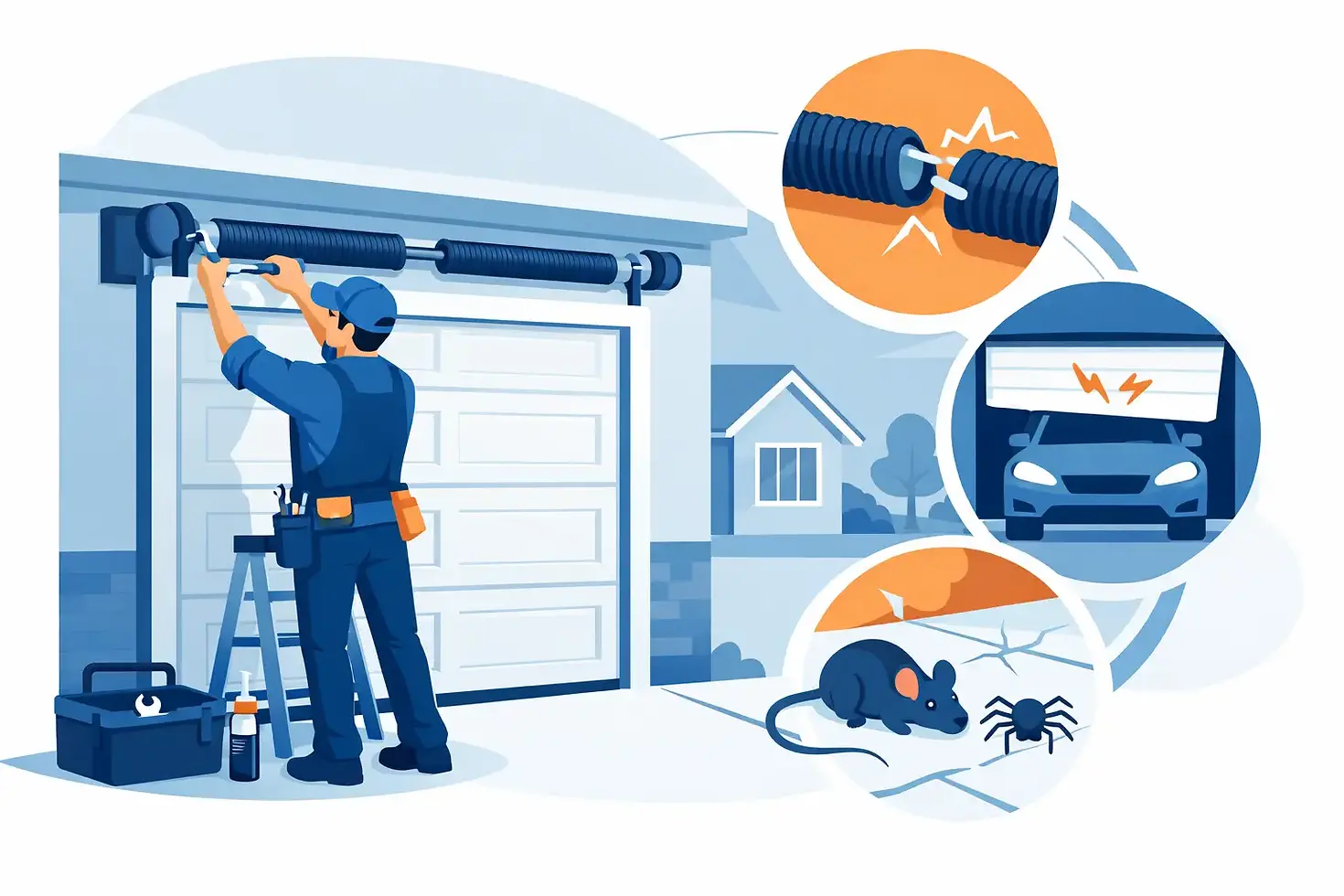
Garage Door Tune Up Service: What It Prevents
- Mike Davis
- May 7
- 6 min read

A garage door usually gives you fair warning before it quits. It gets louder. It hesitates. It shakes on the way up. Maybe it reverses for no clear reason, or the opener sounds like it is working twice as hard as it should. That is where a garage door tune up service earns its keep. It is not about selling parts you do not need. It is about catching wear early, keeping the door safe, and avoiding the kind of failure that turns a normal day into an urgent repair call.
For homeowners, that means fewer surprises when you are trying to get to work or get the kids out the door. For commercial properties, it means less downtime and less risk around a door that gets used over and over all day. A tune-up is simple in theory, but it matters because garage doors are heavy, spring-loaded systems with multiple moving parts that wear at different rates.
What a garage door tune up service actually includes
A proper garage door tune up service is part inspection, part adjustment, and part preventative maintenance. The goal is to make sure the door moves smoothly, stays balanced, and does not put unnecessary strain on the opener or hardware.
That usually starts with checking the springs, cables, rollers, hinges, brackets, and tracks for wear or damage. A technician should also test door balance, because an unbalanced door is one of the fastest ways to burn out an opener or create a safety issue. If the door does not stay where it should when manually lifted, something is off.
The moving parts should be lubricated with the right products, not just sprayed with whatever happens to be in the garage. Tracks are inspected and cleaned as needed, hardware is tightened, and the opener settings may be checked and adjusted. Safety sensors should be tested, along with the auto-reverse function. If the weather seal is worn out or the bottom seal is no longer doing its job, that may come up too.
Some doors need only light adjustment and maintenance. Others reveal bigger issues once the system is inspected closely. That is why tune-ups matter. They often catch a frayed cable, weakening spring, loose hinge, or misalignment before it turns into a snapped part or a door stuck halfway open.
Why skipping a garage door tune up service gets expensive
Most people do not think about their garage door until it stops moving. That is understandable. If it opens and closes, it is easy to assume everything is fine. But garage door systems wear down gradually, and the damage rarely stays isolated.
A dry roller can lead to noisy operation at first, then extra vibration, then faster wear on nearby hardware. A door that is slightly out of balance can force the opener to work harder every cycle. Loose bolts can turn into track issues. Small problems stack up. By the time the door fails, the repair is often larger than it needed to be.
There is also the safety side. Springs and cables operate under high tension. If those parts are wearing out, guessing is not a good plan. A tune-up gives you a clear picture of what is safe to keep using, what needs adjustment, and what should be replaced before it fails.
That does not mean every tune-up turns into a major repair. Sometimes the best outcome is simple confirmation that the door is in good shape. But if there is a problem, it is usually better to find it during maintenance than during an emergency.
Signs your door is overdue for service
You do not need to wait for a breakdown to schedule service. Most garage doors show signs when they need attention, and the warning signs are usually obvious once you know what to look for.
Excess noise is one of the most common clues. Squeaking, grinding, rattling, or popping sounds often point to worn rollers, loose hardware, poor lubrication, or spring stress. Jerky movement is another red flag. If the door shudders, sticks, or moves unevenly, it is worth having it checked.
Slow response from the opener can also mean more than an electrical issue. If the door seems heavy, reverses unexpectedly, or only opens partway, the system may be out of balance or dealing with worn components. Gaps under the door, visible cable wear, bent track sections, and sagging door panels are all good reasons to stop putting it off.
Age matters too. If your door gets used several times a day and has not had a tune-up in a long time, there is a good chance maintenance is overdue even if it is still operating.
How often should you schedule tune-up service?
For most homes, once a year is a smart baseline. That gives a technician a chance to catch normal wear before it becomes a larger issue. If the garage door is your main entry point and gets heavy daily use, twice a year may make more sense.
Commercial doors are a different story. Usage is often much higher, and wear adds up faster. A warehouse roll-up door or a service bay door may need more frequent maintenance based on traffic, size, and operating conditions.
It also depends on the environment and the history of the door. If the system has older springs, recurring alignment issues, or noticeable noise, waiting a full year may not be ideal. The right schedule is based on use, age, and condition - not just the calendar.
What tune-ups can fix and what they cannot
A tune-up can solve a lot of performance issues when the core components are still in decent condition. It can reduce noise, improve travel, correct minor balance problems, tighten loose hardware, and help the opener run more efficiently. It can also identify worn parts before they fail.
What it cannot do is reverse serious damage. If a spring is broken, a cable is snapped, the track is bent, or the opener motor is failing, that is no longer maintenance. That is repair work. The same goes for doors that are off track or have structural panel damage.
That distinction matters because some companies use the word tune-up loosely. A real service appointment should tell you whether your door simply needs maintenance or whether a repair is needed now. Clear answers matter more than sales talk.
Why local service matters when the door starts acting up
When a garage door gets loud or unreliable, most people are not shopping for a lecture. They want someone to show up, inspect the system, and tell them plainly what is wrong and what it will take to fix it. That is especially true when the problem is affecting security, access, or business operations.
A local company that handles tune-ups and repairs every day in the St. Louis area is usually in a better position to respond quickly and stand behind the work. That matters when a maintenance visit turns up a failing spring or a cable that should not wait another week. It also matters when you want straightforward pricing instead of a high-pressure pitch.
That hands-on, service-first approach is exactly why many property owners call Davis Door Service. The goal is not to make a basic maintenance appointment complicated. It is to keep the door working safely, fix what needs fixing, and move fast when timing matters.
Should you try DIY maintenance?
There are a few basic things a property owner can do, like keeping the area around the tracks clear, listening for changes in noise, and watching how the door moves. You can also test the photo-eye sensors and pay attention if the door feels unusually heavy.
But tune-up work has limits when it comes to do-it-yourself maintenance. Springs, cables, and balance adjustments are not beginner jobs. Even experienced homeowners should be careful about what they touch. A heavy door under tension can cause serious injury fast.
If you are just wiping down tracks or checking for visible wear, that is one thing. If the door is out of balance, noisy, crooked, or unreliable, service is the safer move.
The real value of a tune-up
The best time to deal with a garage door problem is before it becomes one. A garage door tune up service gives you that window. It helps keep the system quieter, safer, and more dependable, and it gives you a chance to address wear before you are stuck with a door that will not open when you need it most.
If your door is making noise, moving rough, or simply has not been looked at in a while, getting it checked is a practical move, not an extra expense. A little maintenance now is often what keeps you from needing urgent repair later.


Comments