


How to Fix Off Track Garage Door Safely
- Mike Davis
- Apr 26
- 6 min read

A garage door that jumps the track usually does not give you much warning. One minute it is opening like normal, the next it is crooked, jammed, hanging loose on one side, or grinding hard enough to make you stop everything. If you are searching for how to fix off track garage door problems, the first thing to know is simple - this can go from inconvenient to dangerous fast.
An off-track garage door is not just a nuisance. It can put stress on the rollers, hinges, cables, tracks, and opener all at once. In some cases, the door is still partly supported. In others, it is one bad move away from dropping, twisting, or binding so tightly that forcing it only makes the repair more expensive. That is why the right first step depends on how far off track the door is, how heavy it is, and whether any cables or hardware are already damaged.
What an off-track garage door usually looks like
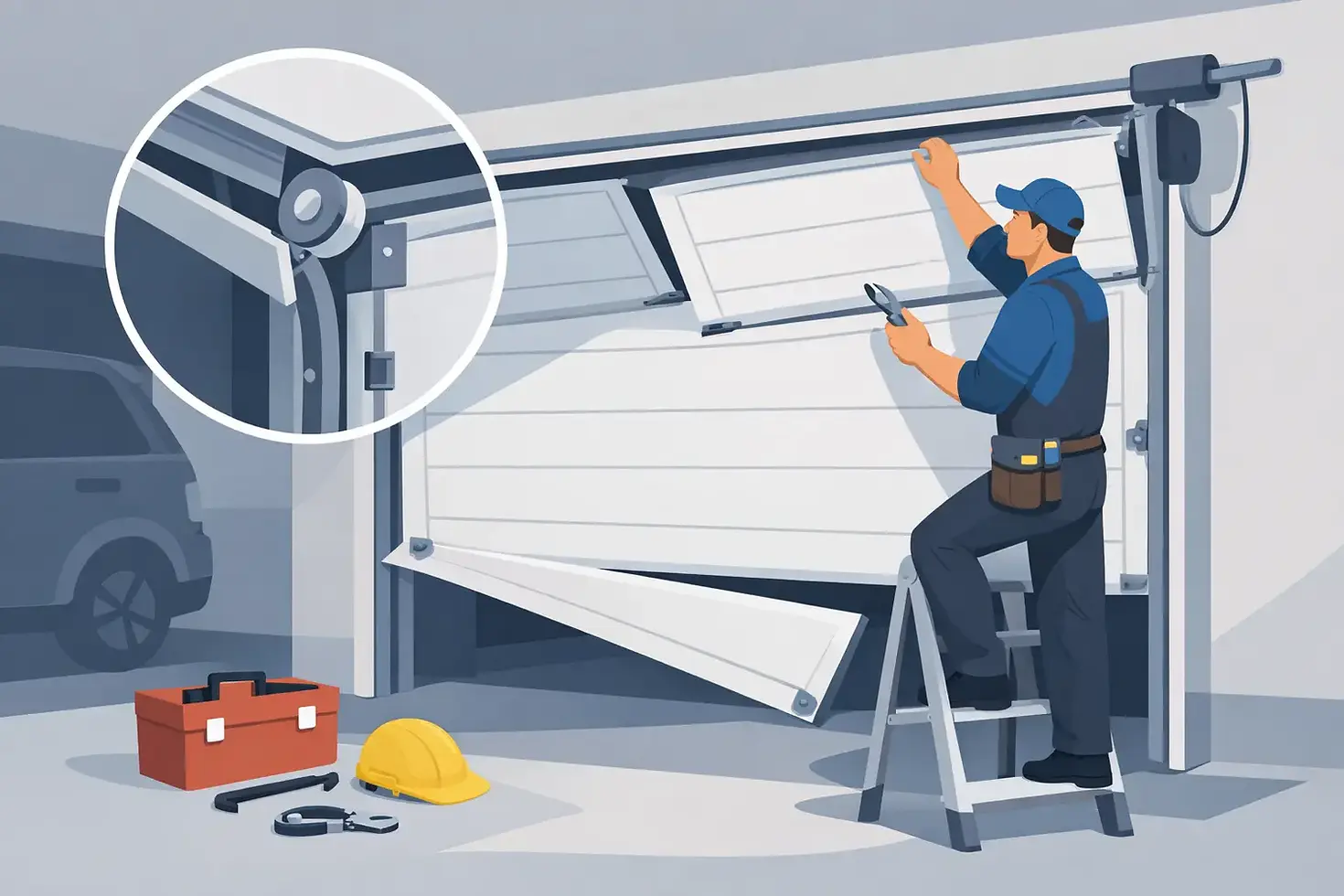
Most homeowners notice the problem when the door looks uneven or will not move more than a few inches. One side may sit lower than the other. A roller may be visibly outside the metal track. The top section might lean forward, or the bottom section might get stuck while the opener keeps trying to pull.
You may also hear scraping, popping, or a hard grinding sound. Sometimes the opener hums but the door does not move. Other times the door opens halfway and then jams. If a cable has come loose or wrapped badly around the drum, the whole system can shift out of alignment in a hurry.
Before you try to fix an off track garage door
Start by stopping all use. Do not keep hitting the wall button. Do not pull the emergency release and try to muscle the door open unless you are sure it is fully supported and the springs and cables are intact. A garage door can weigh a few hundred pounds, and the spring system is under high tension even when the door is not moving.
If the door is hanging at an angle, if a cable is loose or snapped, if a roller stem is bent, or if a track is twisted away from the wall, this is no longer a basic adjustment. It is a safety issue. Same goes for commercial overhead doors and heavier insulated residential doors. At that point, the smart move is to stop and get same-day service before the damage spreads.
How to fix off track garage door problems when the issue is minor
There are a few situations where a careful reset may work. This only applies if the door is only slightly off track, the rollers and hinges look intact, the track is not badly bent, and the cables are still properly wrapped and under tension.
Step 1: Disconnect power to the opener
Unplug the opener or shut off power at the breaker if needed. You do not want the motor engaging while you inspect the door. If the door is stuck in a partly open position, support it before doing anything else. Locking pliers on the track below the bottom roller can help keep it from dropping, but only if the track itself is secure.
Step 2: Inspect the tracks, rollers, and brackets
Look for obvious obstructions first. Small debris, a loose bolt, or built-up grime can push a roller out of line. Then check whether the track is simply spread open at one spot or whether it is bent along a wider section. A slight gap can sometimes be corrected. A crushed or twisted track usually needs replacement.
Also inspect the rollers. If a nylon wheel is broken, if the stem is bent, or if the hinge is pulling away from the panel, do not keep going. Re-seating a damaged roller without fixing the underlying part will not hold.
Step 3: Open the track slightly if one roller slipped out
For a light-duty issue, use pliers to gently open the edge of the track only at the point where the roller came out. You are not trying to reshape the whole track. Just create enough space to guide the roller back in. Once the roller is seated, use pliers or a rubber mallet to close the track back to its original shape.
This is where people often make the repair worse. Too much force can kink the track, and even a small distortion can cause the next roller to bind. If the metal does not move cleanly, stop there.
Step 4: Move the door by hand only if it is stable
With the opener disengaged and the door fully supported, carefully move the door a few inches by hand to see whether the rollers travel smoothly. The motion should feel controlled, not jerky. If you feel binding, hear loud popping, or see the track flexing, do not force it.
If everything looks aligned again, reconnect the opener and test the door once. Stay clear of the opening while it cycles. If it still jerks, tilts, or sounds rough, the problem is not solved.
When not to attempt a DIY off-track repair
This is the part many articles skip. A lot of off-track calls are not just track problems. They start with a snapped cable, worn roller, broken hinge, bent vertical track, loose mounting brackets, or a spring issue that shifts the full weight of the door to one side.
If you see a hanging cable, a gap in the torsion spring, frayed lift cables, cracked hinges, or a top section buckling, do not touch it. The same goes for doors that came off track after being hit by a car, backed into by a trailer, or forced while frozen shut. Those situations usually involve structural damage, not just alignment.
Trying to force the door closed for security can make a repair turn into a full panel replacement. In a commercial setting, that downtime can cost more than the repair itself.
Why garage doors come off track in the first place
Most off-track problems are caused by wear, impact, or uneven tension. Rollers wear down over time and stop tracking smoothly. Bolts loosen. Tracks shift. Cables stretch or fray. One side starts carrying more load than the other, and eventually a roller jumps the rail.
Impact is another big one. A trash can, bumper, lawn equipment, or forklift can nudge the lower track enough to create a problem that does not show up until the next cycle. Poor maintenance also plays a role. Dry rollers, loose brackets, and ignored noise are often the warning signs before the door actually derails.
Weather matters too. In the St. Louis area, temperature swings can expose weak hardware fast. A door that already has worn rollers or marginal alignment may finally fail during heavy use, freezing conditions, or after a storm-related power outage where the opener gets used differently than normal.
What a professional repair usually includes
A proper off-track service is not just putting the roller back in place and leaving. The technician should inspect the full system, including tracks, rollers, hinges, cables, drums, springs, brackets, and opener settings. If one part failed, there is often a reason.
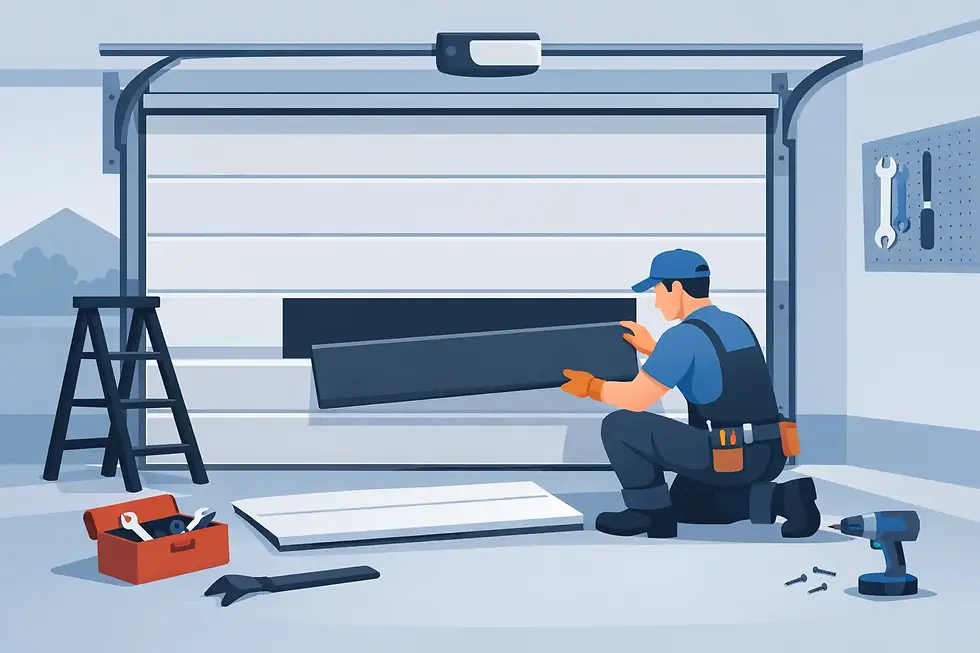
In many cases, the repair includes resetting the door, replacing damaged rollers or hinges, straightening or replacing track sections, securing loose brackets, and checking the spring balance so the door runs evenly again. If the opener was strained during the failure, that should be checked too.
That matters because a door can appear fixed but still be unsafe. If it is not balanced or the hardware is still worn, it may come off track again within days or weeks.
How to keep it from happening again
You do not need a complicated maintenance plan. What helps most is catching small issues early. If the door starts sounding rough, moving unevenly, or shaking more than usual, get it looked at before it turns into an off-track problem.
Keep the track area clear, but do not grease the tracks heavily. The rollers should move cleanly, and the hardware should stay tight. If you notice frayed cables, cracked rollers, or panels that are starting to bow, handle it before the door is forced through another cycle.
For homeowners, that means less chance of getting stuck before work or late at night. For property managers and commercial operators, it means less downtime and fewer emergency calls.
Fast help matters with an off-track door
If the door is visibly crooked, stuck open, dragging on one side, or has a loose cable, the safest answer is not to keep experimenting. It is to get a trained garage door technician out quickly, secure the opening, and fix the root cause the right way. Companies like Davis Door Service handle these calls every day with same-day service, straightforward pricing, and the kind of hands-on repair work that keeps a bad situation from getting more expensive.
If your garage door is off track, trust what the door is telling you. Stop using it, avoid quick fixes that add damage, and get the problem addressed before a simple repair turns into a full replacement.


Comments