


How to Secure Garage Door After Break In
- Mike Davis
- Jun 13
- 6 min read

A garage break-in usually leaves more than a bent panel or broken lock behind. It leaves your home or building exposed, your routine disrupted, and one big question hanging over everything: how to secure garage door after break in without wasting time or missing a weak spot.
The first priority is simple - make the opening secure again before nightfall, before you leave for work, or before the property sits unattended. Some fixes are temporary and some need professional repair right away, but the order matters. If you handle the immediate risks first, you can stop a bad situation from getting worse.
How to secure garage door after break in: first steps
Start by checking whether the door can be safely moved at all. If the track is bent, a cable is loose, a roller is out, or the door is hanging unevenly, do not keep forcing it up and down. A damaged garage door can drop, jam, or pull more parts out of alignment.
If the door still closes, shut it completely and disconnect the opener. That prevents someone from using the remote system while you assess the damage. Unplug the opener if needed and lock the door manually if the lock still works.
If the door will not close because of impact damage, treat the garage like a breached entry point. Move valuables away from the opening, block visibility from outside if possible, and secure the area from the inside with temporary bracing until repairs can be made. For many homeowners and property managers, this is the point where same-day service matters most.
Check the real point of entry
Not every garage break-in happens through the main door panels. Sometimes the damage is at the side service door, the top section, the emergency release, the opener rail, or the bottom corners where older doors can be pried up.
Look closely at the latch, lock bar, hinges, rollers, tracks, weather seal, and the frame around the opening. If the opener was engaged during the forced entry, inspect the trolley and arm as well. A garage door can look closed but still be easy to pry open again if the locking or reinforcement points are compromised.
Disable remotes and keypad access if needed
If a remote was stolen from a vehicle, or if the break-in suggests someone may know your keypad code, erase programmed remotes and reset access codes right away. This step gets overlooked all the time. People focus on visible damage and forget the electronic access that may still be active.
Modern openers usually allow you to clear memory and reprogram devices. If your system is older or acting unpredictably after the break-in, opener troubleshooting may be part of the repair, not a separate issue.
Temporary ways to secure the garage door
If you are waiting on repair service, the goal is to make the door difficult to move and the opening difficult to exploit. Temporary security is not the same as a finished repair, but it can reduce the immediate risk.
If the door is closed, you may be able to secure it by placing locking pliers on the track just above one roller on each side. That can help prevent the door from being lifted. If your door has a manual slide lock and the surrounding metal is not torn out, engage it. For added support, some owners brace the inside with a cut-to-fit 2x4 against the floor and framing, but only if it can be done safely and without creating more damage.
If a panel is cracked or punched through, cover exposed openings from the inside so no one can reach in to release locks or access interior handles. Plywood can work as a short-term barrier when anchored to stable framing, not just damaged sheet metal.
What you should not do is force a broken sectional door to travel under power, tie off a damaged spring system, or keep cycling an opener that is straining. That often turns a break-in repair into a bigger and more expensive job.
When the damage is more than cosmetic
A lot of forced-entry damage looks minor from the driveway. Then the door starts jerking, dragging, or sitting crooked. That usually means the impact affected more than the panel.
A bent track can keep rollers from moving correctly. A snapped cable can leave one side unsupported. A damaged bottom bracket can become a real safety issue. If the opener rail is twisted or the trolley is damaged, the motor may run but the door may not secure properly. Springs matter too. If a torsion or extension spring was already worn, the stress of the break-in may be what finally finished it off.
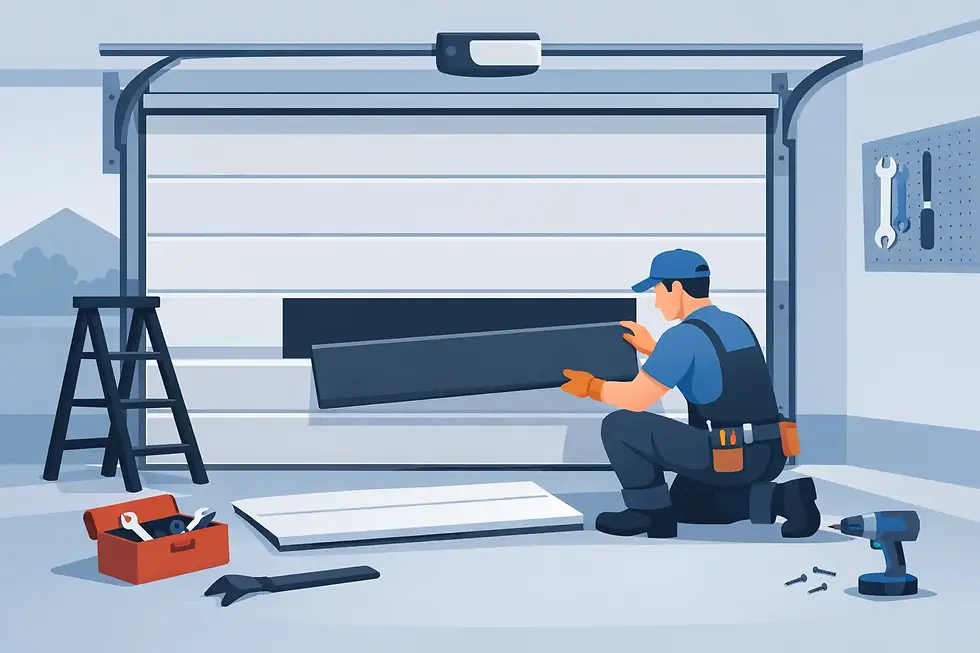
That is why the best repair approach depends on what actually failed. In some cases, replacing one section and resetting the opener is enough. In others, the safer call is replacing multiple structural parts or the entire door, especially if the frame, sections, and lifting hardware all took a hit.
Reinforce weak points before it happens again
Once the door is operable, the next job is making it harder to breach a second time. This is where prevention matters more than appearances.
Older doors with thin panels are easier to kick, pry, or bow inward. Reinforcement struts can help on some sectional doors, especially if the top panel flexes around the opener attachment point. Stronger interior slide locks, upgraded center locks, and better side latches may also make sense depending on the door style.
For homes, one of the most overlooked upgrades is shielding the emergency release from outside access. A common break-in method involves fishing the release cord with a tool through the top of the door. A simple guard or repositioning can reduce that risk. You still need the release to function in an emergency, so this is something to do correctly, not improvised.
For commercial properties, security may depend less on a single lock and more on the condition of the entire system. Roll-up doors, operator controls, bottom bars, jambs, and curtain slats all have their own failure points. If the building depends on that opening for deliveries or daily operations, downtime becomes a business problem fast.
Think beyond the garage door itself
After a break-in, the garage should be treated as part of your overall property security. If the garage connects directly to the home, check the entry door from garage to house. Make sure that door has a solid deadbolt and the frame is not compromised.
Lighting matters too. So does camera coverage, trimmed sight lines, and keeping remotes out of parked vehicles. If your garage is detached, think about what is stored inside and whether exterior access points need better locks or better visibility from the house.
There is always a balance here. The strongest hardware in the world does not help much if an old door is already weak, off-track, or misaligned. Security upgrades work best when the door itself is in proper working order.
When to call for emergency garage door service
If the door will not close, will not stay down, has broken springs or cables, came off track, or has opener damage after a forced entry, this is not a wait-until-next-week problem. The property is exposed, and trying to patch it yourself can create a safety hazard.
That is where a local service company with 24/7 emergency service and same-day availability makes a real difference. In St. Louis, especially when weather, work schedules, or overnight security are factors, speed matters just as much as the repair itself. A straightforward inspection can tell you whether the fix is a cable replacement, track repair, opener reset, section replacement, or full door replacement.
A good service call should also be practical, not salesy. You need to know what failed, what can be fixed today, what should be replaced, and what will actually secure the opening. That direct approach is one reason many local owners and property managers prefer working with a family-owned company like Davis Door Service instead of a high-pressure chain.
What to do after the repair is complete
Once the garage door is repaired, test every access method. Make sure the wall control works, remotes are reprogrammed, keypad codes are changed, and manual locks engage cleanly. Watch the door open and close fully. It should move evenly, seal at the bottom, and stay aligned in the tracks without strain or hesitation.
Then take five extra minutes and remove the conditions that made the break-in easier. Do not leave remotes in unlocked cars. Do not ignore noisy operation or worn hardware. Do not put off replacing a weak panel because the door still technically opens. Small issues have a habit of becoming security issues at the worst possible time.
If your garage door has been forced, bent, pried, or damaged, treat it like the security problem it is, not just a repair ticket. The faster you secure the opening and fix the weak points correctly, the sooner your property gets back to normal.


Comments