


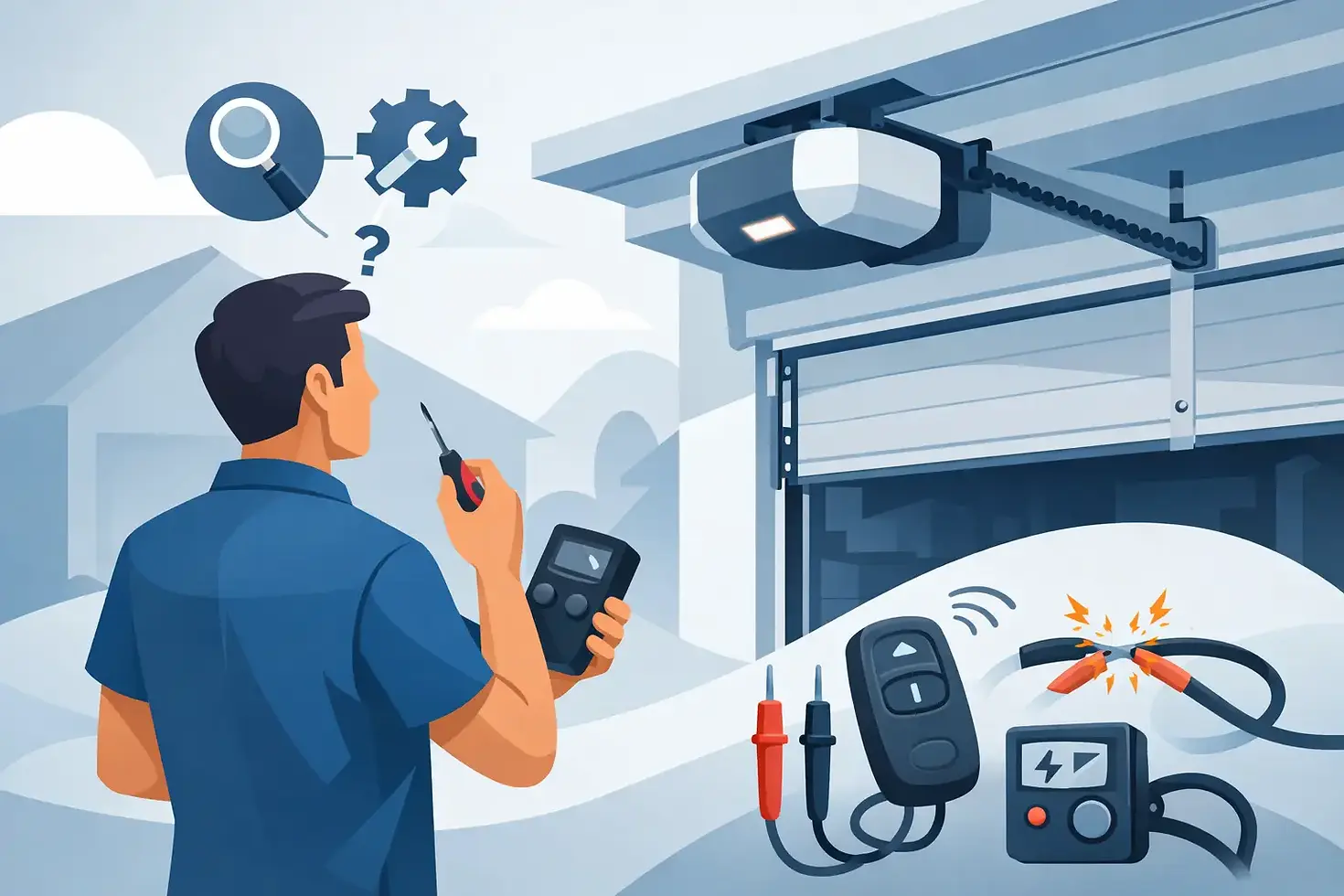
How to Troubleshoot Garage Door Opener
- Mike Davis
- May 24
- 6 min read

When your garage door opener quits at the worst possible time, you do not need a lecture. You need to know how to troubleshoot garage door opener problems fast, rule out the simple stuff, and figure out whether this is a quick fix or a repair that should not wait.
Most opener issues come down to a handful of causes - power loss, sensor trouble, remote problems, travel limit settings, or a door that is too heavy or jammed to move. The trick is checking them in the right order. Start with the safe, obvious items first. If the door is crooked, slamming, hanging on one side, or you hear a loud snap from the spring area, stop right there. That is not an opener problem you should test through.
How to troubleshoot garage door opener step by step
Before touching anything, keep people clear of the opening and do not stand under the door. If your opener is straining, grinding, or only lifting the door a few inches, forcing it to run can burn out the motor or make a broken door component worse.
Start with power. If the opener is completely dead - no lights, no sound, no response - check whether it is plugged in. It sounds basic because it is, but outlets get bumped loose all the time. If it is plugged in, test the outlet with another device or check the breaker. Some garage ceiling outlets are tied to GFCI protection, so a tripped outlet elsewhere in the garage or nearby utility area can shut the opener off.
If the opener has power but the remote does nothing, try the wall button. This one step tells you a lot. If the wall button works and the remote does not, the opener itself is likely fine. You are probably dealing with a remote battery, lost programming, signal interference, or a lock setting on the wall console.
That lock feature gets missed constantly. Many wall controls have a vacation or lock button that disables remotes while still allowing wall control. If the remotes suddenly stopped working after someone cleaned the garage, pressed buttons while moving storage, or kids were playing nearby, check that first.
Check the remote and keypad
Replace the remote battery even if you are not sure it is dead. Weak batteries cause short range, delayed response, or total failure. If you have a keypad, make sure the code still works and the unit is not faded, cracked, or full of moisture. Outdoor keypads take abuse from weather, and sometimes the issue is not programming at all - it is just a worn-out keypad.
If battery replacement does not fix it, reprogram the remote or keypad to the opener. The exact steps vary by brand, but most use a learn button on the motor unit. If one remote works and another does not, that points to the remote itself, not the opener.
When the opener runs but the door does not move
If you press the button and hear the motor running but the door stays put, look at the emergency release. The red cord may have been pulled, disconnecting the trolley from the opener carriage. This can happen accidentally if someone pulled it during a power outage and never re-engaged it.
In many cases, you can reconnect it by moving the door and trolley until they latch back together. But do not stop there. If the release keeps disengaging or the opener struggles once reconnected, something else may be wrong with the door.
A garage door opener is not designed to lift a dead-weight door by itself. Springs do the heavy lifting. If a torsion spring is broken, the opener may hum, move a little, then stop. You may also notice the door feels extremely heavy by hand. That is a stop-and-call situation. Spring repair is dangerous and not a DIY job.
Watch for signs the problem is the door, not the opener
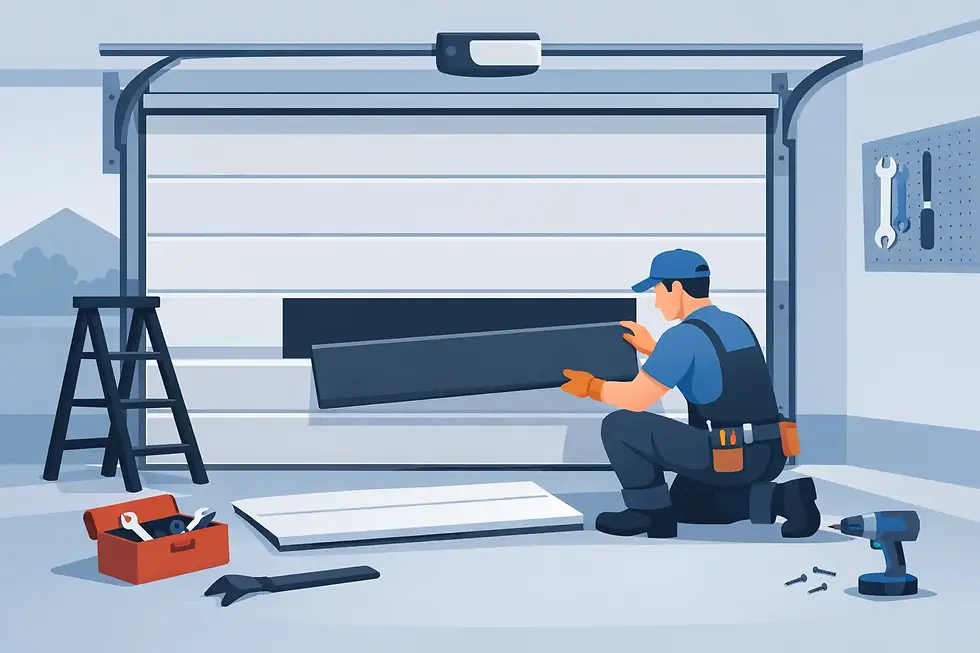
A lot of people assume the opener failed when the real issue is a door component. If the door is off track, has a snapped cable, binds halfway, or leans to one side, the opener may just be reacting to unsafe resistance. In that case, replacing the opener will not solve the problem.
One easy test is to disconnect the opener using the emergency release and try lifting the door manually, only if the door appears level and the springs are intact. It should move smoothly and stay fairly balanced around mid-height. If it is hard to lift, crashes down, or jams, the door hardware needs attention before the opener does.
Sensor problems are one of the most common causes
If the door starts down and then reverses, or it refuses to close unless you hold the wall button, the safety sensors are the first thing to inspect. These photo eyes sit near the bottom of the tracks on each side of the door. They must be aligned and able to see each other.
Clean the sensor lenses with a soft cloth. Dirt, cobwebs, and water spots can block the beam. Then check whether one sensor got bumped out of position. Even a small shift can break alignment. Most sensors have indicator lights. When aligned properly, the lights are usually steady. Blinking or dark lights often mean misalignment, loose wiring, or failed sensors.
Sunlight can also cause trouble in some garages, especially at certain times of day. If the door acts up only in bright afternoon light, glare may be hitting the receiving sensor. Sometimes a minor adjustment solves it. Sometimes the sensors or brackets need replacement.
Check for damaged wires
Low-voltage sensor wires are easy to nick with tools, storage bins, lawn equipment, or even pests. If the sensor lights will not come on, inspect the wire path for cuts, staples driven too tightly, or loose connections at the opener head. This is one of those repairs that looks small but can waste a lot of time if you guess wrong.
Travel limits and force settings can cause strange behavior
If the door closes partway, reverses for no clear reason, or slams to the floor and pops back up, the opener settings may be off. Travel limits tell the opener where the fully open and fully closed positions are. Force settings control how much resistance the opener tolerates before stopping or reversing.
These settings matter, but they are not the place for random adjustments. If you turn the force up too high to push through a sticking door, you are masking a problem and creating a safety risk. A better approach is to inspect the tracks for debris, listen for binding, and make sure the door rolls smoothly first.
If the door hardware looks normal and the opener still stops short or reverses, the travel setting may need a small correction. Make small changes only, test after each adjustment, and stop if the behavior gets worse.
Noise, hesitation, and slow movement
An opener that has become loud, jerky, or inconsistent is often warning you before total failure. Chain-drive systems may need tension adjustment. Belt drives can wear. Screw drives can dry out or accumulate debris. Rollers and hinges on the door itself can also create drag that sounds like opener trouble.
Lubrication helps, but only in the right places. Use a garage-door-safe lubricant on hinges, rollers, and metal moving parts as recommended. Do not grease the tracks heavily. Tracks should be clean, not sticky.
If the opener hums and struggles, pay attention to age. Many openers last a long time, but logic boards, capacitors, gears, and motor components do wear out. Sometimes repair makes sense. Sometimes replacement is the smarter value, especially if the unit lacks modern safety and security features.
How to troubleshoot garage door opener problems without making them worse
The fastest way to turn a manageable repair into a bigger bill is forcing the opener to keep cycling when the door is under stress. If the door is stuck, uneven, or obviously heavy, stop using the remote. Repeated attempts can strip gears, bend parts, or burn out the motor.
The same goes for springs and cables. If you see a gap in a torsion spring, a dangling cable, or a roller out of the track, do not try to muscle the door open for one more trip. Those are high-tension components and they fail hard.
For homeowners and property managers, the real goal is not just getting the door moving again. It is getting it moving safely, reliably, and without damage to the opener or the door system around it.
If you have worked through the basics and the opener still will not cooperate, it is time for a hands-on inspection. In the St. Louis area, that usually means the difference between a same-day fix and a door that leaves your car trapped overnight. A local company like Davis Door Service can tell quickly whether you are dealing with sensors, settings, the opener itself, or a bigger door issue behind it.
A garage door opener problem can look minor right up until the door will not close, will not open, or drops weight where it should not. If something feels off, trust that instinct and get it checked before the next button press turns a small repair into an emergency.


Comments