


What Causes Garage Door Spring to Snap?
- Mike Davis
- May 6
- 6 min read

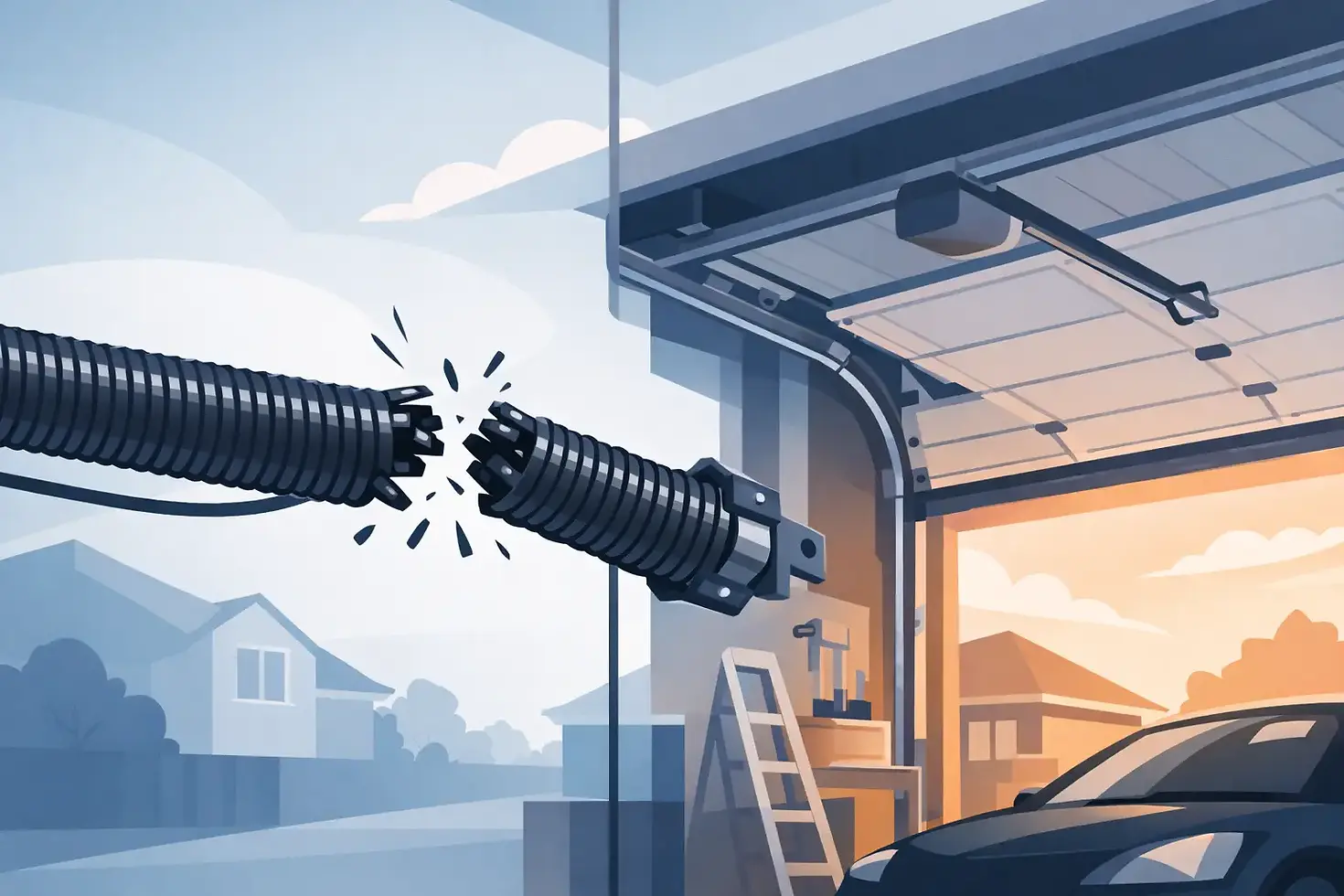
You usually do not get much warning before it happens. One day the door sounds normal, and the next it slams shut, hangs crooked, or refuses to open at all. If you are asking what causes garage door spring to snap, the short answer is wear. The real answer is a little more specific, and knowing the difference can help you avoid a dangerous breakdown and a more expensive repair.
A garage door spring does the heavy lifting every time the door opens and closes. When that spring breaks, the opener is suddenly trying to move a door that can weigh well over a hundred pounds. That is why a snapped spring is not just an inconvenience. It is a safety issue, and in many cases it puts your car, your schedule, and your property access on hold immediately.
What causes garage door spring to snap most often?
Most broken springs fail because they have reached the end of their cycle life. A spring is rated for a certain number of open-and-close cycles. Every trip up and down counts as one. If your household uses the garage as the main entry point, those cycles add up fast.
A standard spring may last years under normal use, but normal use varies more than people think. A door used twice a day is under very different stress than a door used eight or ten times a day. Homes with multiple drivers, school drop-offs, deliveries, and frequent errands wear springs down much faster.
Once the metal has flexed enough times, it weakens. Eventually it loses the ability to hold tension and snaps. That break often sounds like a loud bang, which is why many homeowners think something hit the house.
Age, rust, and poor maintenance all matter
Cycle life is the big reason, but it is not the only reason. Rust is one of the most common accelerators. When a spring starts to rust, the metal surface degrades and creates more friction during movement. That added friction puts extra stress on the coil and speeds up failure.
Moisture in the garage can make this worse, especially in spaces that are not climate controlled. Seasonal temperature swings also play a role. In colder weather, metal can become more brittle, and an already weakened spring is more likely to give out when the door first moves.
Poor maintenance shortens spring life too. Springs need periodic inspection and proper lubrication. Without that, friction increases and small problems go unnoticed until the spring finally breaks. A lot of homeowners in St. Louis do not think about garage door maintenance until the system stops working, which is understandable, but springs are one of those parts that rarely fail at a convenient time.
Wrong spring size can lead to early failure
Not every snapped spring is just old age. Sometimes the wrong spring was installed in the first place. If a spring is too weak for the door, it works harder than it should every time the door moves. If it is too strong, the door can become unbalanced and create stress across the whole system.
This is especially common when a past repair was done quickly without matching the spring to the exact door weight and height. The door may seem to work for a while, but the spring is under the wrong load from day one. That kind of mismatch can cause premature snapping, worn cables, opener strain, and uneven door movement.
For heavier insulated doors, wood doors, or commercial overhead doors, spring sizing matters even more. Bigger doors need more than a generic fix.
A door out of balance puts extra strain on the spring
Garage door systems work as a team. Springs, cables, rollers, tracks, hinges, and the opener all affect one another. If the door is out of balance, the spring may be doing far more work than it was designed to do.
A door can go out of balance for several reasons. Cables may start to fray. Rollers may drag. Tracks may shift slightly. Hardware can loosen over time. Even small alignment problems change the load on the spring.
This is one reason two doors installed around the same time do not always wear out at the same rate. One may be moving cleanly and evenly, while the other is fighting resistance every cycle. That added resistance shortens spring life.
Can weather cause a garage door spring to snap?
Weather usually is not the root cause by itself, but it can be the final trigger. Cold temperatures are tough on aging metal. A spring that is already weakened by years of use, rust, or poor balance may snap during a cold morning when the metal contracts and loses flexibility.
Heat matters too, just in a different way. Long-term exposure to temperature changes can affect lubrication, increase wear on moving parts, and contribute to overall system stress. Weather tends to expose an existing weakness rather than create a brand-new problem.
So if your spring breaks during a freeze, the weather probably helped, but the spring was already on borrowed time.
Warning signs before a spring breaks
Sometimes there is no obvious warning. Other times, the system gives you clues that should not be ignored.
If the door starts feeling unusually heavy, opens a few inches and stops, or slams shut faster than normal, the spring may be failing. You may also hear more creaking, popping, or straining noises than usual. Gaps in a torsion spring are another clear sign once a break happens, but before that point you may notice the door looks uneven or the opener sounds like it is working too hard.
Another red flag is when the opener can no longer lift the door smoothly. Many people assume the opener is the problem, when the real issue is that the spring is no longer carrying its share of the load.
If you see any of these signs, stop using the door until it is checked. Trying to force it open can damage the opener, bend panels, or create a bigger safety hazard.
Why snapped springs are not a DIY repair
This is where a lot of people get into trouble. Garage door springs are under serious tension. Releasing or rewinding that tension the wrong way can cause severe injury. This is not like replacing a hinge or tightening a bracket.
Torsion springs in particular require the correct tools, the correct replacement size, and the correct tension setting. Extension springs also carry risk, especially if safety cables are missing or damaged. Beyond the spring itself, you need to know whether the break caused collateral damage elsewhere in the system.
A proper repair is not just putting on a new spring. It includes checking balance, cable condition, door travel, hardware wear, and opener operation. If the root cause is ignored, the new spring may not last the way it should.
How to help your springs last longer
You cannot make springs last forever, but you can avoid early failure. Regular inspection, basic lubrication, and correcting balance issues early all help. If the door starts sounding different or moving differently, get it checked before the spring snaps.
It also helps to replace both springs at the same time when you have a two-spring system. If one breaks, the other is usually close behind in age and wear. Replacing only one may save a little upfront, but it often leads to another service call sooner than expected.
For high-use households or commercial properties, upgrading to higher-cycle springs can make sense. It depends on how often the door is used and how long you plan to stay in the property. A better spring costs more upfront, but frequent-use doors usually justify it.
When to call for service
If the door will not open, looks crooked, or you heard a loud bang from the garage, stop and assume a spring may have broken. Do not pull emergency release cords casually, and do not try to lift the door unless a trained technician has confirmed it is safe.
For homeowners and property managers, speed matters because a stuck door can trap vehicles, leave the building unsecured, or interrupt business operations. That is why same-day service matters on spring repairs. A fast, accurate fix gets the door safe again without adding more damage.
Davis Door Service handles broken spring repairs with the kind of direct, no-salesman approach most people want when the door is down. The goal is simple: identify the cause, replace the right parts, and get the door working safely again without wasting your time.
If you have been wondering what causes garage door spring to snap, the answer is usually a mix of wear, stress, and ignored warning signs. The good news is that a quick inspection at the first sign of trouble can prevent a full breakdown - and that is always easier than dealing with a door that will not move when you need it most.


Comments