


Why Is Garage Door Noisy? Causes You Should Fix
- Mike Davis
- Jul 13
- 6 min read

A garage door should not wake the house when someone leaves for work. If you are asking, “why is garage door noisy,” the sound may be a simple maintenance issue - or an early warning that a spring, roller, cable, or opener needs attention. The difference matters. A little squeak is annoying. A loud bang, grinding noise, or shaking door can become a safety problem fast.
Why Is Garage Door Noisy? Start With the Sound
The type of noise gives you a useful clue. Listen to the door while it opens and closes, but keep clear of moving parts. Do not stand beneath the door or put your hands near springs, cables, rollers, or tracks while the system is operating.
A high-pitched squeak or squeal usually points to dry rollers, hinges, bearings, or springs. Metal parts move under significant load every time the door cycles. When lubrication wears away, those parts rub instead of moving smoothly.
A rattling or vibrating sound can mean loose hardware. Garage doors have dozens of nuts, bolts, hinge screws, track brackets, and opener connections. Normal vibration can gradually loosen them, especially on older doors or doors that run several times each day.
Grinding is more serious. It may come from worn rollers, damaged bearings, a bent track, an opener gear, or a door that is no longer moving evenly. If the door sounds like metal dragging on metal, stop using it until the cause is checked. Continuing to run it can turn a smaller repair into damaged tracks, a burned-out opener, or an off-track door.
A sharp bang may be a broken torsion spring or extension spring. Springs carry most of the door’s weight. When one breaks, the door can become extremely heavy, the opener may struggle, and you may hear a loud crack from the garage. Do not attempt to replace or adjust a garage door spring yourself. These components are under dangerous tension.
Common Reasons a Garage Door Gets Loud
Dry or worn rollers
Rollers guide the door along its tracks. Older steel rollers often become noisy as bearings wear down or lubrication dries out. Plastic rollers can also crack, flatten, or loosen over time. The sound is often a squeak, rumble, or clattering that gets worse as the door moves.
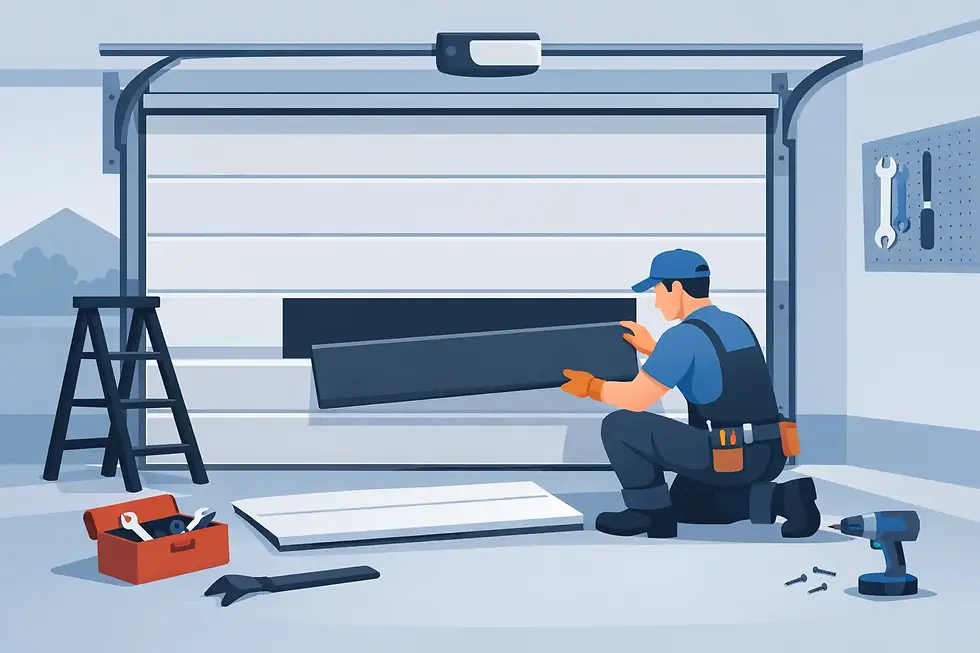
Roller replacement is usually straightforward for a trained technician, but the bottom roller brackets are connected to the lift cables. Those brackets should not be removed by a homeowner. A cable can release under tension and cause injury or make the door unsafe to operate.
Loose hinges, brackets, and track hardware
A door that rattles, shakes, or sounds like it is bouncing down the tracks may have loose hardware. Hinges between door sections can wear and create excess movement. Track brackets may loosen from the wall. The opener mounting hardware can also vibrate if it is not secured correctly.
Some visible bolts can be tightened carefully, but do not tighten or adjust any red-painted hardware, spring fittings, bottom brackets, or cable connections. Garage door hardware does not all carry the same risk. When in doubt, leave it alone and have it inspected.
Dirty, bent, or misaligned tracks
Tracks are not supposed to be lubricated with heavy grease. Grease can collect dirt and debris, creating a rough path for rollers. A clean track is better than a greasy one.
If a track is bent, dented, or pulling away from the wall, the rollers may scrape, pop, or grind as the door travels. You may also see the door move unevenly, hesitate, or leave gaps at one side when it closes. This is not a wait-and-see issue. A door can come off its track without much warning, particularly if the opener continues pulling against the resistance.
Worn springs or an unbalanced door
Your opener is designed to guide a balanced garage door, not lift the full weight of one. Springs do the heavy lifting. As they wear, lose tension, or break, the door may move slowly, slam shut, strain the opener, or make loud creaking and popping noises.
A balanced door should remain roughly in place when disconnected from the opener and lifted manually halfway. But because a damaged spring or cable creates real risk, this check is best left to a professional if you suspect a problem. Never loosen spring hardware to see whether it helps.
Opener problems
Not every noisy garage door problem is in the door itself. Chain-drive openers naturally make more noise than belt-drive models, but excessive rattling, grinding, humming, or clicking can signal trouble. The chain may be loose, the gear inside the opener may be worn, or the motor may be straining because the door is too heavy or binding in the tracks.
A loud opener sometimes gets blamed first, when the real problem is an unbalanced door. Replacing an opener without correcting the door issue can leave the new unit doing the same hard, damaging work.
Weather, age, and normal wear
St. Louis weather puts garage doors through temperature swings, humidity, rain, and winter cold. Metal contracts and expands. Lubricant thickens or dries out. Wood framing can shift slightly, and weather seals can become stiff. Those changes can make a previously quiet door sound rougher for a season.
That said, “it has always been noisy” is not a good reason to ignore a worsening sound. Garage doors are heavy systems with moving parts under tension. Increasing noise usually means increasing friction, wear, or imbalance.
What You Can Safely Do Before Calling for Repair
A homeowner can handle a few basic checks without taking apart the door. First, look for obvious debris in the tracks, loose items leaning against the door, or objects blocking the photo-eye sensors. Wipe dirt from the tracks with a dry cloth. Do not force a door that is stuck or crooked.
You can also apply a garage-door-specific lubricant to metal rollers, hinges, and springs if the door is operating normally and there are no signs of damage. Avoid thick grease, general-purpose oils that attract dust, and spraying the tracks. Lubricant may quiet a dry door, but it will not fix worn rollers, damaged bearings, bent tracks, or a failing spring.
Take note of when the noise happens. Is it loud only while opening? Does the opener hum but the door not move? Does one side rise faster than the other? Is there a visible gap in the torsion spring above the door? These details help identify whether you need routine service or a same-day repair.
Noises That Mean You Should Stop Using the Door
Stop operating the door and call for service if you hear a loud bang followed by a heavy door, see a loose or broken cable, notice the door hanging unevenly, or hear grinding with jerking movement. The same applies if the door is off track, has a bent section, reverses unexpectedly, or the opener is straining to lift it.
Do not pull the emergency release if the door is open and you suspect a broken spring or cable. The door may fall quickly. Keep children, vehicles, and people clear of the area until a qualified technician can secure it.
For commercial doors, noise can be an even bigger operational warning. A rattling roll-up door, grinding operator, or uneven sectional overhead door can disrupt deliveries, access, and building security. Waiting until the door will not open can cost more than addressing the first clear warning signs.
When a Tune-Up Makes Sense
If the door is still operating evenly and the noise is limited to squeaks or minor vibration, a professional tune-up can often prevent a larger breakdown. A proper service visit should include inspection of springs, cables, rollers, hinges, tracks, bearings, safety sensors, opener force settings, and door balance. The goal is not simply to make the noise disappear. It is to find out why the noise started.
Davis Door Service provides straightforward garage door repair and maintenance for homeowners and businesses across the St. Louis area, including same-day and 24/7 emergency support when the door is unsafe or stuck. There are no salesmen involved - just a local service team focused on getting the door working properly.
A quiet door is nice, but a smooth, balanced, dependable door is what protects your vehicle access, home security, and daily routine. If the sound has changed, gotten louder, or comes with shaking, binding, or a heavy door, treat it as a repair signal before it becomes an emergency.


Comments