


Best Garage Doors for Curb Appeal That Stand Out

A garage door can take up a third of your home's front exterior. When it is faded, dented, too plain for the house, or simply the wrong style, it pulls attention away from everything else you have improved. The best garage doors for curb appeal do more than close securely. They make the whole property look more finished, more valuable, and more like it belongs in the neighborhood.
For St. Louis homeowners, the right choice also has to hold up through humid summers, freezing weather, wind, and the daily wear of family life. Good looks matter, but a door that warps, peels, or becomes a constant repair problem is not a good deal. Here is how to choose a door that improves the front of your home without creating headaches later.
Start With Your Home's Architectural Style
The fastest way to miss the mark is to choose a garage door as a separate project. Your door should look like it was designed with the rest of the house, not installed as an afterthought. Look at the roofline, siding or brick, window shape, trim color, and front entry before settling on a design.
Traditional brick homes usually look strongest with raised-panel doors, recessed panels, or carriage-house styling. These designs add depth without competing with the masonry. A ranch home can handle a clean, simple door with long windows or subtle paneling. On Craftsman-style homes, a carriage-house door with rectangular windows and modest decorative hardware can tie in naturally with the front porch.
Contemporary homes are where full-view glass, flush-panel steel, and dark modern finishes make sense. Clean lines are the point. Do not add fake hinges and handles to a sharply modern home just because they are popular. Those details can look forced when they do not match the architecture.
Best Garage Doors for Curb Appeal by Style
There is no single best-looking garage door for every property. The right style depends on whether you want the door to blend in, create contrast, or become a major design feature.
Carriage-house doors add character
Carriage-house doors are one of the safest choices for boosting curb appeal on traditional, farmhouse, Craftsman, and Colonial-style homes. They recreate the appearance of old swing-out carriage doors while operating as modern sectional overhead doors. Crossbuck overlays, recessed panels, windows, hinges, and handles give the door more dimension than a basic raised-panel design.
The trade-off is that decorative hardware and overlays must be chosen carefully. Too much ornament can overwhelm a smaller garage or clash with a simple exterior. Use hardware as an accent, not as costume jewelry for the house.
Flush-panel doors create a modern look
Flush-panel doors have flat, smooth sections with minimal visual interruption. They work especially well with modern siding, mixed-material exteriors, black window frames, and homes with strong horizontal lines. A charcoal, black, walnut-look, or warm gray finish can make a plain garage look intentional and current.
Dark doors do show dust, road salt, and scratches more readily than mid-tone colors. If your garage faces direct afternoon sun, very dark finishes can also absorb more heat. Insulation and a quality finish are worth considering, particularly on an attached garage.
Full-view glass doors make a statement
Aluminum-and-glass full-view doors offer the most dramatic contemporary upgrade. Their glass panels bring light into the garage and create a clean commercial-modern appearance that works well on updated homes, studios, and properties with a strong architectural design.
Privacy and insulation are the big decisions here. Clear glass may expose storage and vehicles, so frosted, tinted, or obscure glass is often the smarter choice. Glass doors can cost more than standard steel options, and they need regular cleaning to keep their sharp appearance. They are not the best fit for every neighborhood, but on the right house, they are hard to beat.
Raised or recessed panels remain a dependable choice
A classic steel door with raised or recessed panels is not boring when it is properly matched to the house. It is practical, familiar, and available in many colors, window layouts, and insulation levels. Recessed panels tend to give a more tailored, higher-end appearance than the basic raised-panel look.
This option is a strong choice when you want a visible improvement without turning the garage into the center of attention. Add a top row of windows or choose a color that works with the trim, and a standard sectional door can look far better than its price suggests.
Material Matters as Much as Appearance
A good-looking door needs to keep looking good after several Missouri seasons. Materials affect durability, maintenance, cost, and how convincingly the door delivers the style you want.
Steel is the practical leader for most homeowners. It is durable, widely available, relatively low-maintenance, and offered in designs that mimic wood or carriage-house construction. Insulated steel doors can also reduce heat transfer and make an attached garage more comfortable. Look for a quality finish and solid construction, because thin, entry-level steel dents more easily.
Wood gives a home real warmth and can be custom-built to match trim, siding, or historic details. It also comes with more maintenance. Wood needs refinishing or repainting over time, and moisture can create problems if the finish is neglected. For homeowners who want the wood look without the upkeep, steel doors with realistic wood-grain finishes are often the better call.
Composite or faux-wood doors offer another middle ground. They can provide texture and character with less maintenance than natural wood, though quality varies by manufacturer. Aluminum is lightweight and corrosion-resistant, making it a good pairing for contemporary glass doors. It can dent more easily than steel, so consider where kids, tools, and vehicles will be moving around the door.
Choose Color With the Whole Exterior in Mind
Color is where a new garage door can either pull the exterior together or stick out for the wrong reason. The safest approach is to match the garage door to the home's existing trim, siding, or a dominant exterior color. This creates a calm, coordinated look.
A contrasting color can work when it is repeated somewhere else, such as black shutters, a black front door, dark gutters, or window frames. A black garage door on a light brick home can look sharp. So can a warm wood-tone door against stone, gray siding, or white trim. The goal is deliberate contrast, not a random dark rectangle.
Avoid choosing a color from a tiny sample under indoor lighting. Check samples outside at different times of day. St. Louis sunlight can make undertones more obvious than expected, especially with gray, beige, and brown finishes. Also consider the driveway. A door that looks great against the siding may look washed out or overly harsh next to the concrete.
Windows Can Make a Basic Door Look Custom
Windows are one of the most effective upgrades for curb appeal, but only when their shape and placement relate to the house. Traditional homes usually benefit from divided-light windows, arched inserts, or rectangular panes that echo the front windows. Modern homes often look better with long, narrow glass sections or a full-view layout.
Place windows in the top section for privacy and a balanced appearance. If your garage is used as a workshop or needs more daylight, side or mid-level windows may make sense, but think through what will be visible from outside. Obscure glass keeps the light while limiting the view into the garage.
Do not treat windows as decoration alone. Glass adds weight and changes insulation performance, so the door, springs, tracks, and opener should be matched and adjusted correctly during installation.
Details That Separate a Good Door From a Great One
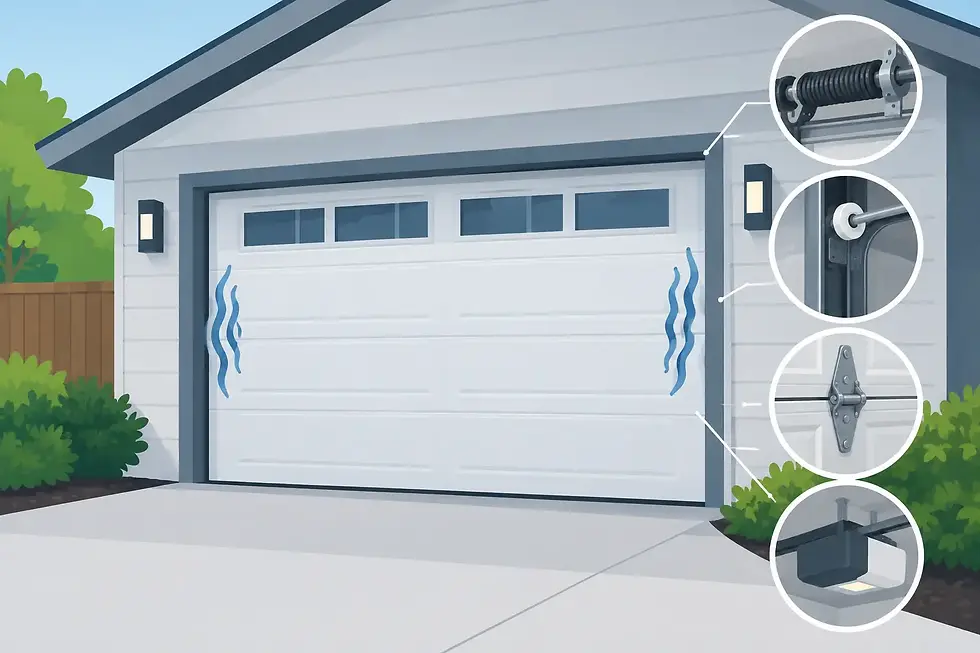
A new door will not improve curb appeal if it hangs crooked, rattles loudly, or has mismatched trim around it. The installation details matter. Clean perimeter trim, properly aligned sections, balanced springs, and a quiet opener all make the finished job feel more professional.
If you choose carriage-house hardware, make sure it aligns with the panel pattern and does not interfere with door operation. Decorative handles should never be used as pull handles on a moving overhead door. For lighting, fixtures beside the garage can frame the new door and make windows, texture, and color more visible after dark.
Insulation is also worth weighing. It may not be the first curb-appeal feature people notice, but a stronger insulated door usually feels more substantial, runs quieter, and helps protect rooms next to or above the garage from temperature swings.
Do Not Ignore Function for Looks
A garage door is the largest moving object in most homes. Style does not excuse poor operation. Before replacing a door, check whether the opener has enough lifting capacity, whether the existing tracks are in good condition, and whether the framing around the opening needs repair. A beautiful new door on worn hardware is not a finished solution.
The best garage doors for curb appeal should also fit how you use the garage. A family with bikes, sports equipment, and daily vehicle traffic may need a durable steel door with an easy-clean finish. A homeowner converting the garage into a studio may prioritize glass and insulation. A property manager may need a consistent, durable design that looks good across multiple units and does not demand constant upkeep.
A clear, on-site estimate helps you compare the full job, not just the advertised door price. Ask what is included for removal, tracks, springs, weather seal, opener compatibility, haul-away, and installation. That is how you avoid a cheap-looking number turning into a costly surprise.
If your current door is damaged, loud, outdated, or dragging down the front of your home, replacement can be one of the most noticeable exterior upgrades you make. Davis Door Service can help homeowners choose a practical style and install it correctly, with straightforward advice from a local team. Pick the door that fits your house, your budget, and your day-to-day use, then make sure the installation is built to last.


Comments