


6 Checks for the Best Garage Opener for Heavy Door

A heavy garage door exposes weak openers fast. It may start with a slow climb, a loud strain, or a door that reverses halfway up when you are already late for work. Finding the best garage opener for heavy door setups is not just about buying the biggest motor on the shelf. The door has to be balanced, the track has to be right, and the opener has to match how the door is used.
For St. Louis homeowners, that matters even more when a garage faces winter cold, summer humidity, daily family traffic, or a driveway that depends on one working door. Here is what actually deserves your attention before replacing an opener.
Start With the Door, Not the Opener
A garage door opener is designed to guide a balanced door. It is not meant to deadlift a door with worn-out springs, bent tracks, bad rollers, or a cable problem. If a technician disconnects the opener and the door feels excessively heavy by hand, drops quickly, or will not stay near the halfway point, the problem is likely in the door system.
This is the mistake that costs people money: installing a stronger opener on an unbalanced door. The new unit may work for a while, but it is forced to do the work that the springs should be doing. That extra strain can wear out gears, burn up components, pull on the rail, and leave you with another stopped door.
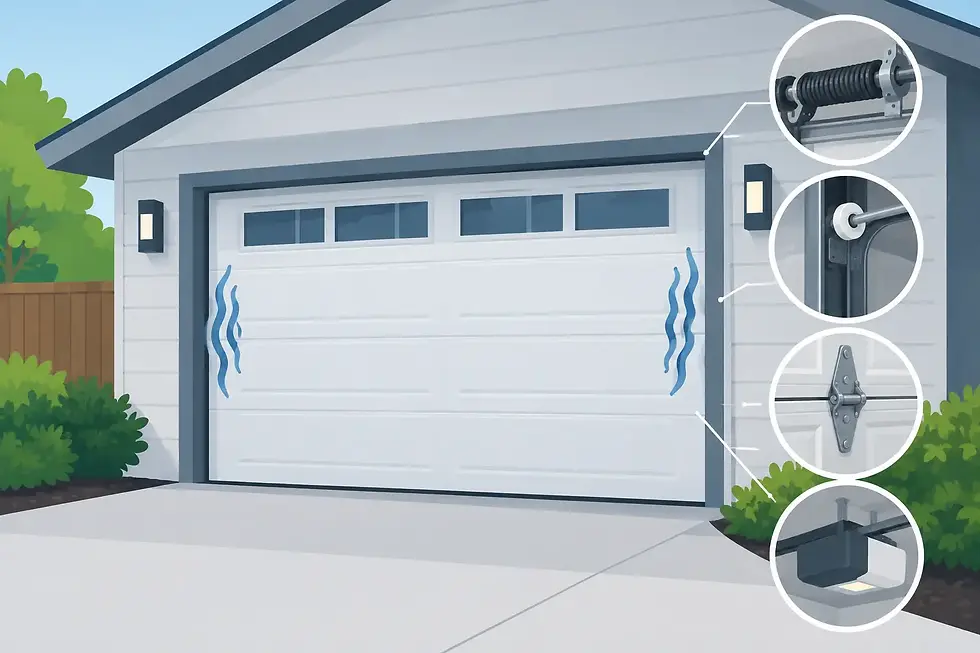
Before choosing an opener, have the door inspected for spring tension, cable condition, roller wear, track alignment, hinges, and overall weight. Never adjust torsion springs yourself. They are under extreme tension and can cause serious injury when handled incorrectly.
Know what makes a door heavy
A basic single steel door is not in the same category as a double insulated carriage-style door with decorative hardware and windows. Wood doors, full-view glass doors, oversized doors, and doors with added insulation can all carry more weight. Age also matters. A door that once ran smoothly can become harder to move as rollers wear down and hardware loosens.
For commercial properties, the question is bigger than door weight. A rolling steel door, sectional overhead door, or high-cycle loading-area door needs an operator selected for its size, use frequency, and operating environment. Residential openers are not a substitute for properly rated commercial operators.
Choosing the Best Garage Opener for a Heavy Door
For most heavy residential doors, a quality 3/4 horsepower equivalent DC opener is a smart starting point. That does not mean every door needs the same rating. A properly balanced standard double door may run well with less power, while a tall, insulated, wood, or specialty door may need more capacity and a more durable rail system.
Do not make the decision based on horsepower alone. Manufacturers use different motor ratings and marketing terms, so compare the complete system: motor, rail, drive type, safety features, warranty, and the condition of the door itself.
Look for these practical features when the door is heavy or used several times a day:
A 3/4 horsepower equivalent DC motor for many heavy residential doors
A reinforced, one-piece steel rail rather than a light rail that flexes under load
Battery backup, so the door can operate during a power outage
Photo-eye safety sensors and automatic reversal protection
A keyed exterior release or other safe access plan if the garage is the primary entry point
Smart controls if remote checking and alerts are useful for your household or property
Battery backup is especially valuable when the garage is your main way in and out. It does not fix a mechanical issue, but it keeps a healthy system usable when the power is out.
Belt drive, chain drive, or jackshaft?
A belt-drive opener is usually the best fit for an attached garage where noise matters. It runs quietly and smoothly, and modern belt systems can handle many heavier residential doors when sized correctly. The trade-off is price. Quality belt-drive units often cost more than basic chain-drive models.
A chain-drive opener is a proven option for detached garages, budget-conscious replacements, or doors where some operating noise is not a concern. It can be durable and capable, but it is typically louder and may require more attention to lubrication and adjustment over time.
A wall-mounted jackshaft opener is worth considering when overhead space is limited, the ceiling is finished, or you want to keep the center of the garage clear. These units mount beside the door and work with the torsion bar. They are not a universal answer, though. The door needs the right torsion setup, side clearance, and structural conditions for safe installation.
Do Not Ignore Cycle Count and Daily Use
The best choice depends on how hard the system works. A door that opens twice a day has different needs than one used for school drop-offs, work vehicles, storage access, and evening errands. More cycles mean more wear on springs, rollers, hinges, and the opener itself.
If you have a busy household, invest in a higher-quality opener and keep the door maintained. If the garage is detached and used occasionally, a simpler chain-drive model may be perfectly reasonable. The right answer is not always the most expensive unit. It is the unit that fits the door and the way you use it.
Property managers should also consider who needs access. Smart controls can help monitor activity and manage remote access, but they should not replace sound mechanical service. A door that binds or slams will remain a problem no matter how advanced the app is.
Installation Details That Protect Your Investment
Even a good opener performs poorly when installed on a bad door system. The opener should be mounted securely, the rail should be straight and properly supported, and the travel limits and force settings should be set correctly. Safety sensors need to be aligned and tested, not simply installed and forgotten.
The opener bracket on the door also matters. Heavy doors need a properly reinforced connection point. If the top section flexes every time the opener pulls, damage can develop over time. A trained installer checks the door sections, struts, and attachment hardware before putting the operator under load.
After installation, test the manual release and make sure every adult in the household knows how to use it. Keep remotes out of vehicles left outside, replace weak remote batteries, and do not let children play with wall controls or safety sensors.
Signs Your Current Opener Is Undersized or Struggling
A loud opener is not automatically failing. Some chain drives are simply louder by design. But grinding, popping, skipping, shaking, or a motor that hums without moving the door are warning signs that should not be ignored.
Call for service if the door reverses without obstruction, opens unevenly, stops before reaching full height, moves much slower than normal, or leaves a visible gap at the floor. Also act quickly if you see a loose cable, a bent track, or a broken spring. Continuing to run the opener can turn a manageable repair into a damaged door, rail, or operator.
For a door that is stuck open, stuck closed, or hanging unevenly, do not force it with the remote. Secure the area and get help. Davis Door Service provides fast garage door and opener service for homeowners and businesses that need the problem handled without a sales pitch or a long wait.
A heavy door can run quietly and reliably, but only when the opener, springs, hardware, and installation are working as one system. Get the door checked before you buy, and you will spend your money on the right fix instead of replacing another strained opener.


Comments