

How to Clean Garage Door Sensors Safely at Home

Your garage door starts down, gets a few inches from the floor, then reverses for no clear reason. Before assuming the opener is failing, clean garage door sensors. A dusty lens, spiderweb, leaf fragment, or slight bump can break the safety beam and keep the door from closing.
The good news is that cleaning the sensors is usually simple. The catch is that dirty sensors are not always the real problem. If cleaning does not restore normal operation, do not force the door shut or bypass the safety system. That can turn a small inconvenience into a security problem or a safety risk.
What Garage Door Sensors Do
Most modern residential garage doors use two photo-eye sensors mounted near the floor, one on each side of the opening. They send an invisible beam across the doorway. When the beam is clear, the opener can close the door. When the beam is blocked, interrupted, or out of alignment, the opener should stop or reverse.
That system is there to protect people, pets, vehicles, and anything else in the doorway. It is not optional equipment to work around when it gets annoying. Holding down the wall button may close some doors in an emergency, but it should not become the regular fix for a sensor problem.
Sensors sit low to the ground, which makes them magnets for dirt. In St. Louis garages, road dust, moisture, lawn clippings, cobwebs, and winter grime can all build up on the sensor lens. A garage that doubles as a workshop, storage room, or entry point for kids and pets may need sensor attention more often.
How to Clean Garage Door Sensors Without Damaging Them
Start with the garage door fully closed if possible. This keeps the door in its safest position while you work around the sensor area. Turn on the garage lights so you can see both sensors clearly, and keep children and pets away from the door.
Find both photo-eye sensors
Look along the bottom of each vertical track, usually four to six inches above the floor. Each sensor is a small plastic unit attached to a bracket and pointed across the garage opening. You may see a small indicator light on each one.
Do not confuse the photo eyes with the garage door track, bottom roller, or wiring. The sensors are low-voltage devices with thin wires running back toward the opener. Avoid pulling, pinching, or disconnecting those wires.
Use a dry microfiber cloth first
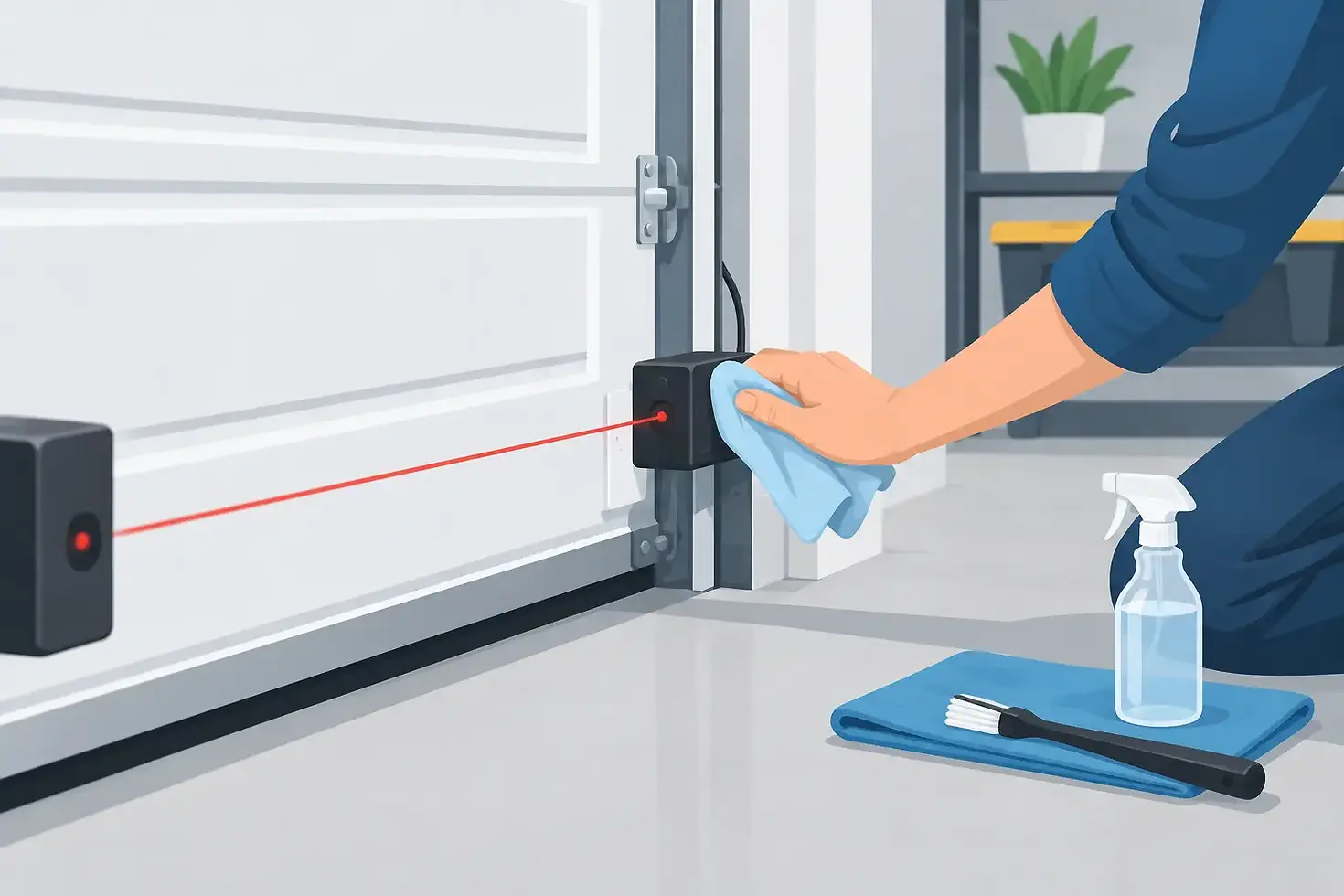
Gently wipe each lens with a clean, dry microfiber cloth. The goal is to lift dust and cobwebs without scratching the plastic lens or pushing the sensor out of position. A soft eyeglass cloth also works well.
Do not use abrasive pads, shop towels with grit on them, or a wire brush. Avoid spraying cleaner directly onto the sensor. Liquid can run into the housing, collect dust, or create a moisture issue around the wiring.
If the lens has stubborn grime, lightly dampen the cloth with water and wipe it again. Then dry the lens completely. You do not need harsh chemicals, lubricant, or glass cleaner for this job.
Clear the area around the sensors
A clean lens will not help if something still interrupts the beam. Check for spiderwebs between the sensors, leaves caught near the tracks, stored items leaning into the opening, or a broom, bike, or trash can placed too close to the sensor path.
Also look at the floor near each sensor. Snowmelt, mud, standing water, and salt residue can cause repeat problems, especially during wet weather. Clean up the area and move stored items away from the bottom of the door opening.
Check the sensor lights after cleaning
Most sensor pairs have indicator lights. The exact color and behavior vary by opener brand, but a steady light generally means the sensors have power and can see each other. A blinking or unlit sensor often points to an alignment issue, blocked lens, damaged wire, or failed sensor.
Do not assume a green light on one side means everything is fine. Both sensors need to be powered, aimed correctly, and communicating. If one light is flickering, take a close look at the bracket. A small bump from a trash bin, vehicle tire, toolbox, or child can move it just enough to break the beam.
If Cleaning Does Not Fix the Problem
Cleaning is the first move, not a cure-all. If the door still reverses, starts down and stops, or only closes when you hold the wall button, work through the obvious checks before scheduling repair.
Make sure the sensors face directly at each other. The brackets should be secure, and neither sensor should be tilted toward the floor, ceiling, or garage wall. If a bracket is loose, gently reposition the sensor until its indicator light becomes steady. Do not bend metal brackets aggressively. They can crack, loosen further, or leave the sensor unable to hold its position.
Next, inspect the visible wires. Look for cuts, loose connections, staple damage, chew marks, or sections pinched against the track. Low-voltage sensor wiring is easy to damage during storage cleanouts, landscaping work, remodeling, or pest activity. A wire can look mostly intact and still have a break inside the insulation.
Then test the door correctly. With the door open, press the remote or wall button to close it. Wave a long object through the sensor path before the door reaches the floor. The door should stop and reverse. Never use your hand, foot, pet, or child for this test. A board or broom handle keeps you safely away from the closing door.
If the door closes normally after cleaning and passes the reversal test, the sensor issue is likely resolved. Keep an eye on it for a few days. Repeat failures can mean a loose bracket, failing sensor, damaged wire, or an opener issue that needs more than a wipe-down.
Problems That Look Like Dirty Sensors
A garage door that will not close is not automatically a photo-eye problem. Several other issues can create similar symptoms, and forcing the opener to run can make them worse.
If the door is crooked, hanging from a cable, dragging on one side, or has come off the track, stop using it. If you hear a loud bang and the door suddenly feels heavy, a broken spring may be the cause. If the opener hums but the door does not move, the problem could be a stripped gear, a disconnected trolley, a damaged motor component, or a door that is binding.
Pay attention to when the problem occurs. A door that reverses only near the floor often points to sensors or closing-force settings. A door that binds halfway up may have a track, roller, cable, or spring problem instead. A door that works inconsistently during rain or extreme cold may have moisture in a sensor connection, but it could also have a worn opener component.
This is where guessing gets expensive. Garage door springs, cables, and tracks are under serious tension. Cleaning a lens is a safe homeowner task. Adjusting springs, replacing cables, or trying to straighten a damaged track is not.
When to Call for Garage Door Sensor Repair
Call for service when the sensor lights will not stay steady, the wiring is damaged, the brackets will not hold alignment, or the door still refuses to close after you clean and clear the sensor path. Get help right away if the door is stuck open, off track, unusually heavy, or creating a security issue at your home or business.
For property managers and commercial operators, do not wait for an intermittent sensor issue to become a blocked loading area or an unsecured building. Frequent traffic, forklifts, carts, weather exposure, and cleaning equipment can knock photo eyes out of alignment or damage wiring without anyone noticing at the time.
Davis Door Service provides straightforward garage door troubleshooting and repair across the St. Louis area, including same-day appointments when available and 24/7 emergency service for urgent door problems. There are no salesmen and no pressure to replace equipment that can be repaired. If the problem is a dirty lens, you should know that. If it is a failed sensor, damaged wire, or a larger door issue, you should know that too.
A clean sensor takes only a few minutes, but it can save you from being late, locked out, or stuck with a garage door that will not secure. If the lights still blink, the door keeps reversing, or anything about the door looks unsafe, leave it alone and get the right repair before the next time you need to leave.


Comments