

Best Garage Door Insulation Options for 2026

A garage can be 20 degrees colder than the rest of the house on a St. Louis winter morning. If there is a bedroom, kitchen, laundry room, or finished space beside it, that cold does not stay in the garage. Choosing the best garage door insulation options can reduce temperature swings, quiet a rattling door, and make an attached garage more usable. It will not turn an unheated garage into a finished living room, but it can make a noticeable difference when the door and the rest of the garage are in decent shape.
The right insulation depends on your door, your goal, and whether added weight could create a safety problem. A low-cost kit can work well on a light-duty steel door. A high R-value panel may be worth the money for an attached garage with a room above it. Before buying anything, make sure the door opens smoothly, stays balanced, and has no damaged hinges, rollers, cables, or springs.
The Best Garage Door Insulation Options by Door Type
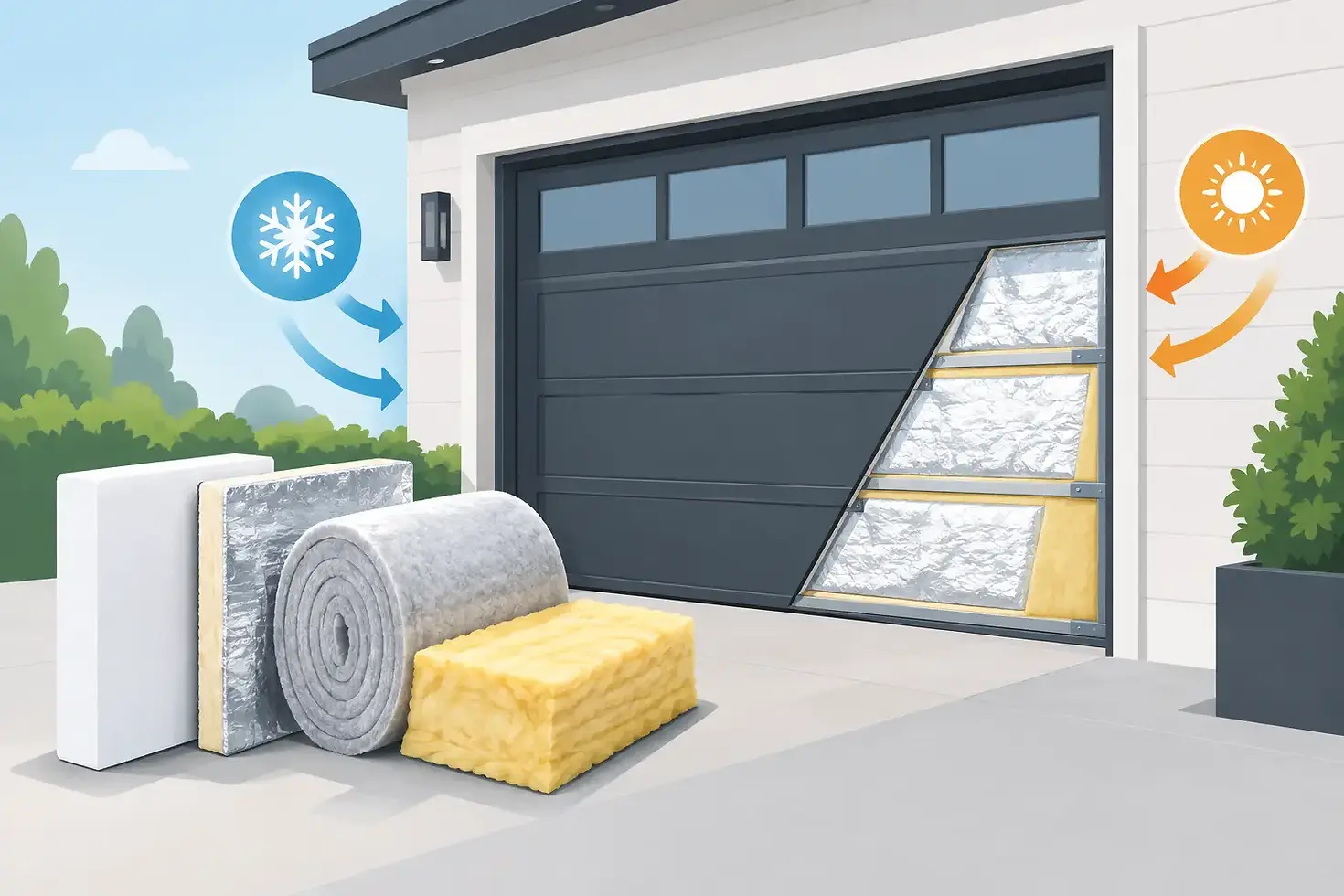
Most homeowners are choosing between foam board panels, reflective insulation, fiberglass batts, or replacing an older door with an insulated model. Each has a place. The mistake is assuming the thickest material is automatically the best choice for every garage.
Foam board panels: best all-around DIY choice
Rigid foam board, usually polystyrene or polyisocyanurate, is the most practical option for many sectional steel garage doors. It is cut to fit inside the horizontal door sections and is light enough that it usually will not overload a properly functioning residential door.
Foam board offers meaningful insulation in a relatively thin panel. Look for a product designed for garage doors or a rigid board that fits securely behind the door's interior framing. Panels should sit flat and stay clear of hinges, rollers, reinforcement struts, and the opener arm.
This option works especially well when the garage is attached to the home and you want better comfort without replacing the entire door. It also helps reduce the hollow, vibrating sound common with uninsulated steel doors. The trade-off is appearance and fit. Panels that are poorly measured, loosely taped, or pressed against moving hardware can fall out or interfere with operation.
Reflective foil insulation: best for radiant heat and tight budgets
Reflective bubble insulation is thin, lightweight, and easy to handle. It is often sold in garage door kits with pre-cut pieces and attachment tape. It can help reflect radiant heat, which is useful when summer sun beats directly on a west- or south-facing garage door.
Its limits matter. Reflective material does not provide the same resistance to heat transfer as a thicker foam panel, especially during a cold Missouri winter. It can be a reasonable budget upgrade for a detached garage, a mild-climate application, or a homeowner primarily trying to reduce summer heat buildup. It is not the strongest answer for an attached garage that stays uncomfortably cold all season.
Fiberglass batts: effective, but usually not the easy answer
Fiberglass insulation can provide solid thermal performance, but it is rarely the first choice for a moving garage door. It is bulkier than foam, can sag over time, and often needs a facing or retaining system to keep fibers contained. If the material gets wet, compressed, or rubbed by moving parts, its performance drops quickly.
Fiberglass makes more sense inside fixed garage walls or a ceiling than inside the door itself. If you are considering it for the door, use a product specifically made for that purpose and do not add it without checking door balance. A heavy door is not just inconvenient. It puts added strain on the opener, springs, cables, and rollers.
Insulated replacement doors: best long-term upgrade
If your existing door is thin, dented, noisy, or nearing the end of its life, an insulated replacement door is usually the cleanest long-term solution. These doors are built with insulation between steel layers, creating a stronger and quieter sandwich-style construction. They also tend to look better from the inside than a retrofit kit.
A quality insulated door offers more than a higher R-value. It improves rigidity, reduces vibration, and can handle everyday use better than a single-layer door with added panels. For homes with a room above or beside the garage, that can be a worthwhile investment.
The upfront cost is higher, and the advertised R-value should not be the only deciding factor. A good installation, bottom seal, perimeter weatherstripping, and correctly adjusted springs all affect real-world performance. A premium door installed poorly will still leak air and operate badly.
What R-Value Actually Means for a Garage Door
R-value measures resistance to heat flow. Higher numbers generally mean better insulation, but garage door marketing can make comparisons confusing. Some manufacturers rate the insulation material alone, while others provide a value for the complete door assembly.
For a detached garage used mainly for parking and storage, a modest insulated door or foam-panel retrofit is often enough. For an attached garage, especially one with a bedroom above it, a higher-performing insulated door can be worth considering. If the garage is heated or cooled, the door is only one part of the job. Insulating the walls and ceiling, sealing gaps, and addressing air leakage will have just as much impact.
Do not chase an R-value that does not match the building. If cold air is pouring through cracked side seals or a worn bottom seal, upgrading insulation alone will not solve the problem.
Weight and Balance Come Before Insulation
Every garage door is counterbalanced by springs. Those springs are sized for the door's original weight. Adding insulation, especially heavy batts, wood panels, or multiple layers of material, changes that weight and can make the door unsafe.
A properly balanced door should stay roughly in place when disconnected from the opener and raised halfway by hand. Do not perform that test if a cable is loose, a spring is broken, or the door is off track. And do not adjust torsion springs yourself. They are under extreme tension and can cause serious injury.
Signs your insulation project may have affected the system include a door that feels heavier, stops short, reverses unexpectedly, makes the opener strain, or has uneven cable tension. The opener is not designed to compensate for a badly balanced door. Continuing to run it can turn a simple adjustment into a broken spring, stripped gear, or damaged operator.
Do Not Skip Weatherstripping
Insulation slows heat transfer. Weatherstripping blocks drafts. You need both.
Check the bottom seal first. If it is flattened, cracked, torn, or leaves daylight under the door, replace it. Then inspect the vinyl seal around the top and sides of the opening. It should make light contact with the closed door without being crushed or bent away from the frame.
This is often the lowest-cost improvement with the fastest payoff. A well-sealed uninsulated door can feel better than a heavily insulated door with wide gaps around its edges. Also look for gaps at the garage-to-house door, penetrations around pipes and wiring, and uninsulated walls shared with the home.
When a Retrofit Kit Makes Sense
A DIY insulation kit is a good fit when the door is structurally sound, operates smoothly, and has enough interior clearance for the added material. It is also a reasonable choice if you plan to keep the current door for several more years and want a modest comfort upgrade now.
Replacement is the better call when the door is badly dented, rusting, noisy, poorly sealed, or difficult to operate. The same goes for doors with damaged sections or outdated hardware. Spending time and money insulating a door that is already failing usually does not pay off.
For property managers and commercial operators, consider the door's use cycle before adding anything. A high-cycle sectional or roll-up door needs materials and hardware that will hold up to frequent operation. Loose insulation can become a maintenance issue fast in a busy loading area.
Get the Door Checked Before You Add Weight
Before installing foam panels or ordering a new insulated door, make sure the system is safe. A quick service inspection can catch worn rollers, frayed cables, weak springs, bent tracks, and opener issues that insulation will not fix. Davis Door Service can inspect the door, explain whether a retrofit is practical, and help St. Louis homeowners choose an insulated replacement when that makes better financial sense.
Start with the simplest fix that matches your garage. Seal the gaps, choose insulation that fits the door and your comfort goal, and do not ignore a door that has become heavy or hard to operate. A garage door should make the home more comfortable without becoming the next repair emergency.


Comments