


7 Clear Signs Your Garage Door Needs Replacement

A garage door can look rough for years and still work. Then one morning, it will not open, will not close, or will come down crooked with your vehicle stuck inside. The most common signs a door needs replacement are not always dramatic at first, but ignoring them can turn a manageable decision into an urgent service call.
For St. Louis homeowners, property managers, and business owners, the real question is not whether an older door has a few dents. It is whether the door is still safe, dependable, and worth putting more money into. Some problems call for a straightforward repair. Others mean the door itself has reached the end of its useful life.
1. The Door Has Major Structural Damage
A bent section, cracked panel, or dent from a vehicle does not automatically mean you need a new garage door. If damage is limited to one section and matching replacement panels are available, repair may be the better value.
Replacement becomes the smarter call when multiple sections are bent, the bottom section is rotted, or the door frame has shifted enough that the door will not run straight. Steel doors with deep creases can lose their strength. Wood doors can absorb moisture, rot from the bottom up, and become too heavy for the opener and springs to handle safely.
Commercial overhead doors deserve the same attention. A damaged curtain, broken slats, or warped tracks can affect security and daily operations. Repeated patchwork repairs may cost more than installing a dependable new system.
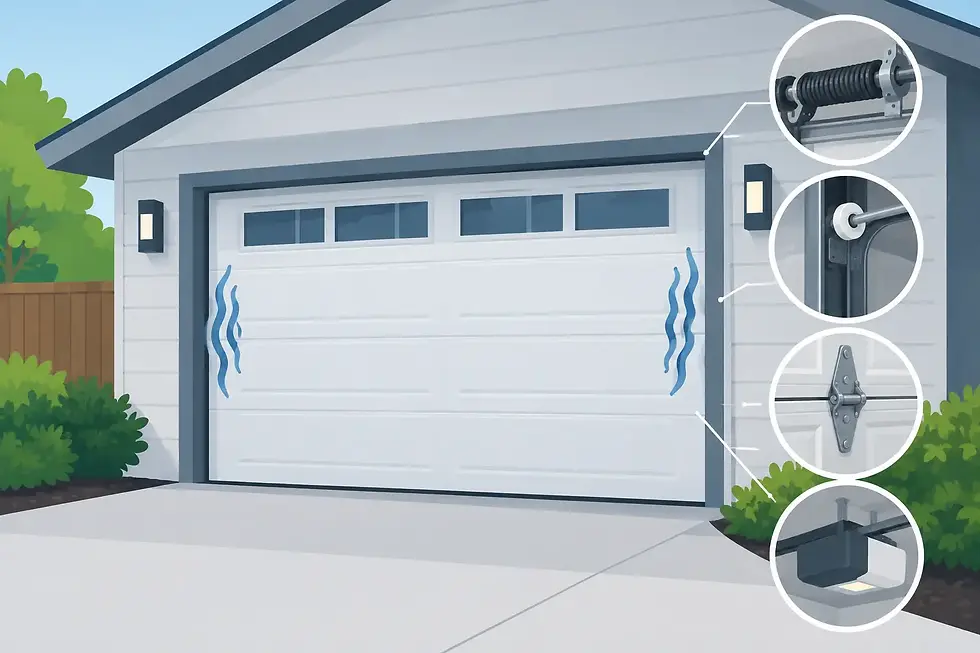
2. Your Door Shakes, Binds, or Comes Off Track
A door that shudders on the way up is telling you something is wrong. Worn rollers, loose hinges, damaged tracks, broken cables, and failing springs can all cause noisy or uneven movement. Many of those issues are repairable when caught early.
But if the door repeatedly comes off track, binds in the opening, or moves crooked even after repairs, the sections or track system may be too damaged to trust. Do not keep running an opener against a stuck or crooked door. The opener can pull harder than the door can handle, causing more damage and creating a real risk of falling sections or snapped cables.
A technician should inspect the door, tracks, rollers, cables, springs, and opener together. Replacing only one part of a badly worn system can buy time, but it may not solve the underlying problem.
3. Repairs Keep Adding Up
One broken spring does not mean you need a new garage door. Neither does a failed opener, snapped cable, or worn roller. Those are common repairs, and a solid door can often serve you well for years after the right fix.
The decision changes when repair calls become routine. If you have replaced cables, rollers, hinges, panels, and opener parts within a short period, stop looking at each bill separately. Consider what the door has cost over the last year or two and whether another repair is likely to be followed by the next failure.
An honest estimate should compare both options. Sometimes a repair is still the clear, affordable answer. Other times, putting that money toward a new door gives you a safer system, better appearance, and a warranty rather than another temporary fix.
4. The Door Is No Longer Safe to Use
Safety issues are among the clearest signs your garage door needs replacement or immediate professional attention. A door that drops quickly, will not stay open, reverses without reason, or has exposed damage should not be used until it is inspected.
Watch for these red flags:
The door falls or slams when released from the opener.
Cables are frayed, loose, or wrapped around the drum.
Sections are separating, cracked, or pulling away from hinges.
The bottom of the door is badly rotted or rusted through.
The door has no modern safety sensors, or its safety system will not work correctly.
Garage door springs and cables carry extreme tension. Do not try to reset a cable, adjust a spring, or force a failing door open yourself. That is a job for a trained technician with the right tools.
5. The Door Is Too Heavy for the Opener
Your opener is designed to guide a properly balanced door. It is not designed to lift the full weight of a door with weak springs, water damage, warped sections, or failing hardware.
If the opener strains, groans, stops halfway, or burns through gears, the issue may be a repairable balance problem. However, an old wood door that has become heavy from moisture, or a steel door with damaged sections, can overload the entire system. Continuing to use the opener may lead to repeated breakdowns and can shorten the life of a newer motor as well.
A balanced door should be relatively easy to lift manually when disconnected from the opener. Do not test this if a cable is loose, a spring is broken, or the door is visibly crooked. Call for service instead.
6. You Can Feel the Weather Coming Through
A garage does not need to feel like your living room, but a worn-out door can let in much more than a little cold air. Gaps along the bottom and sides allow rain, leaves, pests, dust, and winter air into the space. That can matter even more when the garage is attached to the home or used for storage, laundry, a workshop, or a finished room nearby.
Newer insulated garage doors can improve comfort and reduce outside noise. They also tend to operate more quietly than an older, thin door with loose hardware. Insulation is not a magic fix for every energy bill, and it matters less for a detached garage that is rarely used. Still, for many St. Louis homes, replacing an uninsulated or deteriorated door is a practical upgrade.
If the door itself is in good shape, new bottom seals and perimeter weatherstripping may be enough. If the sections are warped, rusted, or no longer sit square in the opening, sealing alone will not solve the problem.
7. The Door Hurts Security and Curb Appeal
Your garage door is one of the largest moving parts of your property and one of the first things people see from the street. Faded paint, rust, cracked windows, missing trim, and dented panels can make an otherwise well-kept home look neglected.
Appearance is not the only concern. A door that does not close tightly, has damaged locks, or can be lifted from the outside is a security issue. For commercial properties, a worn roll-up or overhead door can expose inventory, equipment, and loading areas after hours.
A replacement lets you choose a style that fits the building and a construction level that fits how the door is used. A basic steel door may be the right answer for a rental property or utility garage. An insulated carriage-style door may make more sense for a front-facing residential garage. For a busy commercial opening, durability, cycle life, and operator performance should lead the decision.
Repair or Replace? Get the Answer Before You Spend More
The right choice depends on the condition of the door, not its age alone. A well-maintained older door may only need springs, rollers, or an opener repair. A newer door that has been hit, warped, or repeatedly forced by a failing opener may be a replacement candidate sooner than expected.
Davis Door Service can inspect the full system and give you a clear, on-site estimate for repair or replacement. There are no salesmen pushing a door you do not need. If a repair makes sense, that is what you should be told. If replacement is the safer long-term move, you should know why and what the options cost.
Do not wait until the door traps your car, leaves your building unsecured, or fails after business hours. A quick inspection now can give you a workable plan and keep a worn-out door from becoming an emergency.


Comments