


Fenton Garage Door Installation Done Right

A new garage door should do more than improve the front of your property. It should open when you need it, close securely, stand up to daily use, and fit the opening correctly from day one. For Fenton garage door installation, the quality of the setup matters just as much as the door you choose.
A door that is too heavy for its springs, poorly aligned on its tracks, or paired with the wrong opener can turn a brand-new purchase into a noisy, unreliable problem. That is why the right installation starts with an honest look at your garage, your daily use, and your budget - not a high-pressure sales pitch.
What a Proper Garage Door Installation Includes
Garage doors are heavy moving systems. The panels get the attention, but the hardware does the hard work. Tracks, rollers, cables, springs, hinges, brackets, and the opener all need to work together. When one part is installed incorrectly, the door can bind, shake, run unevenly, or fail before it should.
A proper installation begins with measuring the opening, side room, headroom, and backroom. Those measurements determine what door and track setup will actually fit your space. This is especially important in older garages, where framing may not be perfectly square or where ceiling clearance is limited.
From there, the installer sets the tracks level and plumb, assembles and reinforces the door sections, installs the spring system, balances the door, and tests its travel. If an opener is part of the job, it should be matched to the door's size and weight, then adjusted so its safety reversal system works correctly.
The goal is simple: your door should move smoothly by hand, stay balanced when partially open, seal properly at the floor, and operate without excessive strain on the opener.
Choosing the Right Door for Your Fenton Property
There is no single best garage door for every home or building. The right choice depends on the garage's purpose, the type of construction, your budget, and how much maintenance you are willing to take on.
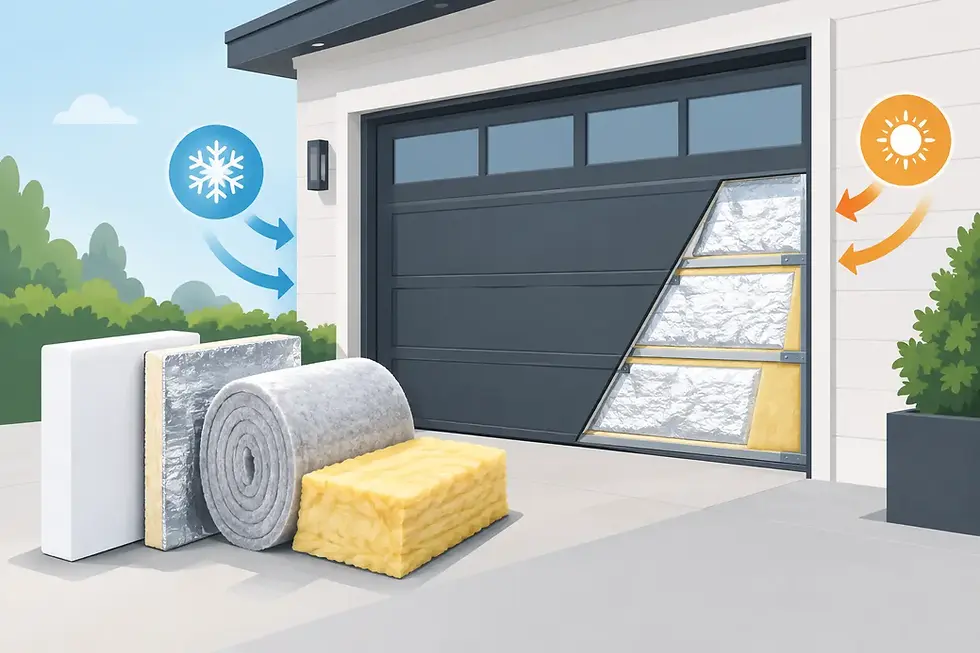
For most homes, sectional steel doors are a practical choice. They are durable, available in many styles, and can be insulated for better temperature control. If the garage is attached to the house, used as a workshop, or has a room above it, insulation is usually worth considering. It can reduce heat transfer and help the space feel less extreme during Missouri summers and winters.
Wood-look steel doors offer the appearance many homeowners want without the regular upkeep of natural wood. Real wood can look great, but it needs more attention over time and may not be the right fit for every budget. Aluminum and glass doors create a modern look, though they can provide less privacy and may not be the best choice where durability is the top concern.
For commercial properties, the decision often comes down to daily cycles, opening size, security needs, and workflow. A warehouse, auto shop, storage facility, or service building may need a sectional overhead door, a rolling steel door, a high-cycle spring system, or a commercial operator built for frequent use. Installing residential-grade equipment on a busy commercial opening is a shortcut that usually costs more later.
Don’t Choose a Door on Appearance Alone
Style matters, but it should not be the only factor. Before selecting a new door, consider these practical questions:
How often will the door open and close each day?
Is the garage attached to a heated or cooled area?
Do you need windows for daylight, or is privacy more important?
Does the area get strong wind exposure or frequent vehicle traffic?
Will the existing opener handle the new door, or should it be replaced too?
A heavier insulated door, for example, may be a smart upgrade for comfort and curb appeal. But it also needs the correct spring setup and an opener with enough lifting capacity. This is where an on-site estimate is more useful than guessing from a photo or a standard price sheet.
When It Makes Sense to Replace the Opener Too
A new garage door does not always require a new opener. If the existing opener is in good condition, properly sized, and has current safety features, it may continue to work well after installation.
But replacement is often the better call when the opener is old, loud, unreliable, or struggling to lift the door. It is also worth considering if you want battery backup, smartphone control, quieter operation, or improved security features. Installing a new door while keeping an opener that is near the end of its life can mean paying for a second service visit soon after.
The trade-off is upfront cost versus avoiding another disruption later. A straight answer from a local technician should help you make that call without being pushed into equipment you do not need.
Common Installation Problems That Create Early Repairs
A garage door can look fine from the driveway and still be set up wrong. Poor installation often shows up in the first few months as noise, jerky movement, uneven gaps, or an opener that reverses for no clear reason.
One common issue is incorrect spring tension. Springs carry the door's weight. If they are too weak, too strong, or improperly adjusted, the opener has to work harder than it should. Another problem is track alignment. Even a small alignment issue can cause rollers to drag, cables to wear unevenly, or the door to come off track.
Weather seal installation matters too. A bottom seal that does not meet the concrete evenly can let in water, leaves, pests, and cold air. In Fenton, where weather can change quickly, that small gap can become an ongoing annoyance.
The best way to avoid these problems is not to treat garage door installation as a do-it-yourself weekend project. Springs and cables are under serious tension, and incorrect handling can cause injury or property damage. Professional installation protects the door, the warranty, and the people using the garage every day.
What to Expect From Davis Door Service
Davis Door Service is family owned and owner operated, which means customers deal with a service-focused local company instead of a chain of salespeople. The job starts with a free on-site estimate so you can understand the door options, required hardware, and total scope before work begins.
Whether you are replacing a damaged home garage door or installing a dependable overhead door for a business, the focus stays on fit, function, and fair pricing. If your current door can be repaired safely and cost-effectively, that should be part of the conversation. If replacement makes more sense, you should know why.
Installation appointments are built around getting your property secured and operational without dragging the job out. For urgent situations, 24/7 emergency service and same-day availability can make a real difference when a door is stuck open, damaged by a vehicle, or leaving equipment exposed.
After Installation: Keep the Door Working Like It Should
A new door is not maintenance-free, but it should not demand constant attention either. A quick visual check every few months can catch loose hardware, worn rollers, frayed cables, or damaged weather seal before they create a larger failure.
Keep the tracks clear, listen for new grinding or popping sounds, and test the opener's safety reversal system periodically. Do not lubricate everything with whatever spray is on the shelf. The wrong product can attract dirt or interfere with parts that should stay clean. Springs, cables, and major adjustments should be left to a technician.
A properly installed garage door is one less thing to worry about when you are leaving for work, locking up a business, or getting home late. Choose a door that fits the property, make sure the system is installed and balanced correctly, and get help fast if something does not sound or move right.


Comments