


Garage Safety Inspection: What Can Go Wrong?

A garage door can weigh hundreds of pounds, move several times a day, and rely on tightly wound springs and cables to stay under control. That is why a garage safety inspection is not just a maintenance chore. It is a practical way to catch the problems that can trap your vehicle, leave your property exposed, or turn a routine morning into an emergency repair.
If your door shakes, scrapes, slams shut, reverses unexpectedly, or feels heavier than usual, do not wait for it to fail completely. Small warning signs often point to worn components that are working under dangerous tension.
What a Garage Safety Inspection Should Cover
A proper inspection looks beyond whether the door opens and closes. A door can still move while a cable is fraying, a roller is coming apart, or a spring is nearing the end of its service life. The goal is to find issues before they damage the door, opener, vehicle, or someone standing nearby.
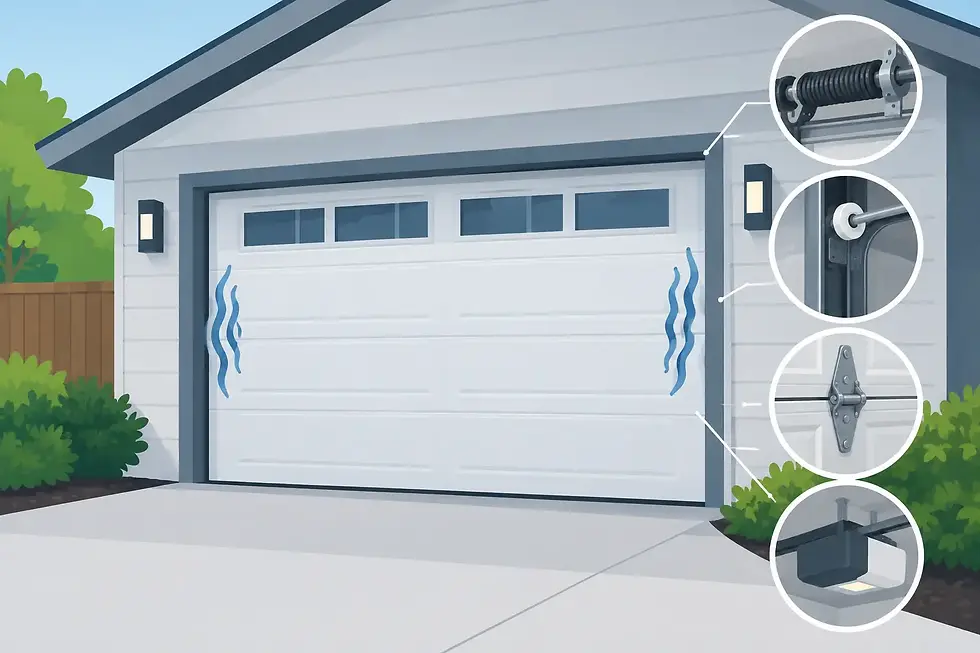
Start by standing inside the garage with the door closed. Look at the panels, tracks, rollers, hinges, brackets, cables, and springs. You are looking for obvious damage, missing hardware, loose parts, rust, bent track sections, and anything hanging where it should not be.
Do not touch the torsion springs above the door or the cables running along the sides. These parts carry high tension. A spring or cable repair is not a DIY job, even for a handy homeowner. The risk is not worth saving a service call.
The door itself and its hardware
Check the door panels for cracks, dents, separation, and water damage. A damaged section can affect how the door travels through the tracks. Pay attention to hinges between sections, especially if you see gaps, wobbling, or cracked metal around the hinge screws.
Rollers should turn smoothly without grinding, dragging, or popping out of the track. Worn rollers can make a door loud and unstable, but noise is not the only concern. A roller that fails can help pull the door off track.
Look at the tracks without trying to bend them back yourself. Tracks should be secure to the wall and ceiling, reasonably clean, and aligned. A bent or loose track can cause the door to bind or come off its path. If the door is already off track, stop operating it. Continued use can cause far more damage in seconds.
Springs, cables, and bottom brackets
Springs do the heavy lifting. When a torsion spring breaks, the door may become too heavy for the opener to lift. Extension springs, typically located along the sides of the door, can also break or stretch out over time. A loud bang from the garage is often the first sign of a broken spring.
Check visually for a visible gap in a torsion spring, stretched extension springs, loose cables, or cable strands that look worn. Frayed cables, rust, or a cable that has slipped off its drum are all reasons to stop using the door.
The bottom brackets deserve special caution. They connect the lifting cables to the bottom of the door and are under severe tension. Never loosen or remove these brackets. If one is damaged, call a qualified garage door technician.
The opener, safety sensors, and reversal system
Your opener is not designed to force a failing door up and down. If it strains, hums, stops midway, or runs while the door does not move, the underlying issue may be the springs, cables, or door balance rather than the opener itself.
Test the photo-eye safety sensors near the bottom of each track. Their lenses should be clean, their indicator lights should be on, and they should face each other. Close the door with the wall button, then pass an object through the sensor path before the door reaches the floor. The door should reverse immediately.
Next, test the auto-reverse setting. Place a solid object such as a piece of wood flat on the floor where the door closes. When the descending door touches it, it should reverse. Do not use a person, pet, foot, or a soft object for this test. If the door does not reverse, take the opener out of service until it is adjusted or repaired.
A Safe At-Home Check Takes About 10 Minutes
Homeowners can perform a visual check and basic sensor test monthly. This is not a replacement for professional service, but it can help you notice changes early. Keep children and pets away from the area while testing the door.
Watch the door through a full open-and-close cycle. It should move smoothly, stay relatively level, and avoid excessive vibration. Listen for new scraping, squealing, banging, or clicking sounds. One noisy roller may be minor. A door that jerks, binds, or shakes throughout its travel needs attention.
With the door fully closed, inspect the weather seal along the bottom. Gaps let in water, pests, and cold air, but they can also indicate an uneven door or floor. Then check that the emergency release handle is present and accessible. Everyone in the household who may need to leave during a power outage should know where it is and how to use it safely.
If you are comfortable doing so, you can test door balance with the opener disconnected and the door closed. Pull the emergency release, then carefully lift the door by hand to about halfway. A properly balanced door should stay near that position. If it crashes down, shoots upward, or is extremely heavy, do not keep testing it. Reconnect the opener if possible and schedule service. Balance adjustments involve springs and should be handled by a professional.
When to Stop Using the Garage Door Immediately
Some issues are inconvenient. Others are unsafe enough to justify keeping the door closed and calling for help right away. Stop operating the door if you notice any of these conditions:
A broken spring, loose cable, or visibly frayed cable
A door that is crooked, off track, or hanging unevenly
A damaged bottom bracket or loose bracket near a cable
A door that slams down, will not reverse, or closes on an obstruction
An opener that strains, smokes, sparks, or repeatedly trips its circuit
A door that is stuck open and cannot be secured
Do not try to force a stuck door with the opener. That can burn out the motor or cause the door to come off track. If the door is open and your home or business cannot be secured, treat it as an urgent service issue.
Why Annual Professional Inspection Pays Off
A homeowner can spot visible trouble, but a trained technician can check spring condition, cable wear, track alignment, bearing wear, force settings, fasteners, and door balance with the right tools. They can also lubricate the correct moving parts and identify components that are close to failing.
Annual service is a sensible baseline for most residential doors. Doors used heavily, exposed to moisture, or serving a busy household may need attention more often. In the St. Louis area, seasonal temperature swings and humidity can add stress to metal hardware, weather seals, and opener performance.
For commercial overhead doors, the inspection schedule depends on daily cycles, door size, loading activity, and security needs. A roll-up door at a busy facility is not the same as a residential door used twice a day. Property managers and business operators should keep service records and address new noise, slow operation, and impact damage before they interrupt operations.
Repairs Are Cheaper Before the Door Fails
A worn roller is usually a straightforward repair. Ignore it long enough, and it can contribute to damaged hinges, bent tracks, and an off-track door. The same pattern applies to weak springs, loose hardware, and failing sensors. Early repair protects the larger system.
There is also a safety benefit that does not show up on a repair invoice. A properly adjusted door is less likely to close on an object, trap a vehicle inside, or leave your garage open when you need it secure. That peace of mind matters when the garage is your main entry point, storage area, workshop, or business access point.
If your inspection raises questions, get the door checked before the next failure decides the timing for you. Davis Door Service provides straightforward garage door inspections, same-day repair when available, and 24/7 emergency help when a door cannot safely wait.


Comments