


How to Balance Garage Door Safely

A garage door that feels too heavy, slams shut, or won’t stay halfway open is not just annoying - it’s a warning sign. If you’re looking up how to balance garage door systems, the first thing to know is simple: balance problems usually point back to the springs, and springs are where DIY can turn dangerous fast.
A properly balanced garage door should lift smoothly, stay in place when opened halfway by hand, and not put extra strain on the opener. When the balance is off, the opener works harder, cables wear faster, rollers take a beating, and the whole system becomes less safe. That matters whether you’re a homeowner trying to get out of the driveway on time or a property manager dealing with a stuck overhead door that needs attention now.
What it means to balance a garage door
Garage door balance is not about making the door perfectly level with a wrench and a quick adjustment. It means the spring system is carrying the door’s weight the way it should. The door should feel controlled - not weightless, but not like dead weight either.
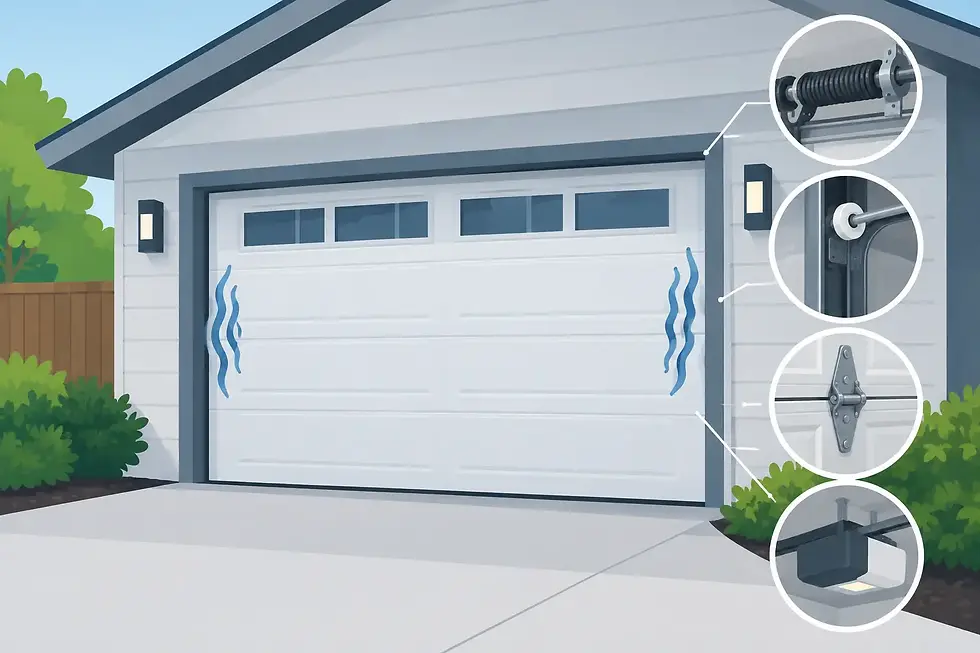
Most residential doors use either torsion springs mounted above the door opening or extension springs running along the horizontal tracks. Both systems are designed to offset the door’s weight. When the spring tension is right, the door opens and closes with steady resistance. When the tension is wrong, the door may drift, drop, bind, or become almost impossible to lift manually.
That’s why the real answer to how to balance garage door systems depends on the spring setup, the size and weight of the door, and whether parts are worn or damaged. There is no one-size-fits-all adjustment.
How to test garage door balance
Before anyone starts changing hardware, test the door the safe way. This gives you a clear picture of whether you have a balance issue or a different problem, like a track obstruction or bad rollers.
Disconnect the opener first
Close the door fully. Pull the emergency release cord to disconnect the automatic opener. This matters because the opener can mask a balance problem by forcing the door to move when the spring system is no longer doing its job.
Lift the door by hand
Raise the door slowly to about halfway and let go carefully. A balanced door should stay close to that position. It may move a little, but it should not shoot upward or crash downward.
If the door falls, the springs may have lost tension or one spring may be broken. If it rises on its own, the springs may be over-tensioned. If it feels jerky or uneven, you may be dealing with worn rollers, damaged tracks, a cable issue, or a spring problem that is already getting worse.
Check how it feels near the floor and near the top
A door can seem fine in one position and still be out of balance. If it is extremely heavy at the bottom or wants to race near the top, that points to a spring tension problem. If one side lags or the door looks crooked, stop there. Uneven movement can mean cable trouble, and that is not a safe DIY repair.
How to balance garage door systems - and when not to
Here’s the straight answer: balancing a garage door usually means adjusting spring tension. On a modern overhead door, that is the most dangerous part of the system to work on.
Torsion spring systems
Torsion springs are under high torque. Adjusting them requires the correct winding bars, a secure ladder, a clear understanding of quarter-turn increments, and a safe procedure for locking the door in place. Using the wrong tools or making the wrong adjustment can cause serious injury in a split second.
That’s why most property owners should not try to rebalance a torsion spring door themselves. If the door is out of balance, the safer move is to schedule service. A trained technician can measure the door weight, confirm the spring size, inspect the shaft, drums, cables, and bearings, and make the right correction without guessing.
Extension spring systems
Extension spring systems can also be hazardous, but they are a little easier for a trained person to inspect visually. Balance changes are made by adjusting the spring stretch, usually through the cable or hanger position. The catch is that extension systems often hide wear until something snaps.
If your extension springs are old, stretched, rusted, or missing proper safety cables, balancing alone is not the whole fix. At that point, replacement is often the smarter and safer call.
Signs your garage door is out of balance
Some customers do not notice a balance problem until the opener quits. Others hear the door getting louder for weeks before it finally sticks. Common signs include a door that slams shut, won’t stay open halfway, feels unusually heavy, opens crooked, or shakes during travel. You may also notice the opener straining, the rail jerking, or the motor sounding louder than normal.
If a spring has already broken, you might hear a sharp bang from the garage and suddenly find the door too heavy to lift. That is not a balance adjustment job. That is a broken spring repair, and the door should stay put until it is fixed.
Why balance matters more than most people think
A lot of people treat balance like a minor tune-up item. It’s not. An unbalanced garage door puts extra load on every moving part.
Your opener is one of the first things to suffer. Openers are built to guide the door, not dead-lift a failing spring system. Keep running an unbalanced door, and you can burn out the motor, strip gears, or end up with a door that stops halfway when you need it most.
The hardware takes a hit too. Cables wear unevenly. Rollers and hinges get stressed. Tracks can start to twist. On heavier insulated doors and commercial systems, those problems escalate faster because there is more weight in motion.
There’s also the safety issue. A door that drops unexpectedly is a real hazard around kids, pets, vehicles, and anyone walking through the opening.
What you can safely do yourself
There are a few practical checks you can handle without getting into spring adjustments.
You can inspect the rollers, hinges, and tracks for obvious wear or damage. You can clear debris from the tracks. You can listen for grinding, popping, or scraping that suggests a mechanical issue. You can also test the opener reversal system and keep moving parts properly lubricated with a garage-door-safe product.
But once the problem points to spring tension, cables, or a crooked door, that’s where DIY should stop. Saving a service call is not worth an ER visit or a ruined door.
When to call for professional garage door service
Call for help if the door is heavy, uneven, noisy, or won’t hold position during a balance test. Call immediately if a spring is broken, a cable is loose or off the drum, the door is off track, or the opener is struggling to move the door.
For homeowners in the St. Louis area, speed matters. A garage door problem can lock in your car, leave your home unsecured, or create a liability issue at a rental or commercial property. That’s where a local company like Davis Door Service makes the difference - same-day service when available, 24/7 emergency support, free on-site estimates, and no sales pressure.
A good technician will do more than tighten something and leave. They will test the balance, inspect the full system, identify whether repair or replacement makes more sense, and give you a straight answer on cost before the work starts.
How often should garage door balance be checked?
For most residential doors, a manual balance check once or twice a year is reasonable, especially if the door gets used several times a day. For rental properties, detached garages, and commercial doors with heavier cycles, more frequent inspection makes sense.
You do not need to obsess over it. Just pay attention to changes. A door rarely goes from perfect to unsafe overnight without giving off a few clues first.
The bottom line on balancing a garage door
If you wanted a simple how-to that ends with one quick adjustment, garage doors don’t really work that way. Balance is tied directly to spring tension, door weight, and the condition of the whole system. Sometimes the fix is a precise adjustment. Sometimes it’s spring replacement. Sometimes the door is telling you there’s a bigger hardware problem behind the symptoms.
The smart move is to test the door safely, avoid spring work unless you are trained for it, and act early before a small imbalance becomes a broken opener, snapped cable, or emergency call at the worst possible time.
If your garage door is getting heavy, loud, or unpredictable, trust what it’s telling you. Garage doors usually give a warning before they fail. The best time to deal with it is before it leaves you stuck.


Comments