


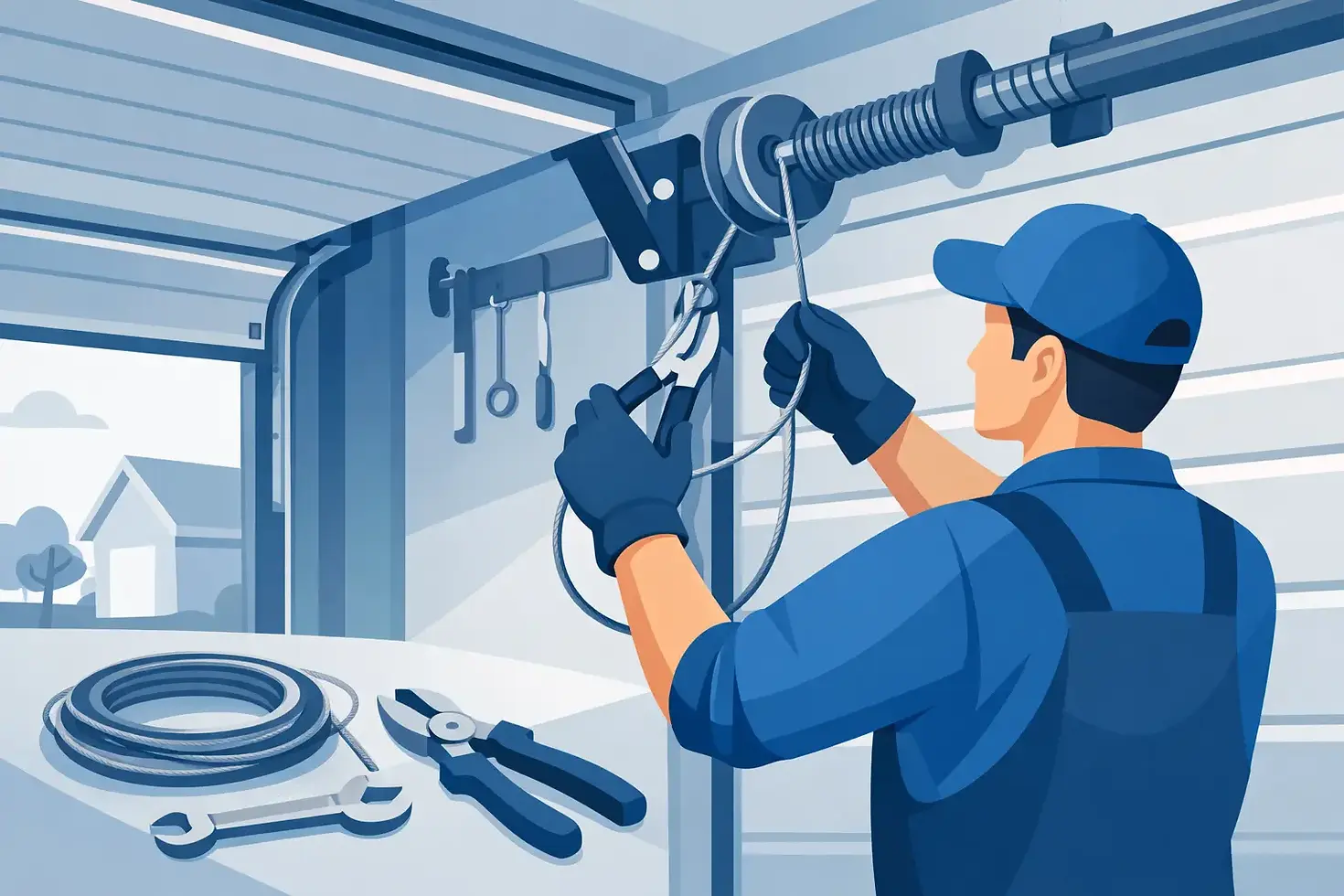
How to Repair Garage Door Cable Safely
- Mike Davis
- Apr 8
- 6 min read

A hanging cable on one side of your garage door is not a small problem. If you are searching for how to repair garage door cable issues, the first thing to know is this: some cable problems are safe to inspect, but many are not safe to fix without the right tools and training.
Garage door cables work under heavy tension. They help lift and lower a door that can weigh hundreds of pounds. If a cable has slipped, frayed, or snapped, the real cause may be a worn drum, a bent track, or a broken spring. That is why a quick DIY fix can turn into a door that drops, binds, or comes completely off track.
How to repair garage door cable starts with the right diagnosis
Not every cable issue is the same. Sometimes the cable is still intact but has come off the drum. Sometimes it is visibly frayed near the bottom bracket. In other cases, the cable breaks because the spring system failed first.
If your door looks crooked, one side is higher than the other, or the opener is straining, stop using it. A garage door opener is not designed to force a damaged door open and closed. Keep running it, and you can burn out the opener, bend panels, or make the cable situation worse.
The safest first step is a visual inspection from a distance. Look for loose cable near the side track, gaps in the spring, bent rollers, or a door that is no longer level. Do not touch the bottom brackets or attempt to unwind anything connected to spring tension.
When a garage door cable problem is dangerous
There is a big difference between basic inspection and active repair. If your system uses torsion springs, the cable wraps around drums at the top of the door and stays under serious tension. Resetting or replacing that cable usually means releasing and rebalancing spring tension correctly. That is not trial-and-error work.
Extension spring systems can also be dangerous. Even though the setup looks simpler, the stored force can still cause injury if hardware slips or parts break loose during repair.
Here is the plain answer: if the cable is snapped, badly frayed, wrapped off the drum, or tied into a spring issue, it is time to call a pro. If the door is stuck halfway, leaning, or off track, do not try to muscle it down yourself.
What you can safely check before calling for service
There are a few things a homeowner or property manager can check without getting into dangerous territory. Start by disconnecting power to the opener and keeping people away from the door area. If the door is open and unstable, do not stand underneath it.
Check whether anything obvious is blocking the track. Look at the rollers and hinges for damage. Inspect the cable from a safe distance and see whether it is frayed, loose, or fully broken. If the spring has a visible gap, that usually means the spring is broken and the cable issue is only part of the problem.
You can also take note of when the issue started. Did the door make a loud bang? Did one side drop suddenly? Did the opener start pulling unevenly? Those details help speed up repair because they point to the underlying failure.
How to repair garage door cable if it only slipped off
This is the one situation where people often assume the job is simple. It is not always simple. A cable can slip off the drum because the door was hit, the track shifted, the spring tension changed, or the cable itself stretched and started to fail.
If the cable merely slipped and there is no broken spring, no fraying, and no track damage, a trained technician will usually secure the door, reset tension, rewind the cable properly on the drum, and test door balance. That last step matters. If the door balance is off, the cable can come off again.
What should you avoid? Do not grab the cable with pliers and try to wind it back by hand. Do not loosen set screws unless you know exactly how the spring load is being controlled. Do not use the opener to pull the cable back into place. Those shortcuts are where bigger repairs begin.
Why garage door cables fail in the first place
Cables wear out over time. Moisture, rust, repeated cycling, poor alignment, and old hardware all play a role. In St. Louis, changing weather and humidity do garage door systems no favors. Metal expands, contracts, and corrodes, especially when maintenance gets skipped.
Another common cause is a broken spring. When the spring fails, the cable can lose tension instantly, jump the drum, or snap under uneven load. A door that has been hit by a vehicle or backed into can also pull the cable system out of alignment.
Cheap replacement parts are another issue. If the previous repair used the wrong cable size or low-grade hardware, that door is more likely to fail again under normal use. A proper repair is not just about getting the door moving today. It is about making sure it stays safe tomorrow.
Repair or replace the cable?
It depends on the condition of the whole system. If the cable is lightly worn but the spring, drum, bearings, and track are all in good shape, targeted cable replacement may be enough. If the cable failed because the spring is broken or the hardware is worn out, replacing only the cable is usually a short-term fix.
That is why good service includes a full look at the lifting system. A fair technician should tell you whether the issue is isolated or whether the cable failure is a symptom of something larger. No guessing. No sales pressure. Just the actual condition of the door.
Signs you should stop and call a professional now
Some garage door problems cross the line from inconvenient to unsafe fast. If the cable is dangling, the door is crooked, the spring is broken, or the bottom bracket is loose, do not keep testing it. If the opener hums but the door barely moves, stop there.
Commercial doors need the same caution, often more. Roll-up doors and heavy overhead systems can carry even greater weight and tension. A rushed fix can shut down access, delay operations, or create a safety problem for staff and customers.
This is where fast local service matters. Same-day service is not just about convenience. It can prevent panel damage, opener burnout, track failure, and a complete door collapse.
What professional garage door cable repair should include
A proper cable repair should start with securing the door and identifying the cause of failure. After that, the technician should inspect springs, drums, bearings, rollers, brackets, and track alignment before installing or resetting anything.
Once the repair is made, the system should be balanced and cycle-tested. The door should open smoothly, stay level, and move without jerking or strain. If it does not, the job is not finished.
For homeowners and property managers, the biggest value is not just the cable itself. It is getting the whole door back into safe working condition without wasting time on repeated breakdowns. That is why many customers choose a local company that offers same-day service, free estimates, and a simple promise: if it cannot be fixed, you do not pay.
A quick word on cost
People often search how to repair garage door cable because they are trying to avoid a large bill. That makes sense. But the least expensive option is not always the cheapest in the end.
A bad DIY attempt can turn a cable repair into a spring repair, opener repair, track repair, or full door replacement. On the other hand, not every cable issue means a major expense. Some jobs are straightforward when handled early. The longer you wait, the more likely other parts get damaged.
If price matters, ask for a clear on-site estimate before work begins. That is the fair way to do it.
Preventing the next cable problem
The best way to avoid another cable failure is regular inspection and tune-up service. Cables, springs, rollers, and moving hardware all wear together. Catching frayed cable early is a lot better than dealing with a door stuck halfway open before work or late at night.
Listen to the door. If it starts sounding rough, moving unevenly, or slowing down, that is your warning. Garage doors rarely fail without giving some sign first.
If your garage door cable is damaged, loose, or already broken, treat it like a safety issue, not a weekend project. The right fix is the one that keeps the door stable, protects your property, and gets you back to normal without guesswork.


Comments