


How to Repair Garage Door Dent Damage
- Mike Davis
- Apr 15
- 6 min read

That basketball hit harder than it looked, or maybe someone backed into the door and left a deep crease across one section. If you're searching for how to repair garage door dent damage, the first thing to know is simple - some dents are cosmetic, and some are the start of a bigger door problem. The difference matters, especially if the door is now rubbing, shaking, or refusing to close right.
A dented garage door is not always an emergency. But if the panel is bent enough to throw off alignment, strain the opener, or weaken the section, putting off the repair can cost more later. A small dent in one panel can turn into worn rollers, damaged hinges, track issues, or a door that stops halfway when you need it most.
How to repair garage door dent without making it worse
The safest approach depends on the material, the depth of the dent, and whether the door still moves normally. Steel, aluminum, wood, and fiberglass do not respond the same way. A light dent in a steel panel may be repairable with basic tools. A deep crease near a hinge, strut, or window frame usually needs professional repair or panel replacement.
Before you touch anything, disconnect the opener if the door is acting up. Then lift the door manually only if it moves smoothly and does not feel unusually heavy. If the door binds, leans, or looks uneven, stop there. That points to more than surface damage.
Start with a close inspection
Look at the dent from inside and outside the garage. Check whether the panel is only pushed in or if it is sharply folded. Inspect the hinges, rollers, brackets, and track near the damaged area. If the metal around fasteners is torn or the panel seam is separating, this is no longer a basic cosmetic fix.
You should also pay attention to door movement. Run the door only if it opens and closes evenly. If you hear popping, scraping, or a hard stop at one section, the panel may be distorting the whole door as it travels.
For minor steel or aluminum dents
If the dent is shallow and the panel is otherwise intact, you may be able to improve it with a simple method. Clean the area first so dirt does not grind into the finish. Then use a rubber mallet and a block of wood from the inside of the panel to tap the dent outward in small, controlled strikes. The wood helps spread the force so you do not create new low spots.
This works best on broad, shallow dents. It does not work well on sharp creases. Once metal folds, it usually loses its original shape and stiffness.
Some homeowners try heat and cold to pop the dent back out. That can help on very light surface damage, but results are inconsistent. It also carries risk. Too much heat can damage paint, warp thin metal, or affect insulated panels. If the garage door is factory-finished, a failed DIY attempt can leave you with both a dent and a visible finish problem.
If the surface needs filling and refinishing
After pushing out a minor dent, the panel may still have ripples or shallow low spots. On steel doors, an exterior-grade auto body filler can sometimes smooth the surface before sanding and repainting. That said, this is a cosmetic patch, not structural repair. If the panel has lost strength or flexes around a hinge, filler will not solve the real issue.
Color match is another practical concern. Even a decent patch can stand out if the paint has faded over time. For front-facing doors, many property owners decide that replacing the section gives a cleaner result than trying to hide the damage.
When a dented panel needs professional repair
There is a point where trying to repair a garage door dent at home stops being cost-effective. If the panel is creased near hardware, bent at the bottom edge, or pushing the track out of line, you are better off having it inspected. Garage doors are under tension, and even a panel issue can turn into a spring, cable, or opener strain issue if the door is forced.
Call for service if the dent is affecting operation, if the door will not seal at the bottom, or if one side appears lower than the other. The same goes for insulated sectional doors with cracked backing or separated layers. Those panels can look repairable from the outside while being compromised inside.
For many homeowners and property managers, the real question is not whether a dent can be repaired. It is whether repair makes sense compared with replacing the damaged section. If the model is still available and the rest of the door is in good shape, replacing one panel is often the smarter fix. If the door is older, discontinued, or has multiple weak spots, a full replacement may save money over repeat service calls.
Why panel damage can affect the whole system
Garage doors work as connected sections, not as isolated pieces. When one panel bends, the hinges no longer carry load exactly the way they should. Rollers can enter the track at the wrong angle. The opener may pull harder at certain points. Over time, that extra stress shows up somewhere else.
This is why a dent that seems minor can lead to noisy movement, jerking, or premature wear. A door does not need to be completely crushed to become unsafe or unreliable.
It depends on the door material
Steel is the most common and usually the most repairable for small dents, though deep creases are still a problem. Aluminum dents more easily and can be harder to restore cleanly because the panels are thinner. Wood doors are different altogether. A wood panel may be gouged, cracked, or split rather than dented, which means filling, sanding, or section replacement may be needed. Fiberglass can crack instead of bending and often needs specialty repair.
Material also affects price. A basic repair on a standard steel sectional door is a different job than correcting damage on a custom carriage-style door or a commercial roll-up system. That is why on-site estimates matter. You need someone looking at the actual panel, not giving a guess over the phone and changing the price later.
What not to do
Do not hammer directly on the panel without backing it. Do not keep running the opener if the door is sticking. Do not remove brackets, hinges, cables, or spring components unless you know exactly what you are doing. And do not assume a dent is cosmetic just because the door still opens once or twice.
A lot of expensive repairs start with a homeowner trying to force a damaged door through one more cycle. That extra strain can burn out an opener, bend track, or finish off a weak roller assembly.
Fast repair matters when the door is your main access point
For many St. Louis area homeowners, the garage door is not just storage access. It is the main way in and out every day. The same goes for commercial properties that rely on overhead doors for deliveries, equipment access, and security. A dent that interferes with movement is more than an appearance issue.
That is where fast local service matters. If a panel is damaged and the door is unsafe, same-day service is the difference between a quick fix and a long night with a stuck vehicle or unsecured building. Davis Door Service handles dented and damaged garage door sections with the same direct approach we bring to off-track doors, broken springs, and emergency calls - clear assessment, fair pricing, and no sales pressure.
Repair or replace?
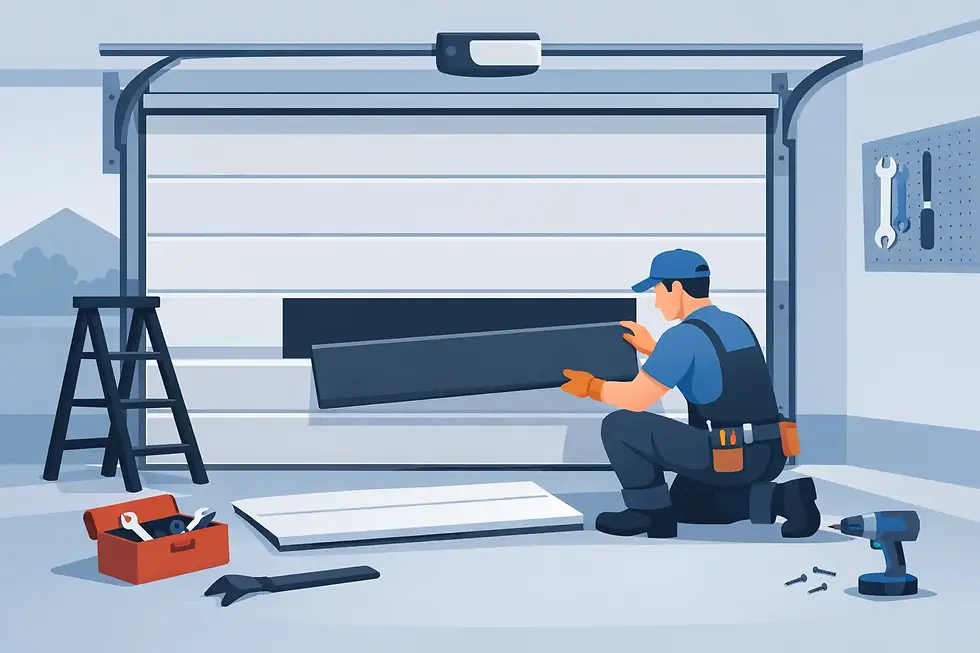
If the dent is shallow, the panel is structurally sound, and the door runs smoothly, repair is often worth it. If the panel is sharply creased, the insulation is compromised, or the damage has changed the way the door moves, replacement is usually the better long-term call.
There is also the appearance factor. A side-facing detached garage can live with a cosmetic repair that is not perfect. A front-facing door on the main elevation of your home usually needs a cleaner result. Property managers and commercial operators often have a different priority - restoring safe, dependable operation fast, with as little downtime as possible.
The right answer depends on the age of the door, the availability of matching panels, and whether the impact caused hidden damage around the hardware. That is why the best next step is not guessing. It is getting the door checked before a simple dent becomes a full system problem.
If your garage door is dented but still working, deal with it early. If it is bent, dragging, or not closing right, stop using it and get it looked at. A quick repair now is usually a lot cheaper than waiting for the whole door to start failing.


Comments