


How to Repair Garage Door Panel Damage
- Mike Davis
- Apr 11
- 6 min read

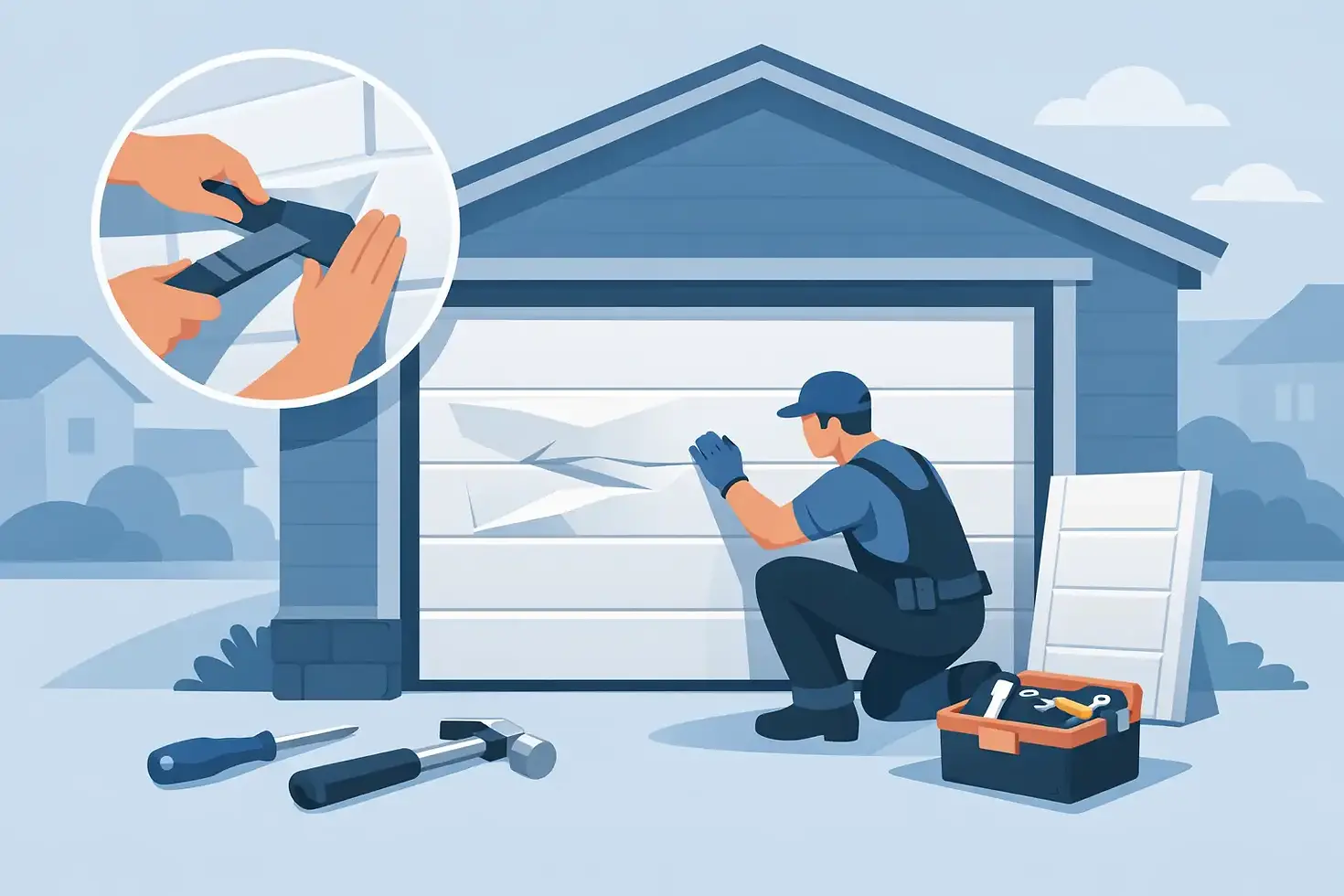
A dented or cracked section in your garage door does more than look bad. If you are searching for how to repair garage door panel damage, the first thing to know is this: some panel problems are cosmetic, but others can throw the whole door out of balance, strain the opener, and turn a simple repair into a bigger bill.
That matters fast when the door is sticking, rubbing the track, or not closing all the way. For homeowners and property managers, a damaged panel can affect security, curb appeal, and daily access. For commercial properties, it can slow down operations and leave an opening where you do not want one.
How to repair garage door panel issues safely
Garage door panels are part of a larger system. Each section connects with hinges, rollers, tracks, springs, and the opener. When one panel is bent or cracked, the damage may not stay isolated to that spot. A lower panel can take the most abuse from impact. A middle or top section may start bowing because the door is under stress or the framing is shifting.
If the damage is minor and the door still opens and closes smoothly, a limited repair may make sense. If the panel is heavily bent, split at the hinge points, pulling away from the stile, or causing the door to bind, this is usually not a DIY situation. The same goes if the track is bent, the rollers are jumping, or the spring system is under unusual strain.
Before touching anything, disconnect the opener only if the door is fully closed and stable. Do not loosen spring hardware, cable attachments, or bottom brackets. Those parts are under tension and can cause serious injury.
Start by checking the real extent of the damage
Look at the panel from inside and outside the garage. A shallow dent in a steel panel may be mostly cosmetic. A crease across the width of the section is different. That kind of bend can weaken the panel and change how it moves through the track.
Check the hinges mounted to the damaged section. If the screws are tearing out, the metal is split, or the panel around the hinge is warped, patching the surface alone will not solve the problem. Also watch the door while opening it manually a few inches at a time. If the damaged area catches, flexes hard, or causes uneven movement, stop there.
Insulated doors need extra attention. A damaged outer skin may hide crushed insulation or a separated internal layer. Wood panels can absorb moisture after cracking. Aluminum panels dent easily and can be difficult to restore cleanly without replacing the section.
When a minor DIY repair can work
If the panel has a small dent and the door still runs true, you may be able to improve the appearance and prevent further wear. For light steel dents, some homeowners try a rubber mallet and a wood block from the inside to gently tap the panel back into place. That can help with shallow damage, but it will not restore full strength if the metal has sharply creased.
For small cracks in certain non-structural areas, a filler or patch material may provide a temporary fix. Sanding, priming, and repainting can help protect the surface from rust or weather exposure. This is mostly a cosmetic repair, not a structural one.
If hardware is loose but the panel itself is still solid, tightening or replacing hinge screws may help. In some cases, longer fasteners or reinforcement plates can stabilize the connection. The key word is some. Once the metal around the hinge tears out, or the wood splits deeply, reinforcement becomes more of a stopgap than a real repair.
When panel repair turns into panel replacement
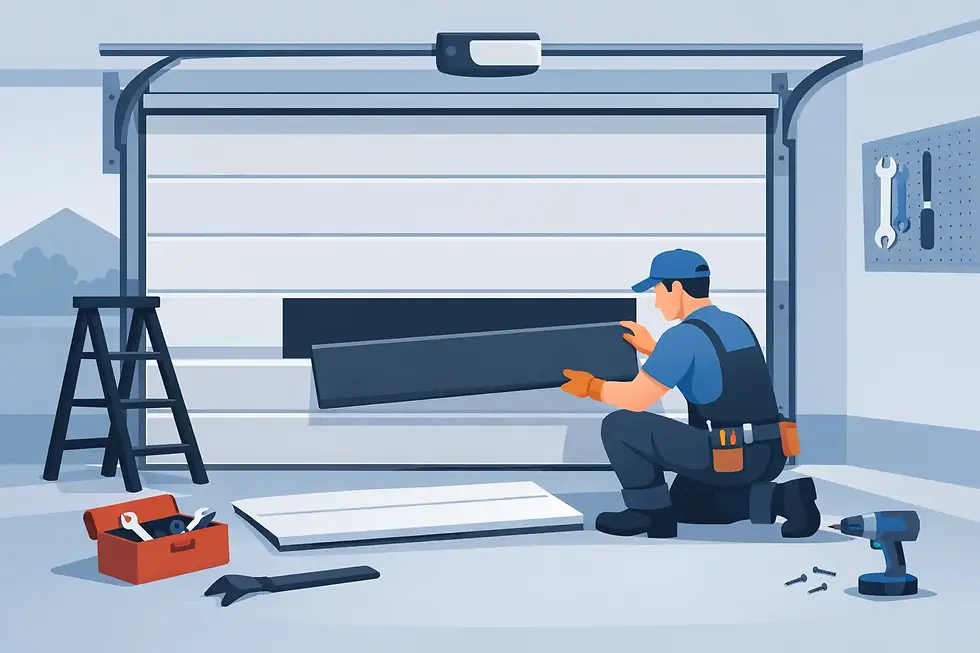
A lot of people ask how to repair garage door panel damage when what they really need is a section replacement. That is common after a vehicle bump, storm impact, or repeated stress on an older door.
Panel replacement is often the right move when one section is badly damaged but the rest of the door is still in good shape. It can save money compared with full door replacement, but only if the new panel matches the existing door in size, model, color, insulation, and profile. That is where things get tricky.
Older doors are not always easy to match. Manufacturers discontinue styles. Colors fade. Window layouts change. Even if a panel technically fits, it may not line up cleanly with the other sections or may stand out badly from the street. In those cases, replacing the full door can be the better long-term value.
There is also a weight issue. Swapping one panel for another changes how the whole system moves if the replacement is not an exact match. Springs are sized for door weight. Add the wrong section and the opener and springs can wear out faster.
Signs you should stop and call a pro
If the door is off track, crooked, jammed halfway, or slamming shut, panel damage may be only part of the problem. If you hear loud popping, see frayed cables, or notice gaps around the rollers, leave it alone. A damaged panel combined with spring or track issues can become dangerous quickly.
The same applies if the bottom panel is crushed near the corners. That area works hard every time the door cycles. It also connects to critical hardware. Trying to straighten or drill into that section without understanding the load points can make the door less safe, not more repairable.
For commercial doors, downtime costs money. A bent sectional panel or damaged roll-up slat can interfere with security and access the same day it happens. Quick service matters more than experimenting with a temporary fix that may fail during business hours.
What a professional garage door panel repair should include
A proper service call should do more than patch the visible damage. The technician should inspect panel alignment, hinges, rollers, track condition, opener strain, and spring balance. That is the difference between treating the symptom and fixing the problem.
If the panel can be repaired, the goal is to restore function safely and keep the door moving evenly. If the section needs replacement, measurements and compatibility have to be checked carefully. On some jobs, reinforcing the affected area makes sense. On others, it is throwing money at a panel that is already too far gone.
A local company that handles repairs every day can usually tell within minutes whether you are looking at a cosmetic issue, a repairable section, or a bigger system problem. That saves time and avoids paying twice.
Cost depends on damage, door type, and parts availability
There is no honest flat answer without seeing the door. Minor cosmetic work is one price. Replacing a panel on an insulated steel door is another. Custom residential doors and commercial systems can cost more because parts are less available and labor is more involved.
The cheapest option up front is not always the least expensive over time. A weak repair on a damaged panel can lead to opener damage, roller wear, and recurring alignment problems. On the other hand, replacing an entire door when a single matching section is available may be more than you need. It depends on condition, age, and whether the repair will hold.
In the St. Louis area, fast weather changes also matter. Moisture, temperature swings, and seasonal movement can make panel damage worse if the door is already stressed. Waiting too long can turn a repair call into an emergency call.
How to repair garage door panel damage without making it worse
If you are deciding whether to attempt a fix yourself, keep the standard simple. If the damage is light, isolated, and not affecting movement, a cosmetic repair may be reasonable. If the panel is structural, the door is binding, or any spring and cable components are involved, it is time for trained service.
That is especially true when you need the door working today, not after a weekend of trial and error. Davis Door Service handles same-day garage door repairs, panel damage, off-track doors, opener issues, and emergency calls with straightforward pricing and no sales pressure. If we can fix the panel safely, we will. If the smarter move is replacement, we will tell you that too.
A damaged garage door panel is one of those problems that looks smaller than it is. The best next step is not guessing. It is getting the door checked before a bent section turns into a stuck door, a burned-out opener, or a safety issue at the worst possible time.


Comments