

How to Spot a Broken Door Spring Fast

You usually know something is wrong before you see it. The garage door feels unusually heavy, the opener strains, or the door goes up a few inches and stops. If you are wondering how to spot broken door spring trouble before the door gets stuck or unsafe, there are a few signs that show up fast - and they are not subtle.
A bad spring is one of the most common reasons a garage door stops working the way it should. It is also one of the most dangerous parts to ignore. Springs carry the door’s weight. When one breaks, the opener is no longer doing the light lifting it was designed for. It is trying to move a door that can weigh well over 100 pounds, and sometimes much more. That is why a spring problem can turn into a bigger repair if you keep forcing the system.
How to spot broken door spring problems
The clearest sign is a door that suddenly feels too heavy to lift by hand. A properly balanced garage door should lift with controlled resistance. If it feels like dead weight, the spring may be broken or no longer carrying its share of the load.
Another common sign is a loud snap from the garage. Many homeowners describe it as sounding like something slammed into the wall or a board cracked in half. That noise is often the spring breaking under tension. If the door worked fine the day before and now will not open normally, that sound matters.
You may also notice the door opening crooked, stopping halfway, or dropping faster than usual. If one spring breaks on a two-spring system, the other side may still have some tension. That can make the door look uneven or jerky as it moves. In some cases, the opener keeps trying, but the door barely moves. In others, it lifts a few inches and reverses.
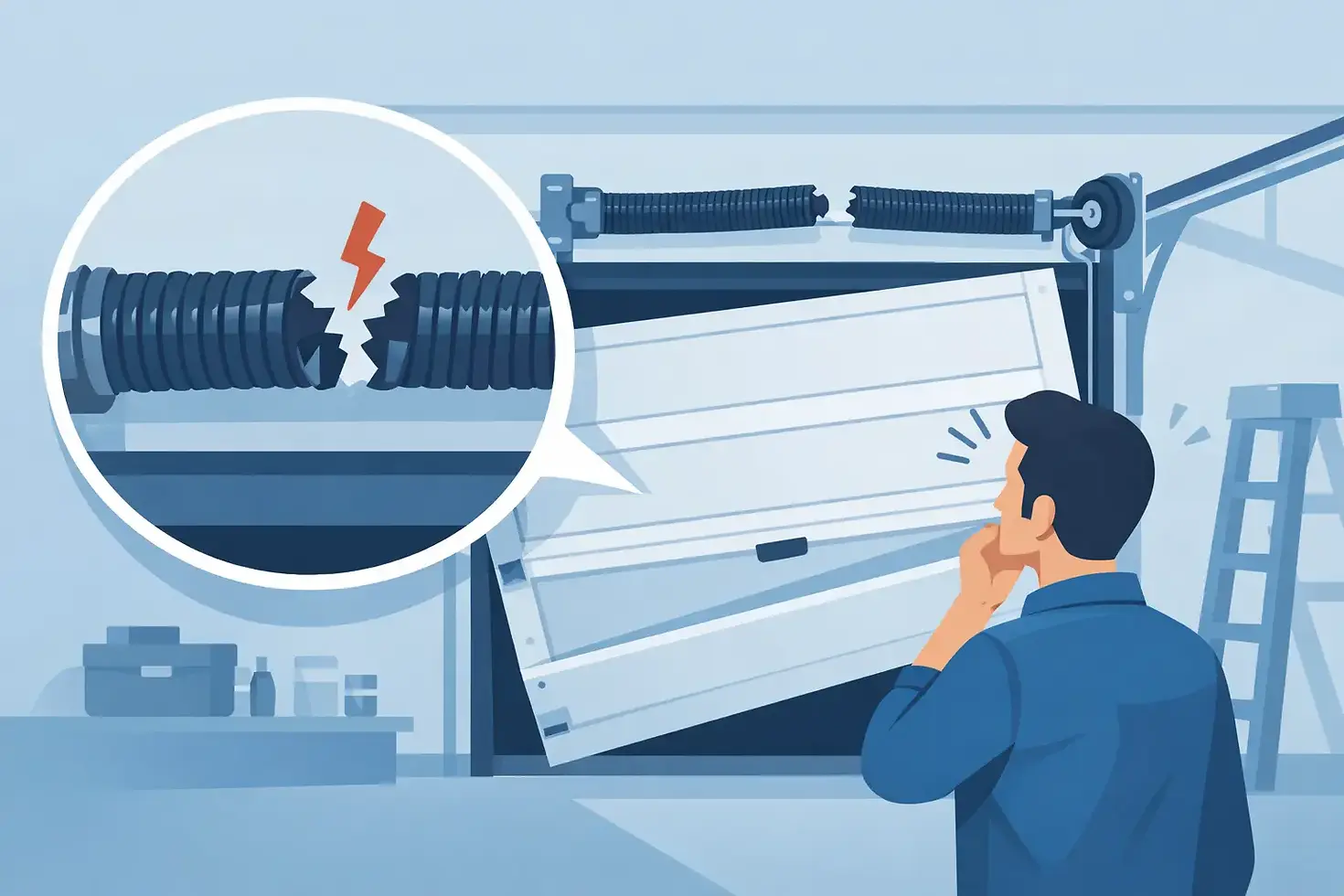
A visible gap in the spring is another giveaway. On a torsion spring, which sits on a bar above the door, a break often leaves a clear separation of a couple inches between the coils. On extension springs, which run along the horizontal tracks, the spring may look stretched out, hanging loose, or obviously split.
Torsion vs. extension spring signs
Most residential garage doors use either torsion springs or extension springs, and the warning signs can look a little different depending on the setup.
Torsion spring issues
Torsion springs mount above the garage door opening on a metal shaft. When one breaks, you will usually see that clean gap in the coil. The door may not open at all, or it may lift unevenly if there are two springs and only one has failed. You might also notice the cables loosening around the drums because the spring is no longer holding proper tension.
Torsion systems are common because they give smoother, more controlled movement. But when they fail, the change is immediate. The opener may hum, strain, or stop. The door may slam shut if it was open when the spring let go.
Extension spring issues
Extension springs stretch along the sides of the door tracks. When one breaks, it can hang oddly, look overextended, or leave one side of the door unsupported. The door may rise crooked or shake more than usual.
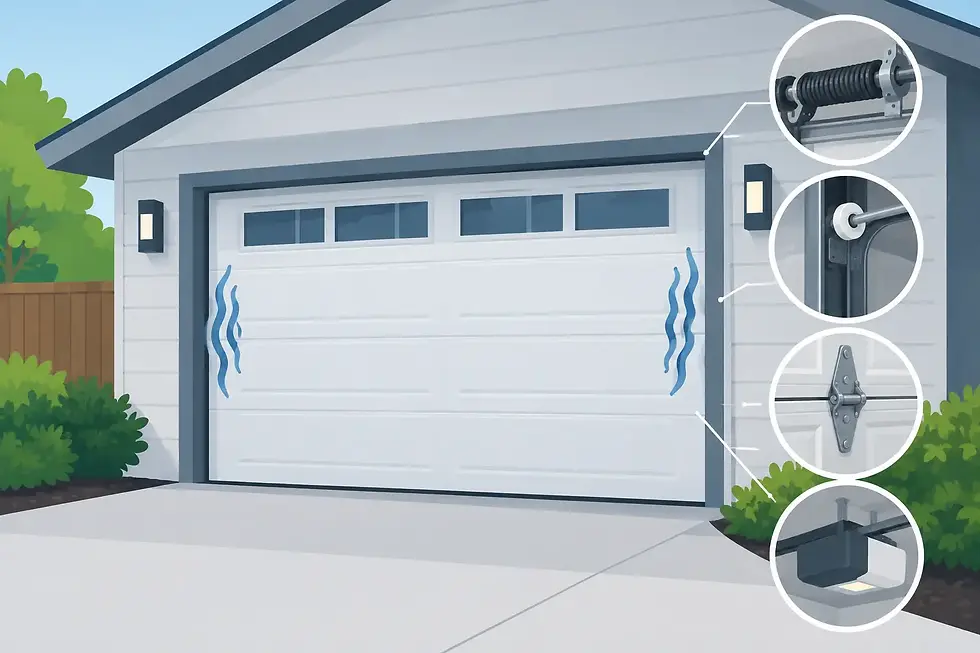
With extension springs, frayed safety cables or visibly worn pulleys can also show up around the same time. Sometimes the spring itself is not fully snapped yet, but the system is worn enough that failure is close. That is why squeaking, jerking, and uneven travel should not be brushed off as normal aging.
Signs people miss before the spring fully breaks
Not every spring fails without warning. A lot of doors give homeowners a short heads-up, but the signs are easy to dismiss until the door stops working.
One of the earliest clues is a garage door that gets noisier over time. If the door starts groaning, popping, or banging during travel, the springs may be losing tension or wearing unevenly. Noise alone does not always mean a broken spring, but it is often part of the picture.
Slower movement is another sign. If your garage door used to open smoothly and now seems sluggish or strained, the spring may be weakening. The opener may sound like it is working harder than usual because it is taking on weight it should not be carrying.
You might also notice gaps under one side of the closed door, a door that drifts down when partly open, or rollers that look like they are fighting the track. Those problems can point to spring imbalance. It depends on the system, but in real-world service calls, spring wear often shows up alongside cable tension changes and alignment issues.
What not to do if you think the spring is broken
Do not keep hitting the wall button or remote hoping the opener will push through it. That is one of the fastest ways to burn out the opener, strip gears, or create a second repair on top of the spring issue.
Do not try to lift a heavy door unless you absolutely need emergency access and can do it safely with help. A door with a broken spring can drop hard and fast. Even if it moves, it is unstable.
And do not try to unwind or replace the spring yourself unless you are trained and have the right tools. Springs are under serious tension. This is not like swapping out a hinge or a roller. One wrong move can cause major injury.
A quick visual check you can do safely
You do not need to take anything apart to get a better idea of what is happening. Start with the door in the closed position and look above the opening for a torsion spring or along the side tracks for extension springs. If you see a visible split, stretched spring, hanging cable, or loose side of the system, stop there and call for service.
If the opener is trying but the door is barely moving, unplug the opener and avoid using it again until the issue is checked. If the door is stuck open, keep people clear of the opening and avoid parking or walking underneath it. Safety first, access second.
A quick look can help confirm the problem, but it does not replace a repair inspection. Sometimes what looks like a broken spring is part of a larger failure involving cables, bearings, or a damaged bracket. Other times the spring is the only issue, and replacing it quickly prevents more wear on the rest of the system.
When a broken spring becomes urgent
A broken spring is always a repair issue, but sometimes it is an immediate one. If your car is trapped inside, your business cannot open its overhead door, or the garage door is stuck halfway, waiting can create a bigger problem than inconvenience.
For homeowners, that can mean being late for work, leaving the house unsecured, or having no safe access to storage. For commercial properties, a nonworking door can interrupt deliveries, staffing, security, and daily operations. In those cases, same-day service matters because the door is not just noisy or annoying - it is affecting access and safety.
That is especially true if the door has come off balance. A crooked or partially open door puts extra strain on tracks, cables, and rollers. The longer it sits that way, the more likely it is that the repair grows.
Why spring problems should be fixed now, not later
Garage door springs do not heal themselves. Once one breaks, the system is compromised. Even if the opener manages to move the door a little, every cycle adds risk. You can damage the opener, wear out the second spring faster, or end up with a door that jams off track.
There is also the question of age. Springs are rated for a certain number of cycles. If one spring has failed and the other is the same age, replacing both is often the smarter long-term move. It costs more upfront, but it can save you from another service call in the near future. It depends on the condition of the system, but that is a practical conversation worth having during the estimate.
For property owners in St. Louis, quick service matters because a stuck garage door is never scheduled. It usually happens when you are already trying to leave, close up, or keep a property running on time. That is why local, same-day response makes a real difference.
If you are dealing with a heavy door, a loud snap, a visible spring gap, or an opener that suddenly cannot lift the door, trust what the system is telling you. A broken spring is not a wait-and-see problem. Get it checked, get it fixed right, and give the rest of the door a chance to keep doing its job.


Comments