

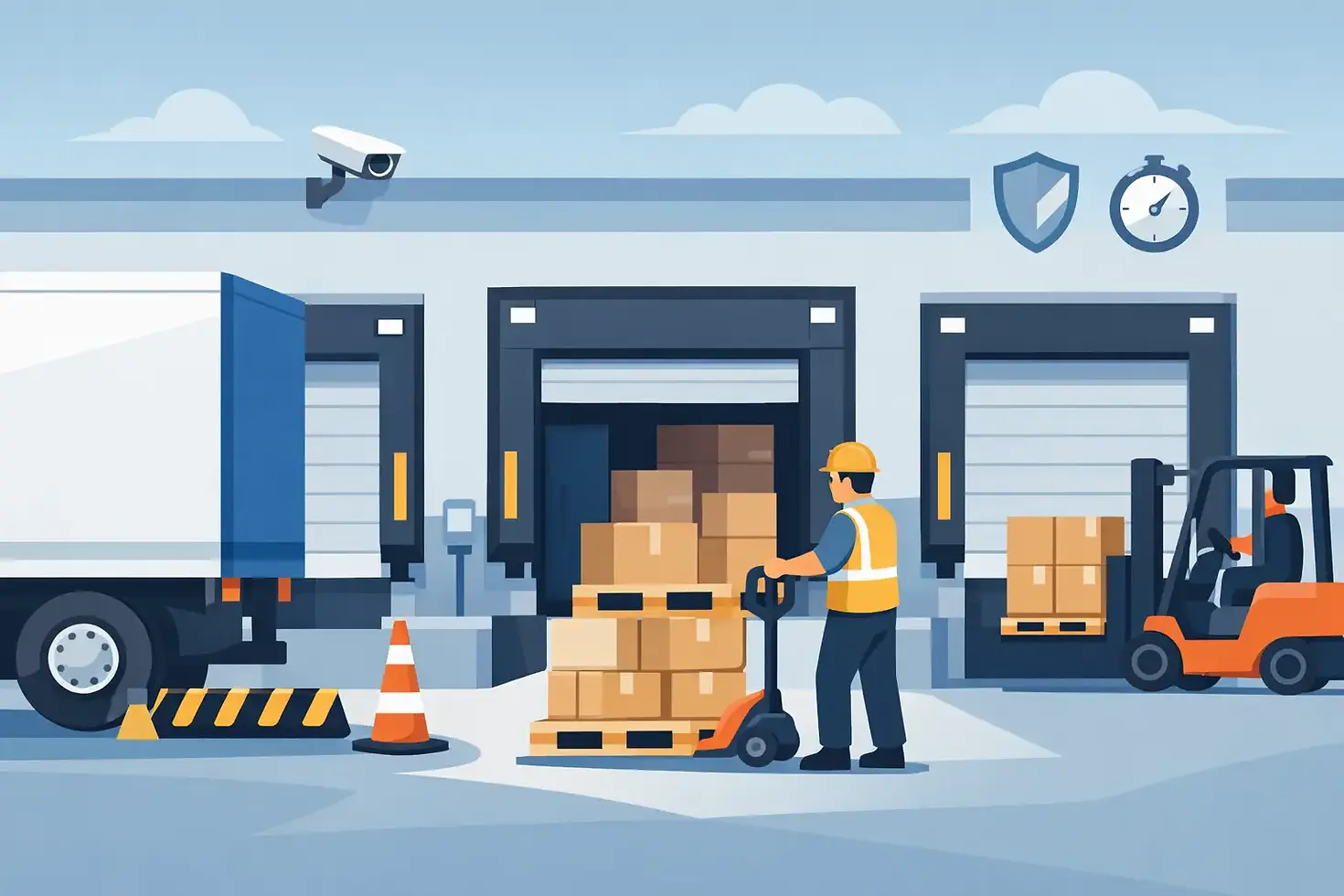
Loading Dock Door Guide for Safer, Faster Operations

A loading dock door that sticks halfway open at 6:30 a.m. is not a minor inconvenience. It can delay trucks, expose inventory, create a security problem, and put employees in the path of a heavy moving door. This loading dock door guide covers the practical decisions that keep a facility moving: what type of door fits the job, what problems demand immediate service, and how to avoid preventable downtime.
Start With the Job the Door Has to Do
The right commercial door depends on how your dock operates, not just the opening size. A warehouse receiving a few deliveries each day has different needs than a distribution facility cycling doors constantly through every shift. Traffic volume, available headroom, exposure to weather, security requirements, and the type of equipment moving through the opening all matter.
Sectional overhead doors are common at loading docks because they are durable, insulated options are available, and damaged sections can often be replaced without replacing the entire system. They work well for many warehouses, auto shops, municipal buildings, and retail receiving areas.
Rolling steel doors are often the better choice where side room or overhead space is limited. Their compact coil design can suit tight layouts, and they are built for frequent commercial use. The trade-off is that repairs, slat damage, and operator issues need prompt attention. Letting a rolling door grind, bind, or run unevenly can turn a manageable repair into a larger replacement expense.
High-speed doors are worth considering when temperature control, traffic flow, or clean work areas are central to the operation. They open and close quickly, but they also add controls, sensors, and moving parts that need regular inspection. For an exterior dock opening, a high-speed door may still need to be paired with the right seals, dock equipment, or a second security door.
Measure More Than the Opening
A door may fit the width and height on paper and still be wrong for the building. Before selecting a replacement, measure the clear opening, side room, headroom, backroom, and any obstructions such as pipes, lights, sprinklers, shelving, or structural beams.
Also look at the trucks using the dock. If trailers vary significantly in height, the door must provide enough clearance for the highest practical load. If forklifts regularly pass through, consider how often the door cycles, whether it needs windows for visibility, and how much abuse the bottom section is likely to take.
Insulation deserves a practical look. A lightly used storage building may not justify a premium insulated door. A heated warehouse, food-related operation, or climate-sensitive storage area often benefits from better insulation and tighter perimeter seals. The savings are not only about utility bills. A better sealed opening can reduce drafts, moisture, dust, and employee discomfort at the dock.
Do Not Ignore the Bottom of the Door
The bottom seal, astragal, and bottom retainer take a constant beating from concrete, water, debris, forklifts, and uneven dock surfaces. A worn seal can let in rain and rodents, but it can also signal that the door is not closing evenly. If daylight shows beneath one corner, do not assume a new seal alone will solve it. The tracks, cables, springs, rollers, or floor condition may be part of the issue.
Know the Parts That Cause Most Downtime
Commercial dock doors are simple in concept but carry major force. A technician can quickly identify the source of a problem, but facility staff can often spot warning signs before the door fails completely.
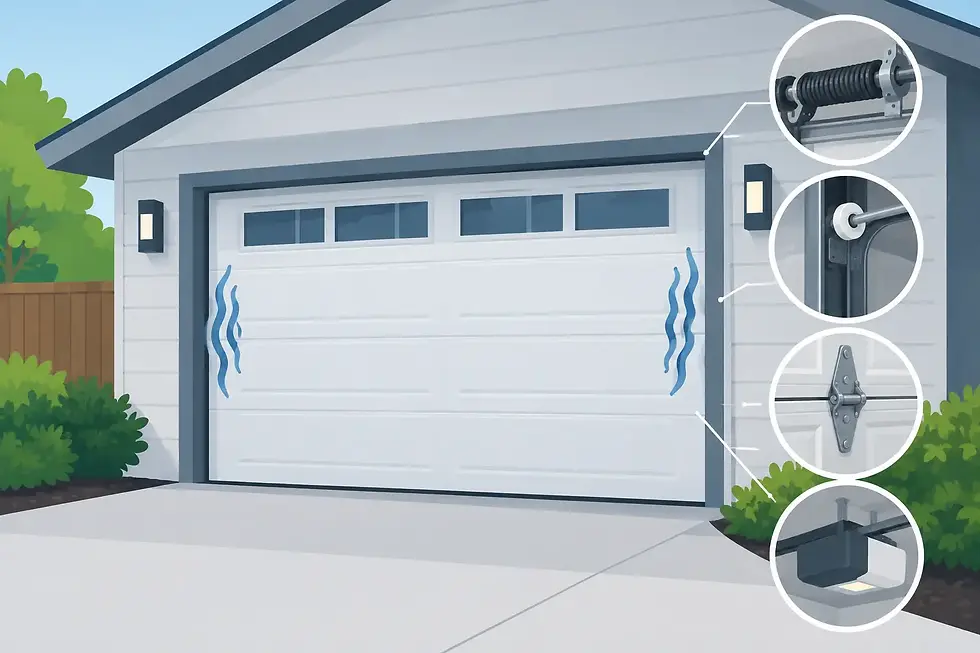
Springs counterbalance the weight of the door. When a torsion spring breaks, the door can become too heavy for the operator to lift or lower safely. A loud bang from above the door, a door that will not rise, or an opener straining without moving the door are common signs. Never attempt to wind, unwind, or replace a commercial spring without the right training and tools.
Cables keep the door lifting evenly. A frayed cable, loose cable, or cable that has jumped the drum can pull the door crooked in the opening. Continuing to operate it can bend tracks, damage sections, and send the door off track. Stop using the door if one side rises faster than the other.
Rollers and hinges allow the sections to travel through the tracks. Worn rollers can create vibration, noise, and rough movement. Bent hinges, cracked sections, and loose fasteners can turn into a jam at the worst time, usually when a truck is waiting.
The operator is the motorized unit that opens and closes the door. Operators can fail because of worn gears, electrical issues, a bad control station, damaged photo eyes, limit-setting problems, or simple lack of maintenance. If the motor runs but the door does not move, shut the system down and have it checked. Repeatedly pressing the control button can worsen a mechanical failure.
Safety Devices Are Not Optional Extras
A loading dock is already a high-risk work area. A door system with bypassed or poorly functioning safety devices adds unnecessary risk. Photo eyes, monitored reversing devices, bottom sensing edges, warning lights, and manual-release hardware should be tested as part of routine maintenance.
Keep the photo eyes clear and properly aligned. Dust, forklift contact, loose wiring, and misalignment can cause a door to reverse unexpectedly or refuse to close. Do not tape sensors out of the way or ask employees to hold buttons until the door closes. That may get the door down once, but it removes the protection meant to prevent injury and property damage.
Make sure employees know who is authorized to operate each dock door and what to do when one malfunctions. The basic rule is straightforward: if the door is moving unevenly, making new grinding noises, hanging from one cable, or coming out of the track, take it out of service. Mark the opening, notify the right person, and call for repair.
Set a Maintenance Schedule Based on Use
There is no one schedule that fits every facility. A door used ten times a day needs less attention than a door cycling hundreds of times each week. Still, waiting until a door stops working is usually the most expensive approach.
For most commercial properties, staff should do a quick visual check regularly and schedule professional service at least annually. High-cycle doors, doors exposed to heavy forklift traffic, and doors that protect valuable inventory may need inspections twice a year or more often.
A professional service visit should include more than spraying lubricant on the rollers. The technician should inspect spring balance, cables, drums, brackets, rollers, hinges, tracks, operator settings, safety devices, seals, fasteners, and door travel. They should also check for wear that could cause a sudden failure before the next busy delivery window.
What Staff Can Check Safely
Staff can look for visible damage, listen for new noises, keep tracks clear of debris, and report slow or uneven movement. They can also keep the area around the door free of pallets, trash, and equipment that could block the photo eyes or prevent a full close.
Leave spring adjustment, cable work, track realignment, operator repair, and off-track door correction to a commercial door professional. These systems are heavy, under tension, and not forgiving when something slips.
Decide Between Repair and Replacement
A damaged panel or failed roller does not automatically mean the entire door needs replacement. If the door is structurally sound and parts are available, repair is often the smart, cost-effective option. That is especially true when the problem is limited to springs, cables, rollers, hinges, seals, controls, or an operator component.
Replacement starts making more sense when sections are badly crushed, the door has repeated failures, repairs are becoming frequent, parts are obsolete, or the current door no longer meets security, insulation, or operational needs. A door that is too slow, too poorly sealed, or too unreliable can cost more in disruption than a planned replacement.
Ask for a clear explanation of what failed, what can be repaired, and what the realistic lifespan looks like after the repair. A good service company should give you options without pushing a door replacement when a safe repair will do the job.
When to Call for Emergency Dock Door Service
Some issues can wait for a scheduled visit. A worn bottom seal or a noisy roller may be inconvenient but manageable for a short time. Other issues need immediate attention because the dock cannot be secured or safely used.
Call for emergency service when the door is stuck open, stuck closed during active operations, off track, hanging unevenly, hit by a vehicle or forklift, missing a cable, or unable to secure the building. The same applies if the operator will not stop, safety devices are failing, or damage leaves sharp edges and unstable sections in the work area.
For St. Louis businesses dealing with an urgent commercial door problem, Davis Door Service provides 24/7 emergency support and same-day service when available. The goal is not to sell panic. It is to get the opening safe, secure, and operational as quickly as possible.
A dependable loading dock door is part of your daily workflow, not background equipment. Treat new noise, uneven travel, and slow operation as an early warning. A quick call before the next truck arrives is usually easier, safer, and less expensive than dealing with a door that fails in the middle of the shift.


Comments