


Why Is a Commercial Garage Door Stuck at Work?

A stuck overhead door can stop deliveries, trap equipment, expose inventory, and leave your building unsecured. If you are asking why a commercial garage door is stuck, the answer is usually not the door panel itself. Commercial doors rely on springs, cables, tracks, rollers, operators, and safety devices working together. One failed part can bring the whole system to a halt.
The right move depends on where the door stopped, what happened immediately before the problem, and whether the door is under tension or off its tracks. Do not force it open with a forklift, pull hard on the bottom section, or keep pressing the operator button. That can turn a repairable problem into a damaged door, a broken operator, or an injury.
Why Is a Commercial Garage Door Stuck?
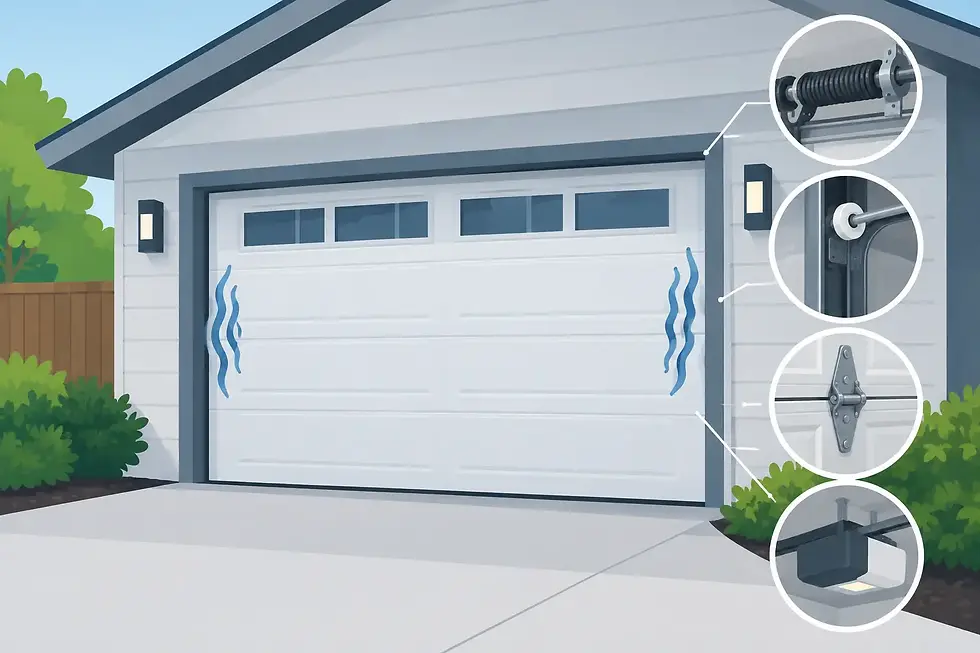
The most common causes are a broken spring, snapped cable, jammed track, failed operator, or an obstruction at the safety sensors. Heavy sectional doors and roll-up doors put serious strain on their hardware every day. Wear catches up eventually, especially at loading areas where doors run dozens of cycles per shift.
A broken torsion spring or extension spring
Springs carry most of the door's weight. When a torsion spring breaks, the operator may hum, strain, or move the door only a few inches. In some cases, the door will not move at all. You may hear a loud bang when the spring fails, often mistaken for something hitting the building.
A broken spring is not a do-it-yourself repair. Commercial springs are tightly wound under extreme tension. Trying to remove or wind one without the correct tools and training can cause severe injury and damage the shaft, drums, or door sections. Keep people clear, stop using the operator, and have the spring system inspected.
A loose or snapped cable
Cables run from the bottom of the door to the drum system near the top. They can fray, slip off a drum, or snap after a spring failure, impact, or track issue. When one cable comes loose, the door may lift unevenly, hang crooked, or bind halfway up.
Do not try to reset a cable while the door is hanging. The remaining cable and spring system may be carrying an uneven load. A technician needs to secure the door first, correct the cable and drum alignment, and check why the cable came off in the first place.
Bent tracks, damaged rollers, or an off-track door
A pallet jack, delivery vehicle, forklift, or piece of equipment can bend a vertical track with one bad hit. Even a smaller impact can knock rollers out of alignment. Dirt, hardened grease, loose bolts, and worn rollers can also make a door bind until it finally sticks.
Look for a door that is crooked in the opening, rollers outside the track, fresh scrape marks, or a track pulled away from the wall. Those signs point to a mechanical problem, not an opener issue. Continuing to run the operator can twist the door sections or pull the track farther from the building.
An operator or electrical failure
If the door does not respond at all, the issue could be power, a control station, a remote, a damaged wire, a tripped breaker, or the commercial operator itself. If the operator makes noise but the door does not move, a broken drive component, disengaged trolley, or spring problem may be involved.
Start with the basics only. Confirm the disconnect has not been pulled, check whether the breaker has tripped, and make sure an emergency stop button is not engaged. If the operator is hardwired, avoid opening electrical panels or bypassing controls. Commercial door operators have safety circuits for a reason.
Blocked or misaligned safety devices
Many commercial doors use photo eyes, monitored edge sensors, loop detectors, or other safety equipment. A box, snow, grime, a damaged sensor bracket, or a cut wire can prevent the door from closing. The door may start down and immediately reverse, or refuse to close from the wall station.
Clear obvious debris from the doorway and wipe the sensor lenses carefully. If the problem persists, do not defeat the sensors to get the door shut. A failed safety system needs proper diagnosis. Bypassing it can put employees, customers, and vehicles at risk.
A damaged bottom section or a blocked opening
A bent bottom section, damaged weather seal, frozen threshold, or debris in the opening can stop the door at the floor. This is common after vehicle contact or during freezing St. Louis weather. For roll-up doors, a damaged curtain slat or guide can create the same problem.
Remove loose debris only if it can be done without moving the door. Do not chip ice around a closed door with tools that can damage the bottom seal, concrete, or door section. If the door is frozen or physically damaged, forcing the operator may strip gears or burn out the motor.
What to Do When a Commercial Door Will Not Move
First, protect the area. Keep employees, customers, and vehicles away from the opening, especially if the door is crooked, partially open, or making unusual noises. If the door secures a loading dock, block off the lane until the condition is assessed.
Next, stop repeated attempts to operate it. One or two controlled tests can help identify a problem, but repeated button presses do not fix a jammed door. They can overheat an operator and place more stress on cables, springs, and tracks.
Then check for simple external issues: an obstruction in the opening, an engaged emergency stop, a tripped breaker, or visibly dirty photo eyes. Do not touch springs, cables, drums, hinges, or track hardware. Those components may be under load even when the door appears still.
If the door is stuck open, security becomes the immediate concern. Move inventory away from the opening when possible and use temporary barriers or staff coverage while arranging service. If it is stuck closed and blocking operations, avoid creating a workaround that exposes people to moving equipment or an unsecured dock.
When It Is an Emergency Repair
A commercial garage door problem needs same-day attention when it stops deliveries, blocks a vehicle bay, leaves valuable stock exposed, prevents a business from opening, or creates an unsafe condition. A hanging door, broken cable, damaged track, or failed spring is not something to leave for the next shift.
It may be tempting to keep operating a door that is only sticking occasionally. That is a trade-off that rarely pays off. A roller or hinge replacement is usually more manageable than rebuilding an operator system or replacing damaged door sections after the door comes off track.
For St. Louis businesses, Davis Door Service provides 24/7 emergency support for commercial overhead doors, roll-up doors, operators, broken springs, cables, and off-track doors. The goal is simple: identify the actual failure, explain the repair before work starts, and get your access and security back without a sales pitch.
Preventing the Next Stuck Door
Commercial doors do not need complicated maintenance, but they do need regular attention. A practical service check should include spring balance, cable condition, rollers, hinges, track alignment, fasteners, operator limits, safety devices, and bottom seal wear. High-cycle doors at warehouses, auto shops, fire stations, and receiving areas should be checked more often than a door that runs a few times per day.
Train staff to report grinding, squealing, slow movement, uneven lifting, and reversal issues early. Those are warning signs, not normal operating sounds. Also keep the tracks and opening clear, and make sure drivers know the door must be fully open before moving equipment through the opening.
A commercial door is part of your daily operation, not just a building feature. When it sticks, treat it like the access and safety issue it is. Securing the area and calling for a proper repair early is the fastest way to keep one bad door from disrupting the rest of the day.


Comments